
News
Ready Before the Emergency | How the Dr. Lee Jong-wook Fellowship Transformed Emergency Care in Masaka
How the Dr. Lee Jong-wook Fellowship Program turned a Masaka clinical officer into the steady hands an emergency depends on
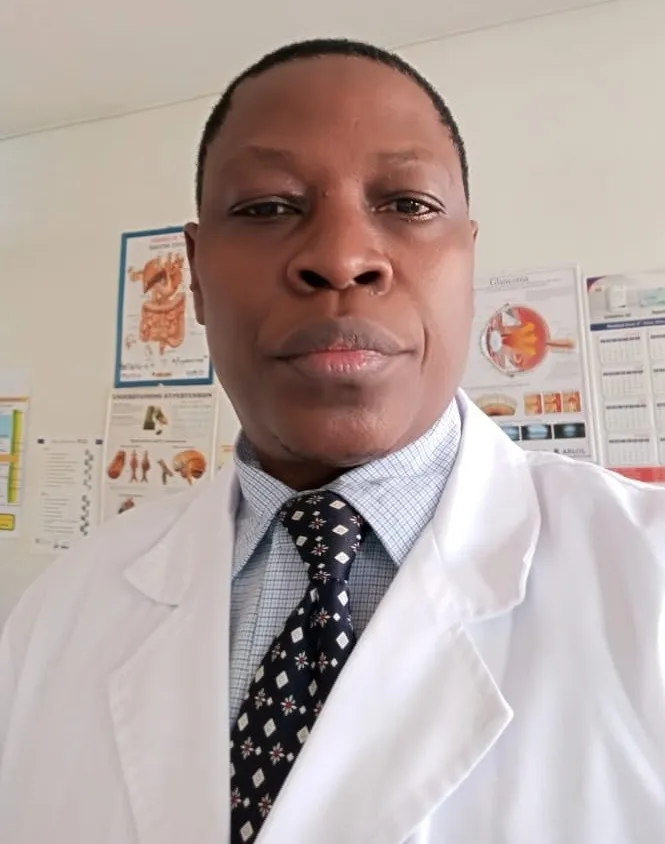
Good emergency care is rarely about heroics. It is about being ready; the right skill, the right tool, and a clear plan, all in place before the patient arrives. This is the story of Zikusoka Fredrick, a clinical officer who went to Korea to learn how to be ready, and who has spent the years since teaching that readiness to everyone around him.
A young man arrived at the Out-Patient Department of Masaka Regional Referral Hospital struggling to breathe. He could barely finish a sentence. He had come late, as patients often do, after the medicine he had been given elsewhere wasn’t helping his condition anymore. By the time he reached Zikusoka Fredrick, each breath was harder than the last.
Fredrick worked through it in order. He looked, he listened, and he ordered a chest X-ray. The result matched what he had already learned to suspect: not an ordinary chest infection, but bronchial asthma in the middle of an active attack. He started the patient on a nebuliser. Within minutes the young man’s breathing eased. Today, on simple maintenance treatment, he lives without the attacks that once frightened him.
To anyone walking past, it looked like a routine morning in a busy hospital. Fredrick knows it was not. A few years earlier, he admits, he might not have read the signs as fast, acted as surely, or stayed as steady. What changed is easy to name and easy to trace: a training programme that began more than ten thousand kilometres away, in Korea.
A capable clinician, missing the tools of the moment
For years, Fredrick was the kind of clinician a regional referral hospital relies on; experienced, dependable, and trusted by his colleagues. But being a sound general clinician and being ready for an emergency are two different things. When a case turned critical fast, he could feel the limit of his training.
“I lacked clinical skills in emergency care and overall patient management,” he notes plainly. And the problem was bigger than him. The department ran on a weak triage system, with limited diagnostic tools such as ultrasound and X-ray, and an emergency service that could not always keep pace with what came through the door. Queues were long and disorderly. The patients who were badly off were not always seen first. In a place where order and speed save lives, the system tended to slow down at exactly the wrong moment.
Fredrick was not willing to work within those limits. He kept looking for better methods, and that is partly why he nominated for a programme that would reshape how he practised.
An invitation to Korea
In 2019, Fredrick was selected for the Dr. Lee Jong-wook Fellowship Program, the Clinical Experts Training Program that brings health workers from partner countries to Korea for advanced clinical training. He was placed at Wonju Christian Severance Hospital at Yonsei University. There, the standards he had only imagined back home were simply routine.
The training covered much of what he had been missing. He had hands-on training in cardiopulmonary resuscitation (CPR) and basic life support, in emergency tracheostomy, in the management of poisoning, and in infection prevention and control. He studied Korea’s structured triage and acuity system, a disciplined method of deciding who is seen first; turning a crowded waiting room into an orderly one. He learned modern resuscitation technique and hyperbaric oxygen management, and, away from the bedside, he picked up strategic planning, proposal writing, ICT and facility management skills.
What stayed with him, though, was not only the techniques. It was the working culture around them.
“What impressed me most were the work ethics, the timeliness during care, the way assessment equipment was always within close reach, and the attitude towards the patient.”- Zikusoka Fredrick, Senior Clinical Officer
In Korea, he learned that during an emergency, a health worker did not have the time or liberty to start hunting for a tool or a plan; but rather already have both. He resolved to bring the practice and attitude back home.
Bringing Korea home
Upon return home, he started with what had frustrated him most; the way patients moved through the department. Using what he had learned, he helped rebuild the triage system at the Out-Patient Department so that the most badly off patients would be identified and seen first, instead of waiting for their turn in a single line. Waiting times came down. The route from the front door to the right clinician became shorter and clearer. Working with his colleagues, he raised the hospital’s emergency care to a standard it had not reached before.
The skill that multiplies
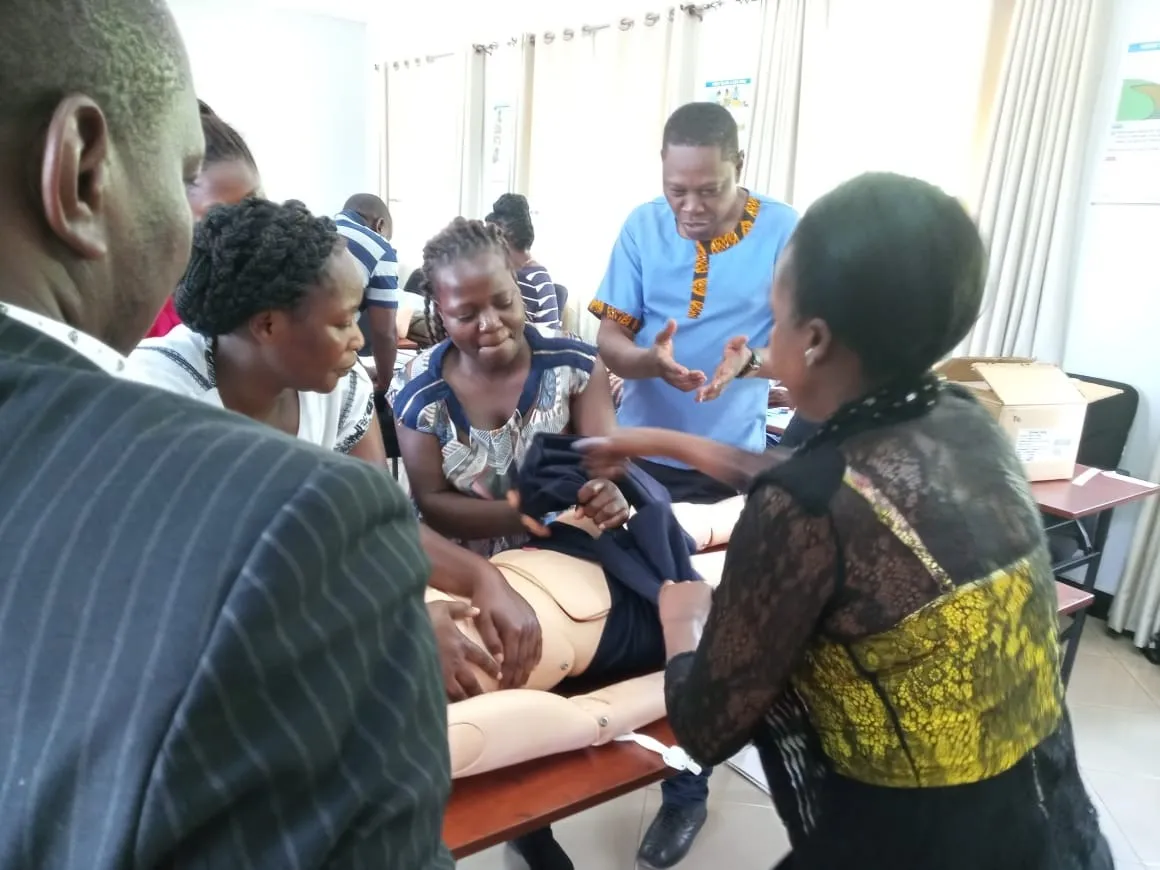
Fredrick measures the fellowship less by what he can now do, and more by how many other people can do it because of him.
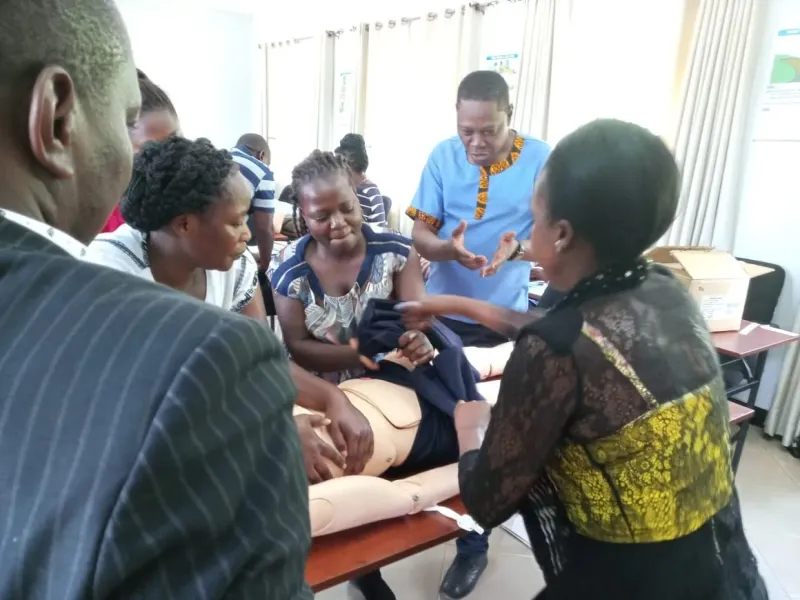
He mentors fellow health workers in basic life support, basic emergency care and CPR. The training he once travelled across the world to get is now shared with colleagues across a region of over two million people, and in need of every trained pair of hands it can find.
He did not stop at the hospital walls. Fredrick took the message to the radio, joining talk shows to explain emergency medical services and the care the hospital can now offer. Patients who once would not have known where to go began arriving better informed, and often sooner, which in an emergency is usually what matters most.
Inside the hospital, the effect compounded. As more colleagues were trained, emergency response in the region of greater Masaka greatly improved. Thanks to what begun as one clinician’s fellowship.
“A remarkable experience”
Ask Fredrick what he would tell the people who made the fellowship possible, and the answer is part thanks, part request: send more.
“The program is well-structured and intentional, and more health workers need to undergo it. Provision of more equipment will help boost emergency-care services in the hospital.”- Zikusoka Fredrick, Senior Clinical Officer
His plainest words, though, are for the partners who opened the door:
“The Dr. Lee Jong-wook Fellowship is a remarkable experience that has enabled a big transformation in the health care at Masaka Regional Referral Hospital. Thanks to Wonju Christian Severance Hospital, of Yonsei University, for facilitating this.”- Zikusoka Fredrick, Senior Clinical Officer, Masaka Regional Referral Hospital
The Readiness that Spreads
Some of Fredrick’s results are easy to point to. A patient breathing normally who, minutes earlier, could not. A queue that finally moves in the right order. A junior clinician at a regional training, learning a skill from the man who first carried it back from Korea.
The Dr. Lee Jong-wook Fellowship gave Zikusoka Fredrick more than a set of techniques. It gave him the calm, the order and the confidence to meet an emergency already prepared, and the determination to make sure his colleagues are prepared too.

Sunrise reporter
Leave a Comment
Your email address will not be published.