
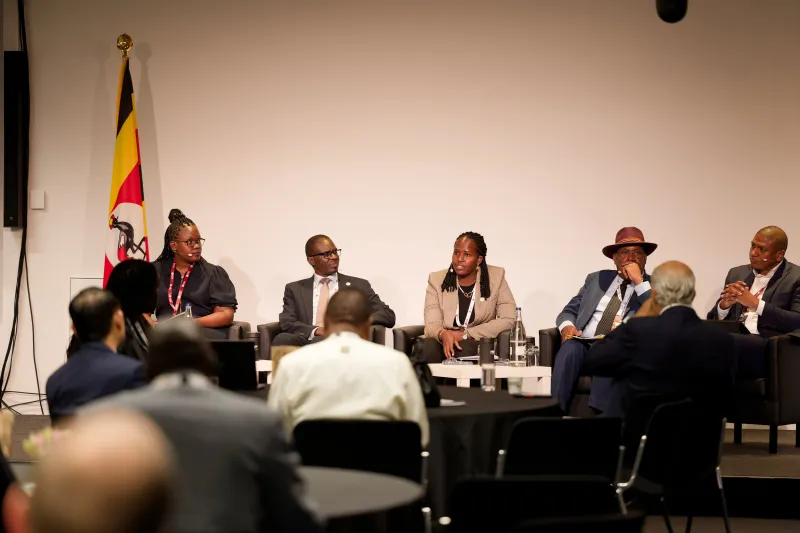




Uganda has presented its coffee industry transformation agenda to international traders, investors and industry leaders during the 17th Swiss Coffee Trade Association (SCTA) Forum and Dinner held in Montreux, Switzerland.
The country used its first-ever participation in the global coffee gathering to highlight progress in coffee production, quality improvement, traceability, sustainability and value addition, while seeking stronger partnerships and access to international markets.
The Ugandan delegation was led by Minister of State for Agriculture, Hon. Desire Muhooza, accompanied by the Permanent Secretary of the Ministry of Agriculture, Animal Industry and Fisheries (MAAIF), Rtd. Maj. Gen. David Kasura-Kyomukama, and Permanent Secretary of the Ministry of Foreign Affairs, Mr. Vincent Bagiire Waiswa.
The engagement was conducted under the theme, “Brewing Trust: Traceability, Sustainability and Value Addition in Uganda’s Coffee Journey.”
Addressing participants at the forum, Muhooza emphasised the importance of coffee to Uganda's economy, cultural identity and the livelihoods of millions of households.
She revealed that Uganda's coffee exports have increased significantly, rising from approximately 3.6 million bags in 2017 to more than 8.3 million bags in 2025.
The minister attributed the growth to government initiatives aimed at expanding production and supporting farmers. These include distributing coffee seedlings, providing agricultural training, subsidising fertilisers, strengthening extension services and implementing coffee rehabilitation and replanting programmes.
She also pointed to the expansion of coffee growing into Northern and Eastern Uganda, which has widened production opportunities and strengthened the country's agricultural base.
Beyond increasing production, Uganda is prioritising traceability and sustainable farming practices to maintain its competitiveness in international coffee markets.
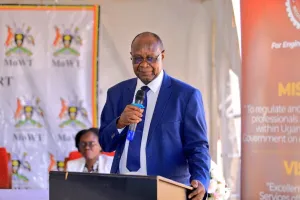
Rtd. Maj. Gen. Kasura-Kyomukama said the government is developing systems for farmer registration and mapping while working to meet international market requirements, including the European Union Deforestation Regulation (EUDR).
He emphasised that establishing the origin of coffee and demonstrating responsible production practices are essential to building confidence among international buyers.
“Trust begins with knowing where our coffee comes from and being able to demonstrate how it is produced,” he said.
The government is also promoting climate-resilient agricultural practices to support sustainable coffee production and protect the industry's long-term prospects.
Uganda also used the Swiss forum to attract investment into different segments of its coffee value chain, particularly processing, manufacturing, branding and export development.
Mr. Joseph Enyimu, Commissioner at the Ministry of Finance, Planning and Economic Development, highlighted the country's ambition to move beyond exporting raw coffee and retain more economic value through local processing and manufacturing.
He noted that coffee offers investment opportunities extending beyond farming to include product development, branding and international trade.
The government's strategy seeks to strengthen domestic value addition while creating opportunities for businesses and improving the economic benefits received by coffee-producing communities.
During the engagement, Uganda highlighted its distinctive coffee origins and quality, including Fine Robusta and specialty Arabica varieties.
Ugandan Fine Robusta was presented for its chocolate, caramel, nutty and spicy flavour characteristics, while specialty Arabica coffee from Bugisu, Mount Elgon and the Rwenzori Highlands was also showcased.
The presentation was intended to strengthen international recognition of Uganda as a source of distinctive coffee products with potential for premium markets.
Mr. Vincent Bagiire Waiswa said Uganda's participation in the SCTA Forum supports the country's Economic and Commercial Diplomacy agenda.
He emphasised the role of cooperation between government institutions in promoting Ugandan products, attracting foreign investment and expanding access to international markets.
The Montreux engagement offered Uganda an opportunity to interact with global coffee industry stakeholders, explore potential partnerships and reinforce confidence in the country's coffee sector.
Uganda's broader coffee transformation agenda remains focused on increasing production, improving quality, complying with international standards, expanding value addition and enhancing farmers' livelihoods.
Through these efforts, the government aims to strengthen Uganda's position as a recognised coffee-producing country and a competitive supplier in the global coffee market.





Sunrise reporter
Leave a Comment
Your email address will not be published.