



The Government of Uganda has signed the Civil Works Contract for the construction of the New Karuma Bridge along the Kampala–Gulu Highway, paving the way for the start of one of the country's key transport infrastructure projects.
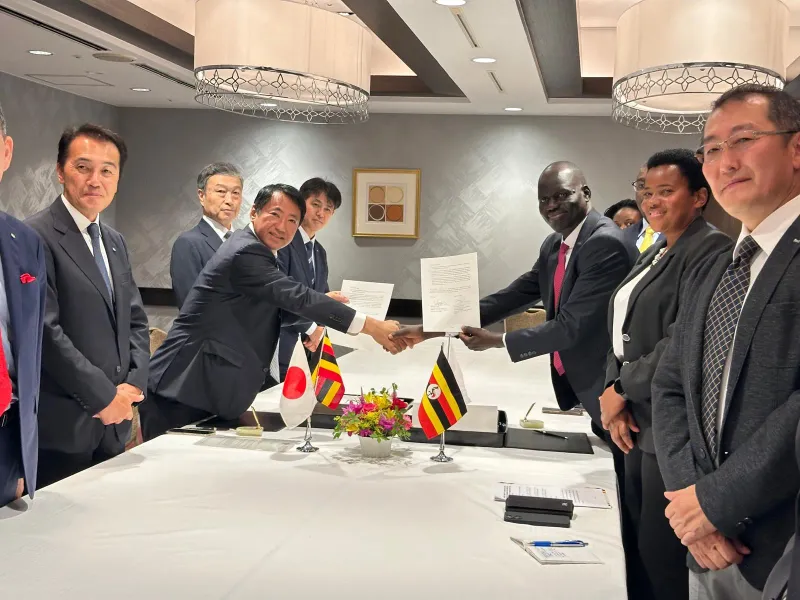
The contract was signed on Friday, 10 July 2026, during a ceremony held in Tokyo, Japan.
Eng. Isaac Wani, Commissioner for National Roads at the Ministry of Works and Transport, represented the Acting Permanent Secretary and signed on behalf of the Government of Uganda. The agreement was signed with Mr. Osamu Tanabe of Zenitaka Corporation, the Japanese construction firm that built the Jinja Nile Bridge.
The signing ceremony was witnessed by Solicitor General Pius Perry Biribonwoha and Uganda's Ambassador to Japan, H.E. Tophace Kaahwa.
Other members of the Ugandan delegation included Mr. Nurh Byarufu, Minister Counsellor at the Embassy of the Republic of Uganda in Japan, and Ms. Elizabeth Zungu Akimpye, Acting Head of Commercial Law.
According to the Ministry of Works and Transport, the project is supported by the Government of Japan through the Japan International Cooperation Agency (JICA) under the Official Development Assistance (ODA) Grant Aid Programme.
Speaking during the signing ceremony, Eng. Wani said the project will improve safety, connectivity, trade and regional integration along the Kampala–Gulu corridor.
The New Karuma Bridge will replace the existing bridge, which has been in service for more than 60 years. The new crossing is expected to strengthen transport along one of Uganda's most important road corridors linking Kampala to Northern Uganda and providing onward connectivity to South Sudan.
Project implementation is expected to begin with a groundbreaking ceremony in September 2026, while construction works are scheduled to commence in October 2026 under Zenitaka Corporation.
The signing of the contract marks another milestone in infrastructure cooperation between Uganda and Japan, reinforcing the long-standing partnership between the two countries in the development of transport infrastructure.





Sunrise reporter
Leave a Comment
Your email address will not be published.