



Uganda's mobile money sector is taking major steps to prevent loan defaults and restore trust in digital lending. For years, some borrowers who defaulted on digital loans exploited loopholes by switching networks or SIM cards, making it difficult for lenders to recover funds. Under the previous system, defaulters could divert incoming payments or even instruct friends and family to route money through different networks.
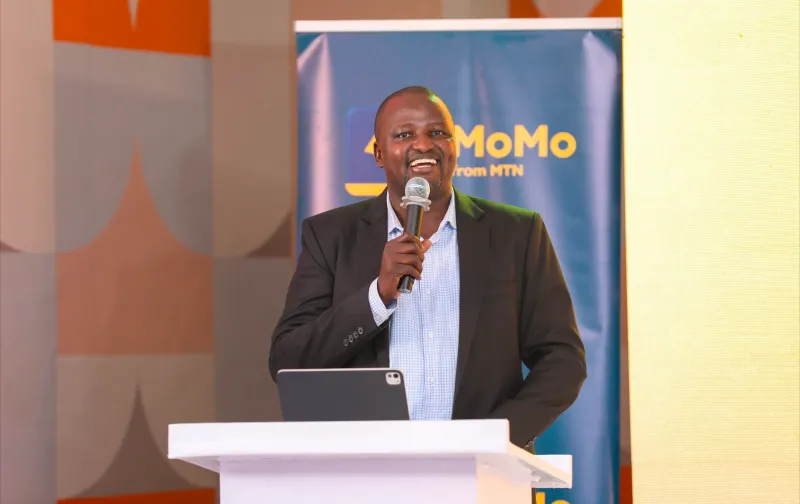
Now, Uganda's leading mobile money providers, MTN and Airtel Money, have partnered to share information on defaulters across networks. MTN Mobile Money Uganda Ltd Chief Executive Officer Richard Yego explains: "Any attempt to deposit money into a defaulting account will be automatically rejected, with both the sender and the recipient notified of the reason." This cross-network collaboration aims to restore discipline in digital lending, a sector that has faced challenges from high default rates, transaction costs, and regulatory hurdles.
Uganda has approximately 36 million active mobile money users out of 40 million mobile phone users nationwide, with MTN alone accounting for 14 million customers. The number of mobile borrowers has surged from 3.5 million to 8 million this year, largely driven by services such as MoMo Advance. Over the same period, the value of mobile loans doubled from 1.4 trillion to 2.8 trillion Ugandan Shillings, indicating a rapidly expanding digital lending market.
Despite this growth, challenges remain. High transaction costs, including a 0.5% tax on mobile money withdrawals introduced in 2018/2019, have reduced high-value transactions, particularly those above 500,000 Shillings. To address this, operators are proposing to retain the tax but distribute it across the payment value chain, which they believe will restore consumer choice while maintaining government revenue.
Yego highlights the need for more integration between banks and mobile money: "Out of MTN's 14 million mobile money users, only about 200,000 regularly transfer funds from their wallets to bank accounts, while about 800,000 move money from banks into mobile wallets." He sees the upcoming National Payments Switch, expected before the end of 2026, as a solution to reduce cross-network transaction costs and improve system efficiency.
Operators are also tackling operational challenges with third-party deposits. New fees have been introduced for depositing money into wallets not registered in the depositor's name, a change that helps agents cover costs and curbs money laundering by ensuring all transaction parties are traceable.
With these reforms, Uganda's mobile money sector aims to enhance trust, reduce loan defaults, and foster a more robust cashless economy. The tightening regulations are seen as a turning point for millions of Ugandans who rely on mobile money for borrowing, saving, and everyday transactions.
URN




The Sunrise Editor
Leave a Comment
Your email address will not be published.
1 Comment
You have complicated mobile money services all to your benefit by adding in irrelevant costs. The agents are not happy.