
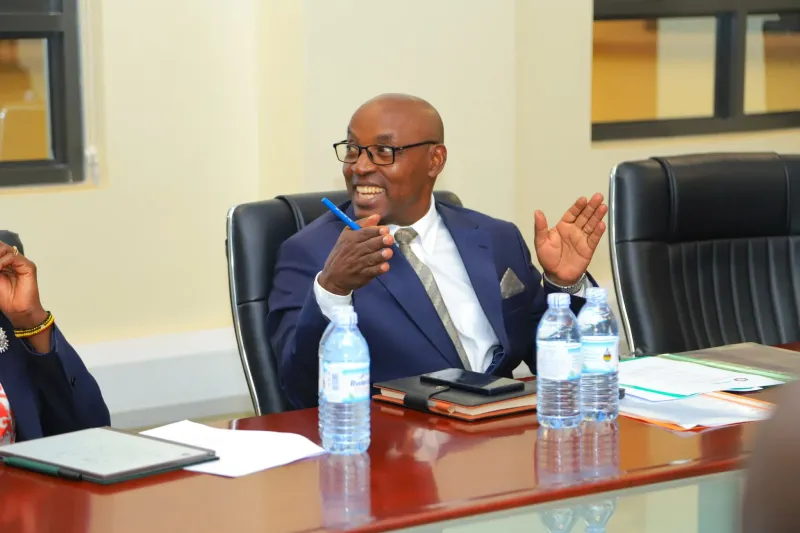

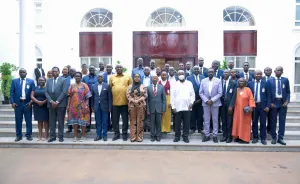
Uganda’s Chief Justice, Flavian Zeija, convened a high-level hybrid meeting at the Court of Appeal Building yesterday to review progress on the Justice 4 Her Project, a UGX 2.54 billion initiative aimed at strengthening the Judiciary’s handling of gender-based violence (GBV) cases and promoting survivor-centred justice.
The meeting brought together representatives from UN Women, Austrian Development Cooperation, and judicial officers from the participating courts to assess implementation progress and discuss acceleration plans.
The Justice 4 Her Project is being implemented in the High Court Circuits of Masaka and Gulu for a three-year period ending in November 2027, while the Nebbi High Court Circuit will implement the programme over a 12-month period ending in April 2026. The initiative seeks to improve identification, prioritization, and expeditious handling of GBV cases through institutional reforms, technology-driven case management, and survivor-centred approaches.
Gender-based violence remains a significant justice concern in Uganda, with stakeholders emphasizing the need for improved case tracking, reduced delays, and stronger survivor support within court processes. Judiciary officials say the project is intended to address these challenges through structured training, monitoring, and performance tracking mechanisms.
According to Chief Justice Zeija, the project agreement was signed on December 19, 2025, following internal reviews and incorporation of Judiciary recommendations. UGX 720.8 million was disbursed on February 5, 2026, to support implementation in Masaka and Gulu for the period February–June 2026.
Implementation activities began in November 2025 with training on GBV case identification, a case census, and monitoring missions in Masaka High Court and Sembabule Chief Magistrate’s Court. Following a Judiciary–UN Women technical meeting on January 28, 2026, an acceleration plan was adopted to ensure simultaneous rollout across all participating courts between January and May 2026.
Under the approved work plans, the Judicial Training Institute will train case management teams and court interpreters in GBV case handling and victim-centred support. The Registry of Communications and Public Relations will develop and disseminate information materials, conduct radio talk shows, and organize Court Open Days in Masaka and Gulu to raise public awareness. The Judiciary’s Finance and Administration Department will establish victim-friendly rooms, while the ICT Department will procure audio-visual equipment to support GBV hearings.
Regarding Nebbi, the Chief Justice indicated that disbursement of funds is pending the signing of an addendum to the project agreement, after which implementation funds will be channelled through the Judiciary.
Speaking during the meeting, Ms. Adekenin Ndieli, Deputy Country Representative of UN Women, commended the Judiciary’s leadership in advancing gender-responsive justice reforms. She emphasized the importance of structured reporting, performance tracking, and embedding reforms into regular court operations to ensure sustainability beyond pilot interventions. Dr. Katja Yvonne Kerschbaumer, Head of the Austrian Embassy/Development Cooperation, reaffirmed Austria’s commitment, noting EUR 3.5 million funding for the second phase of the project running from December 2024 to November 2027. She described GBV as both a human rights violation and a development challenge, highlighting the need to strengthen judicial responses, reduce delays, and improve case management.
The high-level review meeting demonstrated the Judiciary’s commitment to closely monitor project progress and ensure measurable results in strengthening the handling of GBV cases across Masaka, Gulu, and Nebbi, contributing to a more survivor-centred justice system in Uganda.




Sunrise reporter
Leave a Comment
Your email address will not be published.