
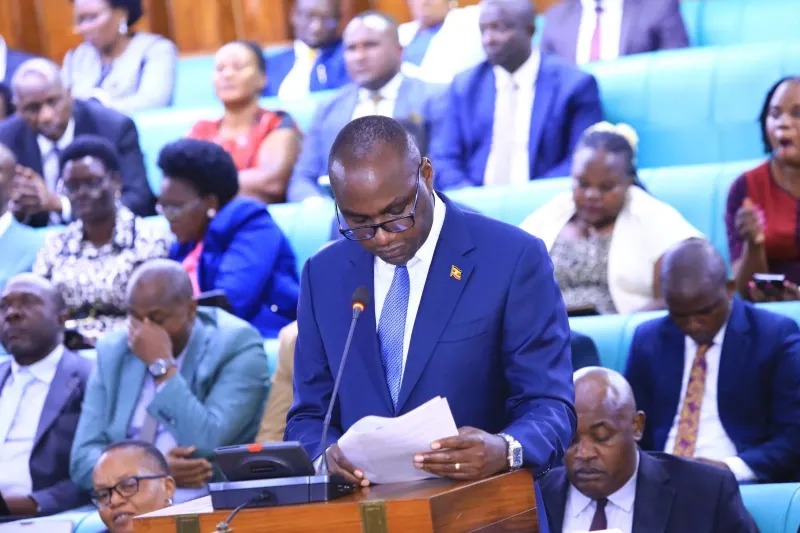



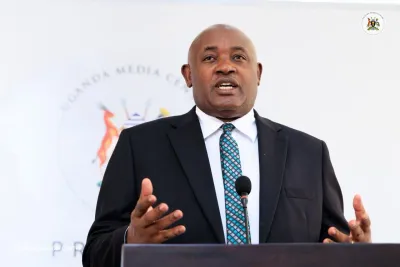
Finance Minister Henry Musasizi has assured Ugandans that the government is closely monitoring economic developments and remains confident the country will overcome the current pressure on the Uganda shilling.
Addressing Parliament on the state of Uganda’s economy, Musasizi said the government was taking steps to respond to the currency’s depreciation while protecting the country’s foreign-exchange reserves and maintaining economic stability.
The minister made the remarks while responding to concerns raised by Members of Parliament following his presentation on the factors behind the weakening shilling and the measures being taken by the government and the Bank of Uganda.
Musasizi called on political leaders to explain the government’s economic policies to the public and help citizens understand the measures being implemented to address the current challenges.
“Uganda is one of the countries that has managed the economic fundamentals sustainably over the years,” Musasizi told Parliament, noting that the economy had registered average growth of about 6 per cent over the previous decade.
He cautioned against proposals that could offer temporary relief from the depreciation but potentially expose the country to prolonged pressure on its foreign-exchange reserves.
The minister questioned whether sustained use of reserves to support the shilling would remain viable if the economic pressures continued for another year.
“Do you want an economy with no reserves? The answer is definitely no,” he said.
Musasizi disclosed that the government was already using gold as one of the assets supporting the country’s reserves under a policy approved by Cabinet and communicated to Parliament.
He said the management of foreign-exchange reserves required careful consideration because the funds serve as a buffer against external economic shocks and help the country meet its international obligations.
The minister’s remarks come as Uganda faces pressure on its currency amid increased demand for US dollars, higher international petroleum costs and uncertainty in global markets.
In his statement to Parliament, Musasizi said the Uganda shilling had weakened from approximately Shs3,604 per US dollar in March 2026 to around Shs4,500 by late October 2026.
He attributed the pressure partly to an imbalance between the demand for and supply of foreign currency. Demand for dollars to finance imports and meet external obligations has increased, while some sources of foreign-exchange earnings have faced constraints.
According to the minister, higher international petroleum prices and geopolitical tensions in the Middle East have increased fuel-related costs, including shipping and insurance. He also cited declining global prices for key agricultural exports, particularly coffee and cocoa, and reduced tourism receipts as factors affecting foreign-exchange inflows.
Musasizi said the government and the Bank of Uganda were responding through fiscal restraint and tighter monetary policy.
The central bank raised its Central Bank Rate from 9.75 per cent to 12 per cent in October 2026. It had also increased the cash reserve requirement for commercial banks from 11 per cent to 13.5 per cent, effective September 24, 2026. The measures are intended to manage liquidity, contain inflationary pressures and support confidence in the shilling.
The Bank of Uganda has indicated that it will continue managing liquidity and may intervene in the foreign-exchange market when necessary to address excessive volatility, in line with its mandate. Uganda remains committed to a market-determined exchange rate, which allows the currency to adjust to changing economic conditions.
On the fiscal side, Musasizi said the government would rationalise non-essential expenditure, including foreign and domestic travel, workshops, meetings and other administrative costs, while protecting critical public services and priority development investments.
He also urged households to prioritise essential spending, conserve fuel and energy, and make informed purchasing decisions. Businesses were encouraged to reduce waste, improve efficiency, source inputs locally where commercially viable and increase production for export markets.
The minister called on Members of Parliament to use the information provided by the government to explain the economic situation to their constituents and reassure the public that authorities were taking steps to address the challenges.
“We are working everything possible and we are confident we shall overcome this storm,” he said.
Deputy Speaker Thomas Tayebwa also called for cooperation among Parliament, government and other leaders in efforts to support economic stability.
Tayebwa said the minister could return to the House if further interventions became necessary and noted that the relevant parliamentary committee would continue engaging with the Ministry of Finance on economic developments.
In response, Musasizi committed to keeping Parliament informed about any additional measures the government might introduce as circumstances evolve.
He said the Ministry of Finance monitors economic performance daily, including market movements and changes in interest rates, to help guide its assessment of the situation.
“As I stated in the statement, if circumstances look that we make other interventions, we will definitely come back and inform the House,” Musasizi said.
The minister reiterated that the government would continue monitoring developments, communicating with Parliament and responding as necessary to safeguard economic stability.
For now, the government is urging Ugandans to remain calm and avoid panic buying of foreign currency or speculative transactions driven by rumours. Authorities are also encouraging households and businesses to manage costs carefully as they respond to changing economic conditions.
The impact of the measures will depend partly on developments in global energy markets, foreign-exchange demand, export earnings and other factors affecting Uganda’s external position.



Sunrise reporter
Leave a Comment
Your email address will not be published.