




The Ministry of Finance, Planning and Economic Development has unveiled plans to formalise 10,000 informal businesses across Uganda by the 2030/31 financial year under a government programme aimed at improving business operations, financial management and tax compliance.
The initiative, known as the Informality Management for Compliance and Revenue Mobilization (IMCORE) Programme, will provide participating businesses with free digital accounting tools, training, internet support and business development services to help them transition into the formal economy.
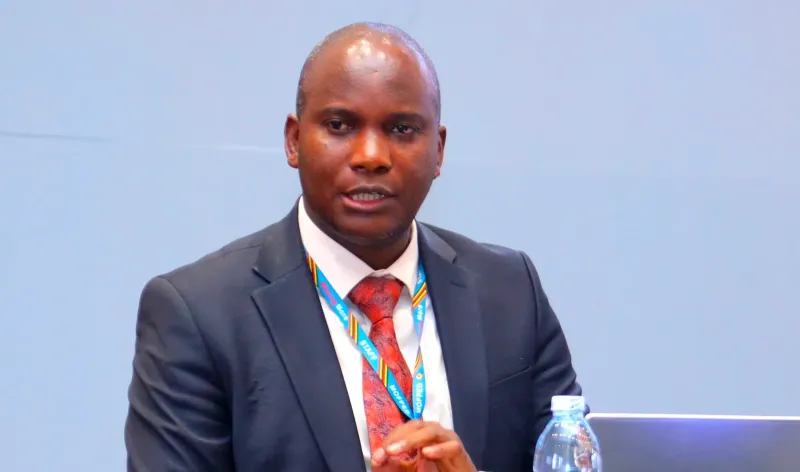
Presenting the programme's implementation strategy, IMCORE Team Lead Richard Mubiru said the government was adopting a support-before-enforcement approach to encourage informal businesses to improve their operations and embrace formalisation.
Under the programme, each participating enterprise will receive access to the free EasyAccounts digital accounting tool, alongside training and continued support from accounting and business development experts. Businesses will also receive tablets and internet support to facilitate digital record-keeping.
The programme will initially target 400 enterprises in Kampala during the 2026/27 financial year before expanding its coverage to other parts of the country.
According to the implementation plan, the target will increase to 1,600 enterprises in Greater Kampala in FY2027/28, 3,600 in FY2028/29 and 6,600 in FY2029/30, before reaching 10,000 enterprises nationally by FY2030/31.
Mubiru also outlined a proposed seed capital incentive of Shs 5 million for businesses graduating under the first and second programme cohorts. The proposed arrangement includes a 5 per cent repayment requirement and a three-year grace period, although the incentive remains subject to approval by the Programme Steering Committee.
The programme is being implemented in partnership with the United Nations Conference on Trade and Development (UNCTAD) to address some of the challenges preventing small businesses from entering the formal economy.
These challenges include limited accounting skills, poor financial record-keeping and inadequate access to business development services.
The initiative comes as Uganda continues to grapple with a large informal economy. According to the Ministry of Finance, more than 1.8 million micro, small and medium enterprises operate in the country, with many run by women, young people and refugees. The ministry has previously reported that these enterprises contribute approximately 54.5 per cent of Uganda's Gross Domestic Product (GDP) and account for 92 per cent of employment.
The government believes improving financial management and record-keeping can help businesses understand their financial performance, strengthen their operations and improve their readiness to access formal business opportunities.
The IMCORE Programme will cover several economic sectors, including agriculture and agribusiness, printing and graphic arts, mining and mineral value addition, manufacturing, cottage industries, retail and wholesale trade.
It will also prioritise women-led and youth-led enterprises, with target groups including farmers' cooperatives, produce dealers, artisans, metal fabricators, market vendors, hardware dealers, SACCOs and youth investment clubs.
To improve participation, the Ministry of Finance is working with business and trade associations to mobilise eligible enterprises through their existing membership networks.
The associations will support business mobilisation, onboarding and peer-to-peer learning, while selected association leaders will serve as digital accounting champions to guide members in adopting the EasyAccounts platform.
The programme builds on the government's efforts to use digital technology to improve financial management among small businesses.
In May 2026, the Ministry of Finance launched the simplified E-Accounting tool developed with technical assistance from UNCTAD under the IMCORE Programme. The ministry reported that 30 informal enterprises had participated in the pilot phase, while more than 490 small and medium-sized enterprises had tried the platform and 241 had registered accounts.
Through IMCORE, the government intends to make it easier for informal enterprises to improve their financial management, access business support and gradually integrate into Uganda's formal economy.






Sunrise reporter
Leave a Comment
Your email address will not be published.