
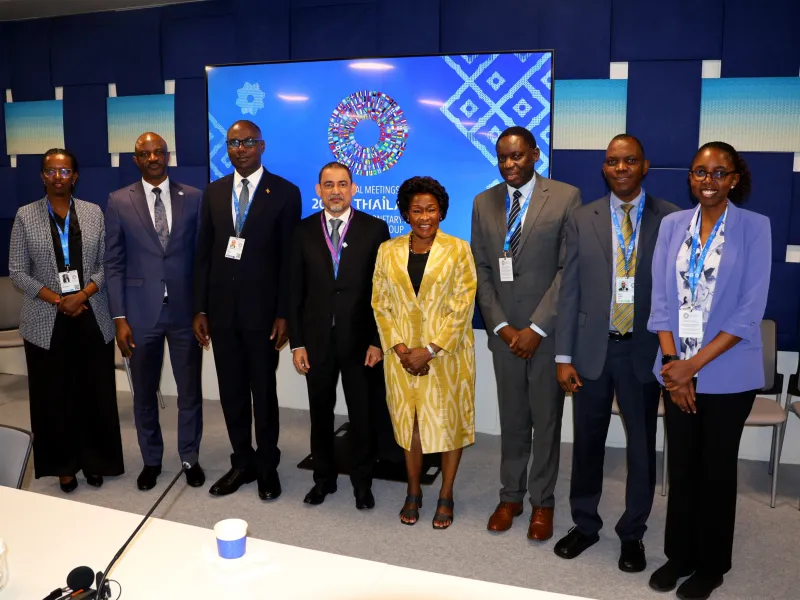
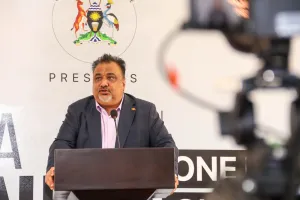


Uganda’s Finance Minister, Henry Musasizi, has met Zeine Zeidane, Director of the African Department at the International Monetary Fund (IMF), to discuss the country’s new Extended Credit Facility (ECF) programme during the ongoing 2026 IMF-World Bank Annual Meetings in Bangkok, Thailand.
The discussions focused on Uganda’s readiness to implement the new programme based on the agreed prior actions. Musasizi said the country needs to secure more concessional financing, noting that the programme is expected to strengthen confidence in Uganda’s economic policies and improve its credit rating.
Musasizi, accompanied by the Permanent Secretary and Secretary to the Treasury, Ramathan Ggoobi, and Bank of Uganda Governor Michael Atingi-Ego, addressed several issues raised by the IMF Director. These included fiscal consolidation, monetary policy, domestic revenue mobilisation, tax policy measures, expenditure and budgetary discipline, supplementary budgets, expenditure composition, governance and structural reforms.
Ggoobi said the government was committed to implementing the necessary reforms to increase Uganda’s tax-to-GDP ratio from the current 14 per cent to at least 20 per cent. He added that any necessary tax measures would be incorporated into the Budget Framework Paper for the 2027/2028 financial year.
The discussions also extended to the IMF Africa Group 3 Constituency meeting, in which Uganda participates. Delegates considered global economic challenges, debt and fiscal adjustment, exchange rate flexibility, subsidy reforms and ways to strengthen Africa’s voice in global financial governance.
During the engagements, Zeidane urged policymakers to protect vulnerable households, maintain economic stability and create conditions that support investment and job creation.
He emphasised the importance of sustaining economic growth alongside reforms designed to make economies more resilient to future shocks.
The agreed priority areas at the constituency meeting included reliable electricity, improved digital connectivity, stronger skills development, a predictable business environment, private sector growth and job creation.
The discussions come as Uganda seeks to strengthen its economic policy framework, improve domestic revenue mobilisation and secure concessional financing to support its development priorities.


Sunrise reporter
Leave a Comment
Your email address will not be published.