
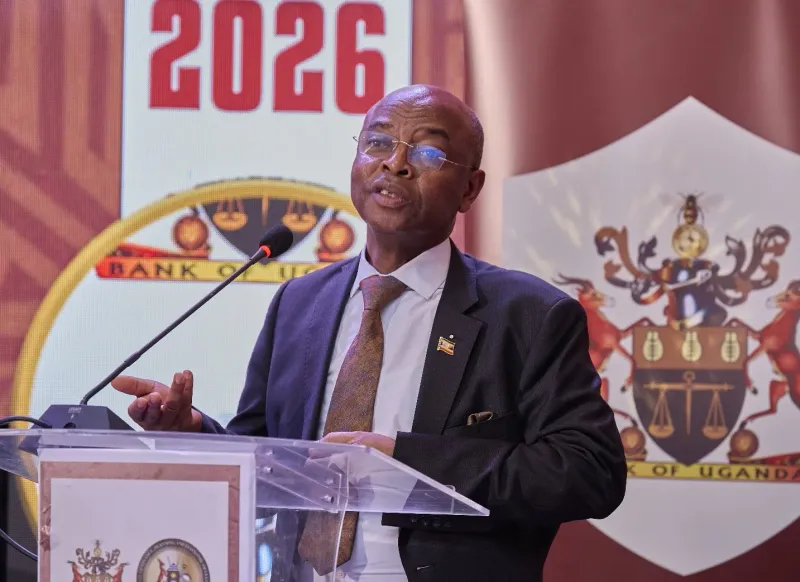




Uganda is intensifying efforts to make financial services more affordable, accessible and useful to households and businesses, with the Government and Bank of Uganda calling for greater financial literacy, savings and responsible use of financial products to accelerate economic transformation.
The call was made during the Financial Inclusion and Financial Literacy Forum 2026, held on Thursday, at Four Points by Sheraton Hotel in Kampala. The forum was organised by the Bank of Uganda in partnership with the Ministry of Finance, Planning and Economic Development under the theme of accelerating inclusivity and financial literacy in support of the Tenfold Growth Strategy.
Deputy Governor of the Bank of Uganda, Prof Augustus Nuwagaba, challenged financial inclusion stakeholders to assess whether access to financial services was translating into meaningful economic benefits for Ugandans.
He said the availability of financial services alone was insufficient if individuals and businesses could not afford them, understand how they work or find products suited to their needs.
According to Nuwagaba, many Ugandans primarily use financial accounts to receive and withdraw money, while the uptake of savings, insurance, pension and investment products remains limited.
He emphasised the need to move beyond access to financial services towards sustained usage, responsible financial decision-making and improved livelihoods.
He said meaningful financial inclusion should enable businesses to invest, households to withstand unexpected financial shocks and underserved communities to improve their economic prospects.
Nuwagaba also called for stronger collaboration among financial sector stakeholders to address barriers including high transaction costs, limited access to digital devices, inadequate financial and digital literacy and low public trust in financial services.
Speaking on behalf of Finance Minister Hon. Henry Musasizi, Ministry of Finance Director of Economic Affairs Kagwa Moses reaffirmed the Government's commitment to making financial inclusion and financial literacy central to Uganda's economic transformation agenda.
He said an inclusive, safe and efficient financial system was essential for implementing the Fourth National Development Plan (NDP IV), the Tenfold Growth Strategy and the National Resistance Movement Manifesto.
The minister highlighted several government interventions aimed at expanding access to affordable financing, supporting enterprises and increasing household incomes.
These include the Parish Development Model, Emyooga, Operation Wealth Creation, the Agricultural Credit Facility, the Small Business Fund, women's enterprise support programmes and the recapitalisation of Uganda Development Bank.
The initiatives are intended to strengthen businesses, support productive investment, promote value addition, create employment opportunities and improve household incomes.
Musasizi encouraged Ugandans to use available financial opportunities productively to build sustainable incomes and wealth. He also emphasised the importance of financial literacy in helping people avoid financial risks associated with digital fraud, excessive borrowing and the growing use of mobile and online financial services.
The Government is also pursuing reforms to strengthen the regulatory environment for Savings and Credit Cooperative Organisations (SACCOs), Tier 4 microfinance institutions and financial technology companies.
The reforms place greater emphasis on consumer protection, cybersecurity and combating financial crime to ensure that the expansion of financial services does not expose customers to unnecessary risks.
Other measures highlighted include zero stamp duty on loans and tax reforms intended to reduce the cost of credit. The planned National Payment Switch is also expected to improve interoperability between payment service providers, facilitate real-time transactions and reduce transaction costs.
The Finance Minister further stressed that increased domestic savings would be critical to mobilising resources for Uganda's development priorities.
He said financial inclusion should create practical economic opportunities for ordinary Ugandans, including farmers, market vendors, boda boda riders, entrepreneurs and small business owners.
The two institutions also emphasised the importance of connecting financial inclusion with financial health and resilience rather than measuring progress solely through the number of people with access to bank accounts or other financial services.
The renewed focus comes as Uganda pursues its ambition of building a US$500 billion economy by 2040 through stronger private-sector growth, increased investment, domestic resource mobilisation and regional cooperation within the East African Community.
Uganda's financial inclusion agenda therefore faces the task of ensuring that more citizens can not only access financial services but also use them safely and effectively to save, invest, manage risks and improve their economic well-being.
The message from the 2026 forum was that financial inclusion must deliver measurable improvements in people's lives, strengthen household resilience and enable businesses to grow if it is to contribute meaningfully to Uganda's economic transformation.






Paul Rubongyera
Leave a Comment
Your email address will not be published.