


Government
Deputy IGG Urges Cabinet Ministers to Strengthen Oversight but Avoid Operational Interference
Cabinet Ministers have been urged to strengthen their oversight role to ensure accountability and the effective implementation of government programmes and institutions, while deliberately avoiding involvement in day-to-day operational processes.
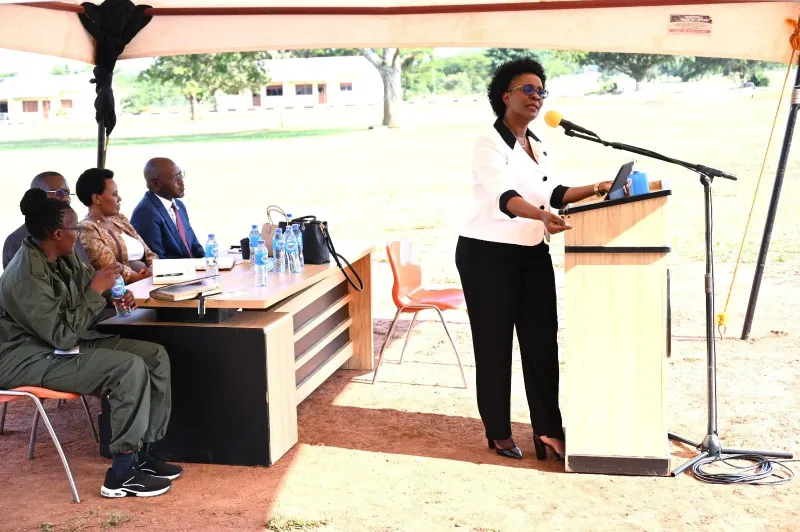
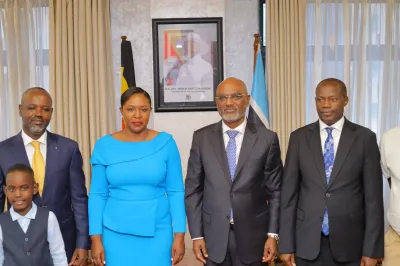
The guidance was issued by the Deputy Inspector General of Government (DIGG), Mrs. Anne Twino, during a presentation to newly appointed Cabinet Ministers at their induction retreat currently underway in Kyankwanzi District.
The retreat is taking place at Nali Kyankwanzi, where discussions are centered on improving governance, accountability, and public service delivery across government institutions.
“Eyes-on, Hands-off” Principle Emphasized
Mrs. Twino urged ministers to embrace the “Eyes-on, Hands-off” principle, which requires political leaders to supervise government programmes without interfering in administrative execution.
“The DIGG made these remarks while delivering a presentation to newly appointed Cabinet Ministers during their induction retreat.”
She warned that any interference in operational processes risks undermining established systems and could open doors to corruption.
“The law assigns the responsibility of recruitment processes, procurement award decisions, and other day-to-day administrative functions to accounting officers. Where a Minister identifies wrongdoing, the appropriate action is to refer the matter to the competent authority rather than assume functions assigned to others,” she said.
Strengthening Oversight and Institutional Integrity
Mrs. Twino, who represents the Inspectorate of Government, emphasized that oversight and adherence to institutional processes must work together rather than conflict.
“Strong oversight and respect for institutional processes must go hand in hand. A minister who remains independent retains the moral authority necessary to supervise others and demand accountability,” she said.
She cautioned that weakening institutional safeguards could reverse years of progress in strengthening governance systems.
She further noted that corruption thrives where systems and accountability mechanisms are weak or compromised.
Ministers Urged to Monitor Service Delivery
Beyond oversight, Mrs. Twino encouraged Ministers to take an active role in monitoring government programmes through site visits and field supervision.
She said political leadership becomes meaningful when it results in visible improvements in citizens’ lives.
“Political leadership becomes more meaningful when it translates into visible improvements in the lives of people. Ministers must ask questions. They must challenge poor performance. They must insist on results,” Mrs. Twino said.
Leadership Focused on Citizens’ Needs
She reminded Ministers that the public judges government performance based on tangible results rather than promises.
“In essence, effective oversight serves as a spotlight, illuminating gaps and weaknesses in the implementation of government programmes.”
Mrs. Twino called on leaders to prioritize public interest over personal ambition and to remain committed to transparency, accountability, and service delivery.
She was accompanied by Director Projects Twine Annet, Director Education Research and Advocacy Gerald Gwaira, and Director Ombudsman Affairs Savio Kakooza.






Roswell Mbabazi
Leave a Comment
Your email address will not be published.