
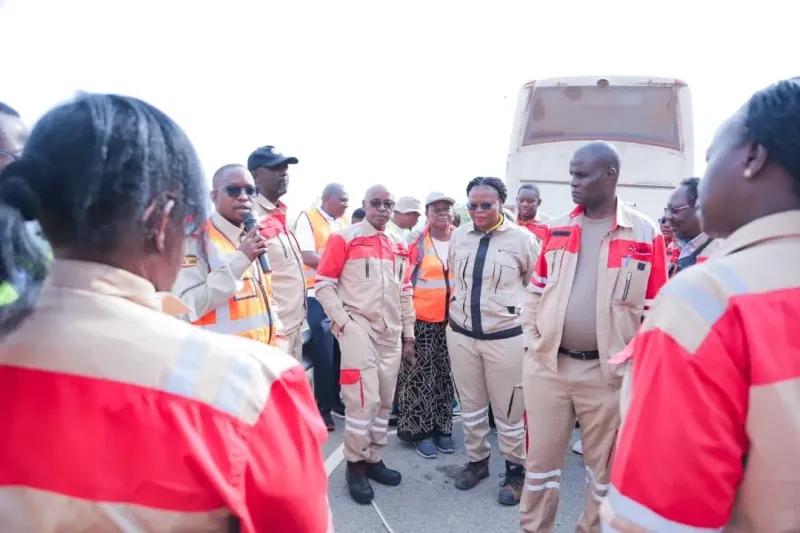
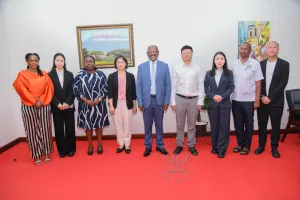

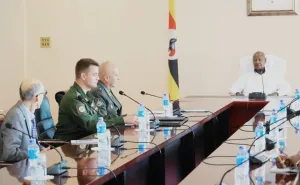
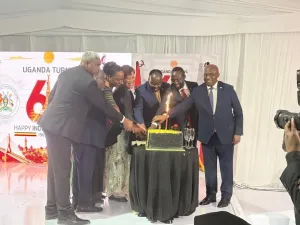
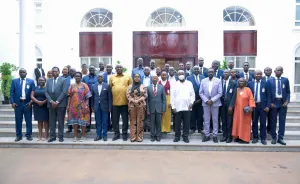
The Judiciary of Uganda has concluded its four-day field study visit to the country’s oil and gas region with a tour of the Tilenga Project in Buliisa District, where judicial officers gained firsthand insight into upstream oil production, environmental restoration, and community resettlement processes.
The latest visit, which marked Day IV of the Judiciary’s field study, was organised by the Judicial Training Institute (JTI) in partnership with the Bank of Uganda (BoU), Uganda Revenue Authority (URA), Petroleum Authority of Uganda (PAU), and Uganda National Oil Company (UNOC).
The study visit brought together judicial officers and officials from partner institutions to deepen their understanding of Uganda’s petroleum sector and its legal, economic, environmental, and social dimensions.
During the Tilenga Project tour, participants received a technical briefing at TotalEnergies EP Uganda’s offices in Buliisa before visiting key project areas. They learned that Tilenga is Uganda’s largest upstream oil development project, consisting of six production fields and 34 well pads located across Buliisa and Nwoya districts.
The delegation toured major facilities linked to petroleum development, including the Contractor Support Base (CSB), Central Processing Facility (CPF), Drilling Support Base (DSB), solar power plant, and Construction Camp Area (CCA).
The judicial officers also visited a replacement house constructed for a Project Affected Person (PAP), giving them practical understanding of land acquisition, compensation, and resettlement processes associated with the project.
The field study included visits to rehabilitated and operational facilities such as the JBR2 exploration well, rehabilitated trunk line sections, JBR5 well pad, and the Process Support Node (PSN), where participants learned about crude oil production, gathering, transportation, and processing.
The Chief Justice, Justice Dr Flavian Zeija, said exposing judicial officers to the realities of Uganda’s oil and gas industry would help them develop a better understanding of petroleum-related disputes and make informed judicial decisions.
The Tilenga tour followed Day III of the study visit, during which the Judiciary delegation visited key facilities in the Kingfisher Development Area, including Kabalega International Airport, Kingfisher Escarpment Viewpoint, Well Pad 1, and the Kingfisher Oil Waste Management Facility.
During the Kingfisher visit, officials explained how different petroleum facilities work together, from drilling and production to processing, waste management, and crude oil transportation.
At Kabalega International Airport, the delegation was informed that the facility had reached 98.8 per cent completion and was developed to support Uganda’s emerging petroleum industry, including the transportation of oversized equipment required for oil and gas operations.
Justice Zeija also said the visit helped address public misconceptions about Uganda’s oil reserves, noting that the progress witnessed at project sites showed significant ongoing activity toward commercial oil production.
He further commended efforts to promote local content in the oil and gas sector, highlighting the growing participation of Ugandans in specialised technical roles.
The Judiciary’s field study visit highlights the importance of collaboration between government institutions and sector players as Uganda continues preparations toward First Oil while addressing legal, environmental, and social issues linked to petroleum development.


Sunrise reporter
Leave a Comment
Your email address will not be published.