

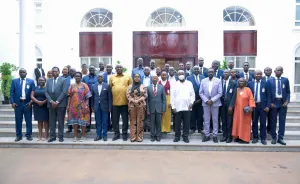
The Government of Uganda has launched an emergency food relief programme aimed at supporting vulnerable households in the Karamoja sub-region following a prolonged dry spell that disrupted agricultural production and increased food insecurity.
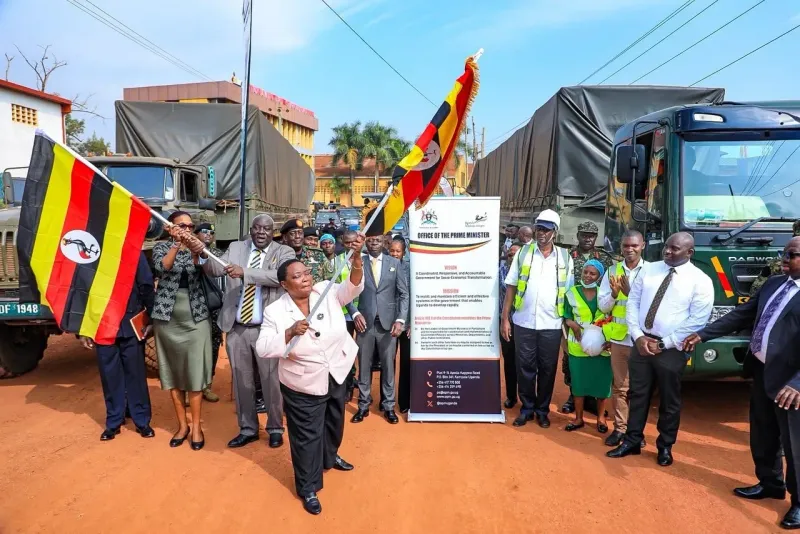
Prime Minister Robinah Nabbanja today flagged off the relief food distribution exercise at the National Enterprise Corporation (NEC) headquarters in Bugolobi, Kampala. The initiative follows a directive from President Yoweri Kaguta Museveni to provide support to communities affected by the difficult food situation in Karamoja.
The government plans to distribute 9,419,610 kilograms of relief food, consisting of maize flour and dry beans, to 313,987 households across 480 parishes in the nine districts of Karamoja.
Speaking during the flag-off, Rt. Hon. Prime Minister Robinah Nabbanja reaffirmed the Government's commitment to supporting the people of Karamoja.
"The Government stands with the people of Karamoja and will continue to mobilise the necessary resources to support their recovery and build resilience against future shocks," she said.
Minister for Relief, Disaster Preparedness and Refugees in the Office of the Prime Minister, Sam Engola, said the first consignment is being supplied by the National Enterprise Corporation (NEC) as part of the government’s response to the growing demand for food assistance in the region.
According to Engola, each beneficiary household will receive 20 kilograms of posho (maize flour) and 10 kilograms of beans monthly for two months under the relief programme.
The distribution exercise is being coordinated by the Office of the Prime Minister in partnership with NEC, the Uganda Peoples' Defence Forces (UPDF), Uganda Prisons Service, Uganda Police Force, and local governments to ensure the relief reaches the targeted beneficiaries.
The government has also warned officials and personnel involved in transportation and distribution against corruption and misuse of relief supplies. Authorities urged local leaders to actively participate in mobilising communities and supervising the process to ensure transparency.
Meanwhile, the government says it is pursuing long-term measures to address recurring food challenges in Karamoja. These include investments in grain storage facilities and irrigation dams to support small-scale farmers and promote commercial agriculture in the region.
Prime Minister Nabbanja said development and humanitarian partners are also being mobilised to complement government efforts in responding to the situation.
The food relief programme comes as Karamoja continues to face challenges linked to climate conditions, reduced agricultural production, and declining household food reserves.

Sunrise reporter
Leave a Comment
Your email address will not be published.