
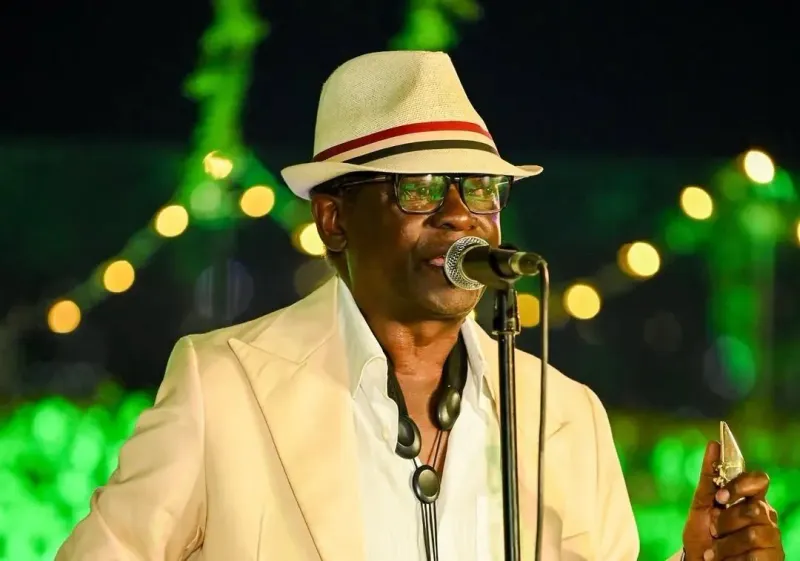




Veteran Ugandan musician and Afrigo Band founder Moses Matovu has died at the age of 77 after being attacked in Kibuli, Kampala, in the early hours of Thursday, September 24.
Police have opened a suspected murder investigation following the death of the celebrated singer, saxophonist, composer and bandleader, who was one of the most enduring figures in Uganda's live music history. Kampala Metropolitan Police spokesperson Rachael Kawala said Kabalagala Police had registered a case of suspected murder after Matovu was attacked at Kibuli Market Zone B in Makindye Division. He was rushed to Kibuli Hospital, where he later succumbed to his injuries. Police said a task team was at the scene investigating the circumstances of the attack and working to identify and apprehend the suspect.
According to preliminary police investigations, Matovu went to the residence of his girlfriend at about 5:30 a.m. on Thursday. Police said that as Matovu and the woman were leaving the residence, they were confronted by a male suspect who had allegedly previously been in a relationship with the same woman.
Police said the woman who was with Matovu has been arrested and remains in custody as detectives investigate the incident. Preliminary information suggests the confrontation may have involved a physical altercation, although police said the exact circumstances leading to Matovu’s injuries and death have not yet been fully established.
Matovu who sustained serious injuries was rushed to Kibuli Hospital by a boda boda rider, but later succumbed to his injuries.
The attack came only hours after Matovu had performed at the Sheraton Hotel in Kampala on Wednesday evening. Reports also indicate that he had played at a farewell event for the outgoing executive director of the Petroleum Authority of Uganda. Tony Otoa of the Uganda National Oil Company was among those who interacted with him during the event and later paid tribute to the musician.
Matovu was born on June 19, 1949, in Kawempe, Kampala, to Abdallah Bukenya and Solome Nakitto. His musical journey began when he was a child. He sang in the Namirembe Cathedral choir before entering professional music in the 1960s. He initially performed with the Thunderbirds Band, later joined the Police Band and then became part of Cranes Band.
Before committing himself fully to music, Matovu was also a talented footballer. He played for teams including Nakivubo Boys, Lint Marketing Board, Police FC, Express FC and Fiat FC. He eventually left competitive football in 1972 to concentrate on music, a decision that would lead to one of the longest careers in Uganda's entertainment industry.
Following the collapse of Cranes Band, Matovu and fellow musicians established Afrigo Band in 1975. The group went on to become one of Uganda's longest-running and most influential live bands, surviving political upheavals, changes in musical tastes and the departure or death of many of its original members. Matovu remained at the centre of the group for five decades as its leader, saxophonist, vocalist and composer.
Afrigo's music drew from Congolese rumba, jazz, funk and Ugandan musical traditions. Much of the band's repertoire was performed in Luganda, connecting its music to everyday Ugandan life while its live performances and international tours introduced Afrigo to audiences outside the country. Over the years, the band became a training ground for generations of Ugandan musicians, including performers such as Joanita Kawalya, Rachel Magoola, Herman Ssewanyana, Frank Mbalire and Sammy Kasule.
Matovu was also a songwriter and composer. His work included songs such as "Nantongo", "Silina Anantwaala", "Teri Mubi", "Emiziro", "Genda Osome" and "Afrigo Batuuse". He had begun recording music before Afrigo was established, with "Jimmy Saasira" and "Emiziro" among the early recordings associated with his career.
Afrigo celebrated its 50th anniversary in 2025, marking five decades of continuous musical history. By then, Matovu had become one of the few Ugandan musicians whose careers stretched across virtually every major era of the country's modern popular-music industry. He continued performing even in his seventies and remained closely involved in mentoring younger musicians and preserving the live-band tradition.
Matovu's death therefore represents more than the loss of a veteran performer. It marks the death of one of the principal figures responsible for keeping Uganda's live-band tradition alive across generations. For more than half a century, his saxophone, voice, songwriting and leadership were closely associated with Afrigo's identity.
His final performance at the Sheraton Hotel on Wednesday night has now become the last public appearance of a musician whose career began in the 1960s and whose name became inseparable from Afrigo Band.
As investigations continue, police have appealed to the public to remain calm and allow investigators to conduct their work without interference assuring the public that all necessary steps are being taken to apprehend the suspect and establish the facts of the matter.





Marlene Luwedde
Leave a Comment
Your email address will not be published.