



Uganda will host the 2026 National HIV and AIDS Symposium from November 16 to 18 at Mbarara University of Science and Technology (MUST), bringing together government officials, researchers, scientists, development partners and communities to assess progress in the fight against HIV and AIDS.
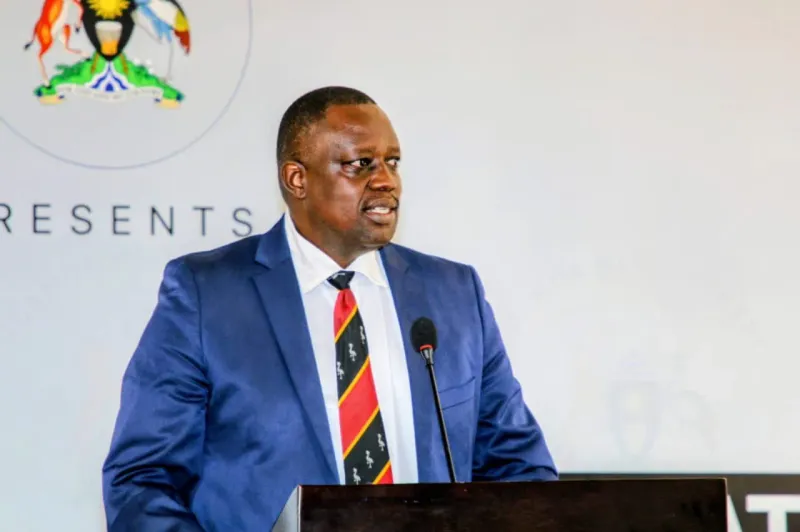
The announcement was made by Mr Etii Tom, Acting Director General, during a media briefing at the Uganda Media Centre, where he highlighted the country's achievements, remaining challenges and strategies towards ending AIDS as a public health threat by 2030.
Organised by the Uganda AIDS Commission in partnership with MUST and other HIV response partners, the symposium will run under the theme, “Sustainable Interventions to End AIDS as a Public Health Threat by 2030.”
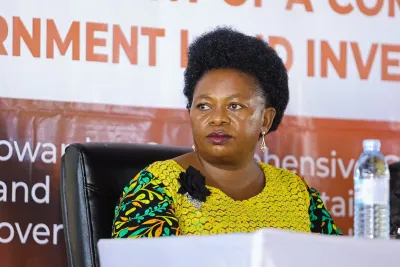
The Minister for the Presidency, Hon. Milly Babirye Babalanda, will attend as Chief Guest, while MUST Vice Chancellor, Prof. Pauline Byakika-Kibwika, will deliver the keynote address.
The three-day gathering is expected to provide a platform for stakeholders to review Uganda's national HIV response, identify implementation gaps and strengthen collaboration to accelerate progress towards the 2030 target.
Speaking at the briefing, Etii attributed Uganda's achievements in combating HIV and AIDS to committed government leadership and a coordinated multisectoral approach spearheaded by President Yoweri Kaguta Museveni.
Uganda's HIV prevalence currently stands at 5.9 per cent, compared to approximately 18 per cent during the early years of the epidemic.
Figures presented at the briefing indicate that 85.3 per cent of people living with HIV aged 15 years and above know their HIV status. Of those who know their status, 99.1 per cent are receiving treatment, while 96.5 per cent of those on treatment have achieved viral suppression.
According to Etii, these achievements demonstrate progress in expanding HIV testing, treatment and care services, enabling people living with HIV to enjoy longer, healthier and more productive lives.
However, he cautioned that significant challenges remain, particularly in urban areas where HIV prevalence is higher than the national average.
Cities highlighted include Fort Portal, with an HIV prevalence of 16.6 per cent, Soroti at 12.3 per cent, Lira at 11.5 per cent and Mbarara, among others.
Adolescent girls and young women also remain particularly vulnerable to HIV infection, with reported prevalence almost four times that of their male counterparts.
The figures further indicate that Uganda recorded approximately 34,400 new HIV infections by December 2025. Young people aged between 15 and 24 accounted for about 38 per cent of these infections, with young women representing the majority of new infections in this age group.
To address these challenges, Uganda continues to implement the Presidential Fast Track Initiative to End AIDS as a Public Health Threat by 2030, launched by President Museveni in June 2017.
The initiative is guided by five strategic pillars, including engaging men in HIV prevention to reduce new infections, particularly among adolescent girls and young women; accelerating HIV testing and treatment to achieve the global 95-95-95 targets; and consolidating progress towards eliminating mother-to-child transmission of HIV.
The other pillars focus on ensuring financial sustainability of the national HIV and AIDS response and strengthening institutional effectiveness and coordination across the multisectoral HIV response.
Etii emphasised that effective implementation of these five pillars remains central to Uganda's ambition of ending AIDS as a public health threat by 2030.
The 2026 National AIDS Symposium will feature several major activities, including the Annual Joint AIDS Review, a financing dialogue, a scientific conference and a commemoration of the late Philly Bongole Lutaaya.
The Annual Joint AIDS Review will evaluate the performance of the National HIV and AIDS Strategic Plan, examining achievements, implementation gaps, challenges and recommendations across prevention, care, treatment, social support and health systems strengthening.
The financing dialogue will bring together government institutions, development partners, communities and other stakeholders to explore sustainable financing mechanisms for Uganda's HIV response amid a changing funding environment.
Meanwhile, the scientific conference will give researchers and scientists from across Uganda an opportunity to present research findings, share evidence and discuss innovations that can guide HIV programming and policy decisions.
The symposium will also honour the legacy of the late Philly Bongole Lutaaya, whose contribution to HIV awareness and the fight against stigma remains an important part of Uganda's response to the epidemic.
The gathering is expected to strengthen cooperation between government institutions, academia, researchers, development partners and communities while identifying sustainable approaches to maintaining progress in HIV prevention, testing, treatment and care.
As Uganda works towards the 2030 target, prevention, early diagnosis, access to treatment, community involvement and sustainable financing remain central to the country's efforts to end AIDS as a public health threat.






Sunrise reporter
Leave a Comment
Your email address will not be published.