
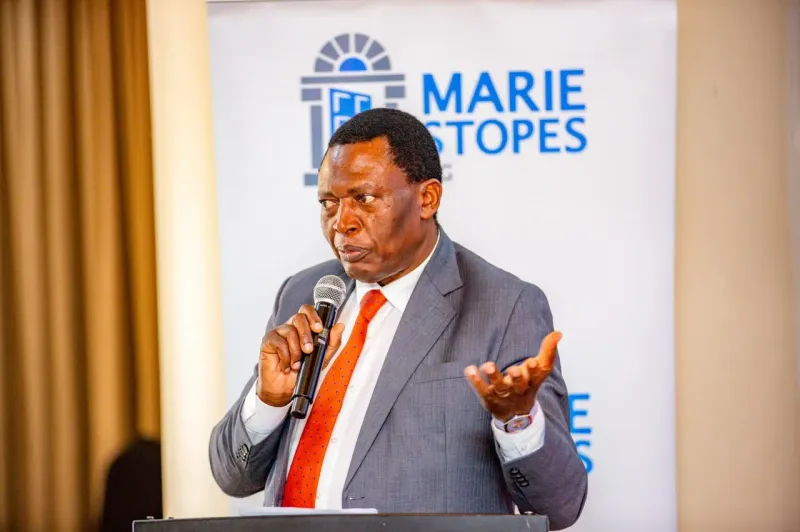





The Ministry of Health has convened a high-level policy dialogue in Kampala to examine sustainable financing for sexual and reproductive health, family planning and primary health care amid changes in Uganda’s health financing landscape.
The half-day dialogue, held at the Sheraton Hotel, brought together senior government officials, development partners and other key stakeholders to discuss how Uganda can strengthen financing for essential health services.
The meeting was convened by the Ministry of Health in collaboration with the Ministry of Finance, Planning and Economic Development, with support from Marie Stopes Uganda.
According to the Ministry of Health, discussions are focusing on the implications of declining external assistance and the need to identify more sustainable approaches to financing health priorities.
Key areas under discussion include strengthening domestic resource mobilisation, exploring innovative financing mechanisms, improving coordination among stakeholders and ensuring that health investments remain aligned with Uganda’s national priorities.
The Director General of Health Services, Prof. Charles Olaro, delivered the keynote address, emphasizing the importance of sustainable and coordinated financing to protect essential health services and strengthen Uganda’s health system.
The dialogue comes as Uganda continues to examine ways of reducing vulnerabilities associated with fragmented and unpredictable health financing.
A 2025 Ministry of Health national dialogue on health financing identified limited fiscal space, high household out-of-pocket expenditure, low insurance coverage and continued reliance on donor funding among challenges affecting Uganda’s health financing system.
The Ministry has also noted in its health financing documents that donor support has been declining and remains fragmented, while significant portions of donor resources have historically been channelled outside government budgets.
Family planning is a key component of the financing discussions.
Uganda’s Ministry of Health published the Third National Family Planning Costed Implementation Plan (FP-CIP III) 2025/26–2029/30 in December 2025. The plan places emphasis on integrating family planning into routine health services, national development planning and government accountability systems while moving towards more predictable domestic financing.
The financing of family planning is particularly important because sustainable access requires more than the availability of services at health facilities. It also depends on reliable financing for commodities, health workers, service delivery, supply chains and community-level interventions.
The Ministry’s 2024 investment case for private-sector engagement in family planning similarly identified stronger public-private partnerships, improved provider capacity and more efficient supply chains as areas for investment.
Primary health care is another major area of focus at the Kampala dialogue. The Ministry of Health has increasingly emphasized strengthening services closer to communities as part of efforts to improve access and reduce pressure on higher-level health facilities.
In February 2026, the Ministry reported progress from a Community Health Extension Workers pilot, including efforts to expand community-based services and improve access to long-term family planning. The Ministry said the experience highlighted the importance of adequate financing, coordination, supervision and sustained capacity building when scaling up community health interventions.
The latest policy dialogue therefore provides an opportunity for government and its partners to consider how financing arrangements can support primary health care alongside sexual and reproductive health and family planning services.
The Ministry of Health said the dialogue is expected to generate practical policy recommendations aimed at sustaining investments in sexual and reproductive health, family planning and primary health care.
The recommendations are also intended to contribute to a more resilient health system capable of maintaining essential services as the country's financing environment changes.
The discussions come at a time when Uganda is seeking greater alignment between external assistance and national health priorities. Previously, the Ministry of Finance reported that Uganda and the United States had signed a Strategic Objective Agreement covering health-sector cooperation from 2026 to 2030, including a shift toward greater use of government systems for some external support. The agreement also reaffirmed the importance of increased domestic financing for sustainable health outcomes.
For Uganda, the financing question is therefore increasingly linked to how government, development partners and other stakeholders can coordinate available resources while building stronger domestic mechanisms for funding essential health services.
The outcomes of the Kampala dialogue are expected to inform efforts to strengthen financing for sexual and reproductive health, family planning and primary health care and support the country's broader health-system priorities.






Marlene Luwedde
Leave a Comment
Your email address will not be published.