
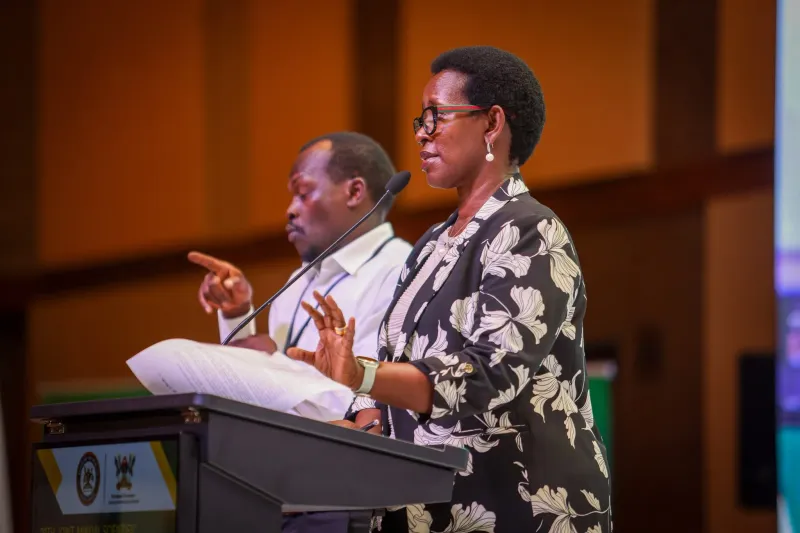




The Ministry of Health Permanent Secretary, Dr Diana Atwine, has called for coordinated action among government institutions, researchers, the private sector and communities to strengthen disease prevention, improve healthcare delivery and reduce avoidable deaths in Uganda.
Atwine made the call during the 20th Joint Annual Scientific Health Conference and the 2nd Annual Communicable and Non-Communicable Diseases Conference 2026, held at Speke Resort Munyonyo in Kampala.
She said the conference provides an important platform for researchers, policymakers and health sector stakeholders to use scientific evidence to shape policies, improve healthcare services and identify effective interventions to address the country’s disease burden.
Atwine warned that climate change could contribute to the emergence and spread of infectious diseases, while Uganda’s ageing population could increase the burden of non-communicable diseases, including cancer, hypertension and diabetes.
She called for stronger health systems capable of preventing, detecting and managing both communicable and non-communicable diseases, emphasising the need for interventions that protect communities and reduce preventable deaths.
The Permanent Secretary stressed that disease prevention should begin at household and community level, urging stakeholders to prioritise proven public health interventions. These include childhood immunisation, administration of the hepatitis B vaccine birth dose, HIV prevention, malaria control, and screening for diseases such as cancer, hypertension and diabetes.
She also raised concern about growing resistance to medicines used to treat malaria, tuberculosis and HIV, warning that the challenge requires sustained investment in research and innovation to identify effective treatments and strengthen disease management.
Atwine called on government institutions to allocate more resources to primary healthcare and community-based interventions, saying prevention, early diagnosis and timely treatment are essential to improving health outcomes.
She further urged health authorities and other stakeholders to intensify public education on healthy lifestyles, proper nutrition, physical activity and routine medical check-ups to help communities reduce the risk of preventable illnesses.
The Permanent Secretary also highlighted the importance of workplace wellness programmes and policies that encourage healthier diets, reduce excessive salt consumption and promote early screening for conditions such as sickle cell disease.
She said stronger collaboration across government, academia, the private sector and communities would be necessary to ensure that health interventions are effectively implemented and reach the people who need them.
Atwine emphasised that research should guide decisions on health priorities and public spending by identifying interventions that deliver meaningful health benefits and provide value for money.
She urged conference participants to ensure that scientific findings move beyond academic discussions and are translated into practical policies, adequately funded programmes and actions that improve healthcare delivery.
According to Atwine, a healthy population is essential to national productivity and Uganda’s Tenfold Growth ambition. She called on stakeholders to align their plans, investments and activities with national health priorities to strengthen the country’s response to communicable and non-communicable diseases.
She urged participants to use the conference outcomes to support evidence-based policymaking, improve disease prevention and strengthen healthcare services across Uganda.
The conference brings together health professionals, researchers, academics, policymakers and development partners to discuss scientific evidence and strengthen cooperation in addressing Uganda’s communicable and non-communicable disease challenges.







Sunrise reporter
Leave a Comment
Your email address will not be published.