
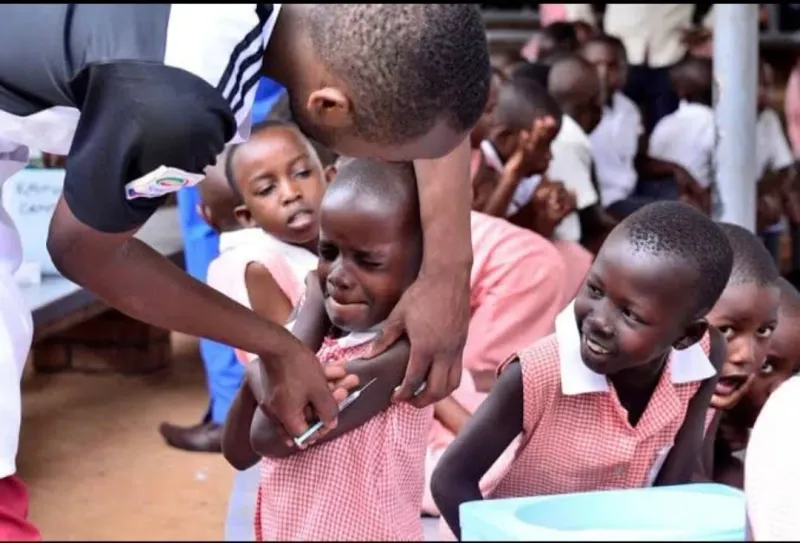

Uganda has vaccinated 8,285,835 children against measles and rubella, surpassing the national target by more than 669,000 children, the Ministry of Health has announced.
The five-day national measles-rubella vaccination campaign, conducted from 1 to 5 October 2026, targeted children aged 9 to 59 months across the country.
According to the Ministry of Health, the campaign reached 108.8 percent of its national target of 7,616,746 children. A total of 8,285,835 children received the measles-rubella vaccine, meaning 669,089 more children were vaccinated than initially targeted.
The campaign was designed to provide an additional dose of the measles-rubella vaccine to eligible children, including those who had previously received the vaccine, as Uganda works to strengthen protection against the two vaccine-preventable diseases.
The Ministry credited health workers, Village Health Teams, district teams and community mobilisers for helping deliver vaccination services in communities across the country.
The teams reportedly travelled long distances and worked in difficult terrain to reach children in remote and underserved areas.
The Ministry also thanked parents and caregivers for bringing children for vaccination, alongside local leaders, schools, religious and cultural institutions, development and implementing partners and the media.
The campaign comes amid continuing efforts to close measles immunity gaps in Uganda. The World Health Organization reported that Uganda confirmed 66 separate measles outbreaks in 2025, with the outbreaks disproportionately affecting children who had not received measles vaccination.
WHO has also reported that routine coverage for the two recommended measles-rubella doses has remained below the approximately 95 percent level needed to prevent sustained measles transmission.
Measles is highly contagious and can cause serious complications, particularly among children who are unvaccinated or inadequately protected.
Uganda's 2026 campaign was intended to help close immunity gaps and reach children who may have missed routine immunisation services.
WHO said ahead of the campaign that investigations into Uganda's measles outbreaks showed that many affected children had never received a measles vaccine. In Karamoja, a review of measles deaths in Moroto and Napak found that 92 percent of the children who died had never received a measles vaccine.
The campaign therefore formed part of a broader effort to strengthen population immunity and reduce the risk of further measles outbreaks.
The Ministry of Health has emphasised that the conclusion of the five-day mass vaccination campaign does not mean childhood vaccination services have ended.
Parents and caregivers are being encouraged to continue following their children's routine immunisation schedules.
Those whose children missed the October campaign have also been advised to contact the nearest health facility for guidance.
The Ministry said maintaining routine immunisation will remain important to protect children and sustain the gains made during the mass campaign.
Uganda's combined measles-rubella vaccine was introduced into the country's routine immunisation programme in 2019, while a second dose was introduced in 2022. WHO has identified missed second doses as an important contributor to immunity gaps following disruptions during and after the COVID-19 pandemic.
With more than 8.2 million children reached during the October campaign, health authorities are now urging families to remain engaged with routine vaccination services so that children continue receiving vaccines when they are due.

Sunrise reporter
Leave a Comment
Your email address will not be published.