

Uganda remains free of Ebola, the Ministry of Health has said, following confirmation of an imported Ebola case in neighbouring Kenya involving a traveller who passed through Uganda from the Democratic Republic of Congo (DRC).
In a press release dated October 6, 2026, Uganda’s Ministry of Health reassured the public and the international community that the country continues to maintain enhanced surveillance and preparedness measures to protect against the spread of Ebola.
The Ministry said preliminary investigations showed that the individual linked to Kenya’s case had travelled from the DRC, transited through Uganda for less than 24 hours and later travelled to Kenya.
According to the Ugandan Ministry of Health, screening teams at Entebbe International Airport observed that the traveller had a normal temperature when he departed Uganda.
Kenyan authorities confirmed on October 6 that the country had recorded its first imported case of Bundibugyo virus disease. The patient, a Kenyan citizen who had been living in the DRC, travelled through Uganda before arriving in Nairobi on October 3. He was subsequently isolated and tested positive for Bundibugyo virus before dying on October 5.
The World Health Organization (WHO) said the patient had travelled by road from the DRC to Kampala on October 2 before flying to Nairobi the following day. WHO confirmed that Kenya had identified 28 contacts, including family members and healthcare workers, while authorities were also tracing passengers and crew members from the flight.
Uganda’s Ministry of Health said it is working with relevant authorities and partners to intensify cross-border surveillance, strengthen information sharing and ensure the timely detection and management of potential public-health threats.
The latest development comes less than three months after Uganda officially ended its 2026 Ebola outbreak. The Ministry of Health declared Uganda Ebola-free on July 28 after no further transmission was detected and all identified contacts completed the required follow-up period without developing the disease. Uganda recorded 20 infections and two deaths during that outbreak.
The previous Ugandan outbreak was caused by Bundibugyo ebolavirus, the same virus responsible for the current outbreak in the DRC and the imported case confirmed in Kenya.
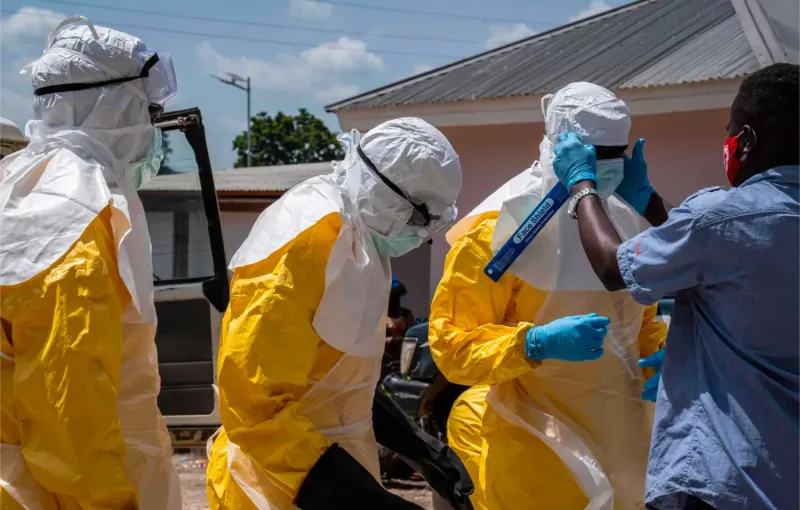
Following confirmation of the case, Kenyan authorities began contact tracing and other response measures. WHO said Kenya had already been strengthening Ebola preparedness, including screening at high-risk points of entry, training health workers and preparing isolation facilities.
As of October 6, WHO said Kenya had screened more than 652,000 travellers, tested 267 suspected samples and trained about 5,000 health workers in Ebola prevention and management.
The DRC continues to experience a major Bundibugyo virus disease outbreak. The European Centre for Disease Prevention and Control reported that, as of data available on October 5, the DRC had recorded 8,603 confirmed cases and 4,148 related deaths, although the figures remain subject to review and harmonisation.
Despite the regional developments, Uganda’s Ministry of Health urged the public to remain calm and rely on official information.
The Ministry encouraged people to continue observing recommended public-health measures and thanked health workers, development partners, security agencies and other stakeholders for supporting Uganda’s health-security efforts.

Linda Munyana
Leave a Comment
Your email address will not be published.