
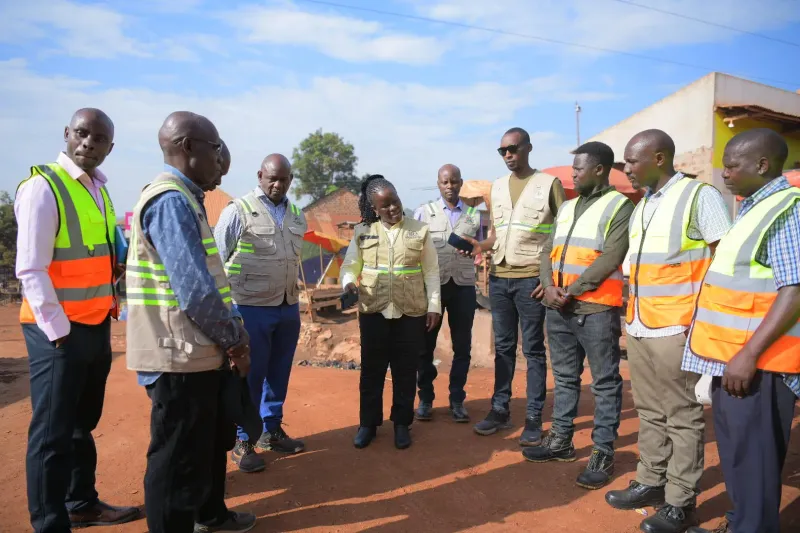

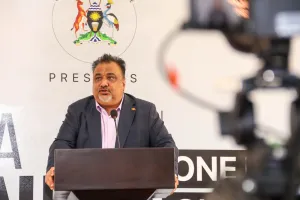
The Ministry of Works and Transport has begun inspecting 11 roads across the Central Region as part of efforts to assess the quality of road projects and maintenance activities, identify challenges and ensure that public funds deliver value to communities.
The inspection team, led by Assistant Commissioner for Road Maintenance Engineer Racheal Ngonzebwa, is conducting assessments across the Mpigi, Masaka and Mubende stations, with the exercise focusing on the progress of works, quality of maintenance and compliance with Ministry standards.
The Ministry says the inspections are also intended to identify areas requiring intervention and strengthen supervision of road maintenance activities to ensure better road services for communities.
The roads on the inspection schedule include Katende–Bulwanyi, which stretches 8.8 kilometres; Mpigi–Kanoni, 60 kilometres; Kanoni–Maddu, 34 kilometres; Maddu–Kyayi–R. Nabakazi; Kabulasoke–Miwuula Junction, 20 kilometres; Miwuula–Lukaya, 30 kilometres; Villa Maria–Sembabule, 38 kilometres; Sembabule–Nkonge, 58 kilometres; Kasambya–R. Mubende–Kakumiro, 30 kilometres; Nabakazi Road, 28 kilometres; and Kakumiro–Nkondo, 12 kilometres.
The exercise has already produced findings from the inspection of the Katende–Bulwanyi Road, where the Ministry said better planning, condition surveys, adequate culverts and proper graveling are needed.
The technical team also called for light grading to smoothen road surfaces and minimise potholes, while urging stakeholders to work together in supervising maintenance activities.
The findings highlight the importance of matching road maintenance interventions to the actual condition of individual roads. Proper condition surveys can help technical teams identify defects and determine the appropriate maintenance measures, while adequate drainage and suitable surface treatment can help protect roads from deterioration.
The Ministry has meanwhile issued a strong warning on the quality of road works, saying poor-quality works will not be accepted.
According to the Ministry, all interventions must meet the required standards and deliver value for money to the public. The position places emphasis not only on carrying out maintenance works but also on ensuring that the work is properly planned, supervised and executed.
The inspection team is now proceeding to other roads across the Central Region, where similar assessments will be conducted to establish the condition of the roads and determine areas requiring attention.
The exercise comes amid continued efforts by the Ministry to strengthen monitoring of road projects and maintenance activities. Field inspections enable technical teams to directly assess road conditions and engage stakeholders on challenges affecting maintenance and service delivery.
For communities along the inspected corridors, the exercise is expected to provide a clearer picture of the condition of their roads and the interventions needed to keep them usable.
The roads covered by the inspection serve communities and connect different parts of the Central Region, making regular maintenance important for movement, access to services and local economic activity.
As the inspection progresses, attention will be on whether problems identified by the technical teams result in timely interventions and whether maintenance works meet the standards set by the Ministry.
The Ministry says the overall objective is to improve road services while ensuring accountability, quality and value for money in the use of public resources.



Marlene Luwedde
Leave a Comment
Your email address will not be published.