



Uganda and the African Union are moving to turn commitments under the Kampala CAADP Declaration into concrete programmes, investment and measurable results in the country’s agrifood sector.
Government officials and development stakeholders met in Kampala for a high-level policy dialogue focused on Uganda’s progress under the Comprehensive Africa Agriculture Development Programme (CAADP) and the priorities contained in the CAADP Strategy and Action Plan 2026–2035.
The meeting brought together representatives from the Ugandan government and the African Union Commission to review implementation challenges and identify areas requiring faster action.
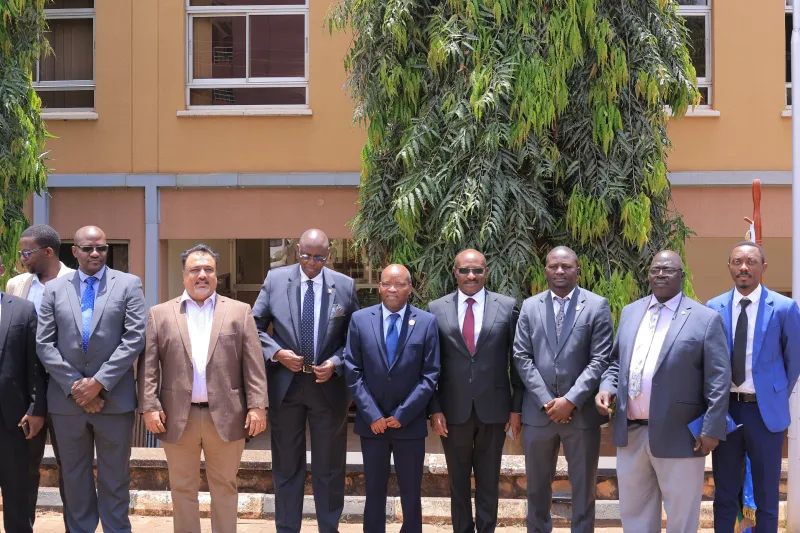
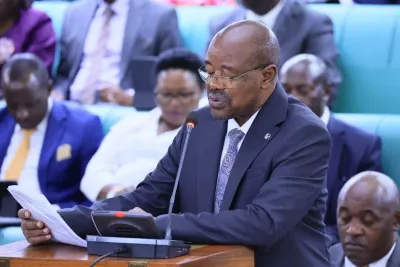
The African Union delegation was led by AU Commissioner for Agriculture, Rural Development, Blue Economy and Sustainable Environment Moses Vilakati, while Uganda was represented by Minister of State for Animal Industry, Bright Rwamirama.
The discussions come after Uganda hosted the Extraordinary African Union Summit in January 2025, where African leaders adopted the Kampala CAADP Declaration as part of efforts to accelerate the transformation of Africa’s food and agricultural systems.
Speaking during the engagement, Vilakati said Africa’s challenge has often been less about developing policies and more about ensuring that agreed commitments are implemented.
The emphasis in Uganda is now on translating the CAADP framework into programmes that can deliver tangible improvements across the agricultural value chain.
Priority areas include food and nutrition security, improved seed systems, soil health, irrigation, mechanisation, livestock, fisheries and aquaculture.
The agenda also places greater emphasis on agro-processing, value addition and market access as Uganda seeks to generate more economic value from agricultural production.
Rwamirama said Uganda already has several interventions that can support implementation of the CAADP commitments.
He also called for stronger coordination across government institutions, arguing that ministries need to work together rather than operate independently when addressing agricultural transformation.
The policy dialogue also placed attention on Uganda’s growing agricultural output and the need to move further up the value chain.
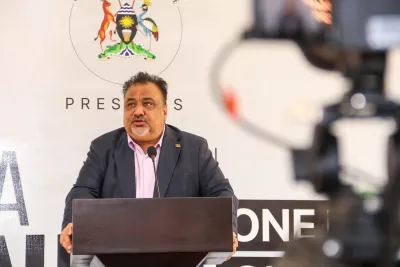
Trade, Industry and Cooperatives Minister Sanjay Tana said Uganda is supplying its domestic market while increasingly serving regional and international markets.
However, he identified value addition, agro-processing and stronger branding as important next steps if Uganda is to sustain agricultural growth and increase the returns generated from its products.
The shift could create opportunities for farmers and businesses while helping Uganda compete more effectively in international markets.
Agricultural transformation was also linked to employment, particularly for young people and women.
Minister of State for Gender, Labour and Social Development Simon Mulongo said increased agricultural production must be accompanied by skills development, technology and a workforce capable of supporting modern agriculture.
The approach reflects a broader CAADP objective of making agricultural transformation more inclusive while creating productive economic opportunities.
The African Union’s 100-Day Rolling Plan is expected to support the implementation drive through targeted interventions.
Among the areas identified for action are soil health mapping, fertiliser systems and blending, climate-resilient seed, irrigation, fisheries and aquaculture, post-harvest management and investment mobilisation.
The plan also places emphasis on increasing the participation of women and young people in the agrifood sector.
For Uganda, the latest engagement is expected to help refine the country’s CAADP implementation roadmap, assign institutional responsibilities and strengthen mechanisms for tracking progress.
The broader objective is to move the Kampala CAADP Declaration beyond policy commitments and towards measurable outcomes in food security, agricultural productivity, investment, jobs and agrifood value chains.
The CAADP Strategy and Action Plan 2026–2035 provides the wider continental framework for this implementation drive, with the African Union and member states now expected to translate the commitments into country-level action.





Sunrise reporter
Leave a Comment
Your email address will not be published.