
The State House Education Desk has warned administrators of schools implementing the Government’s Universal Primary Education (UPE) and Universal Secondary Education (USE) programmes against imposing illegal charges on learners.
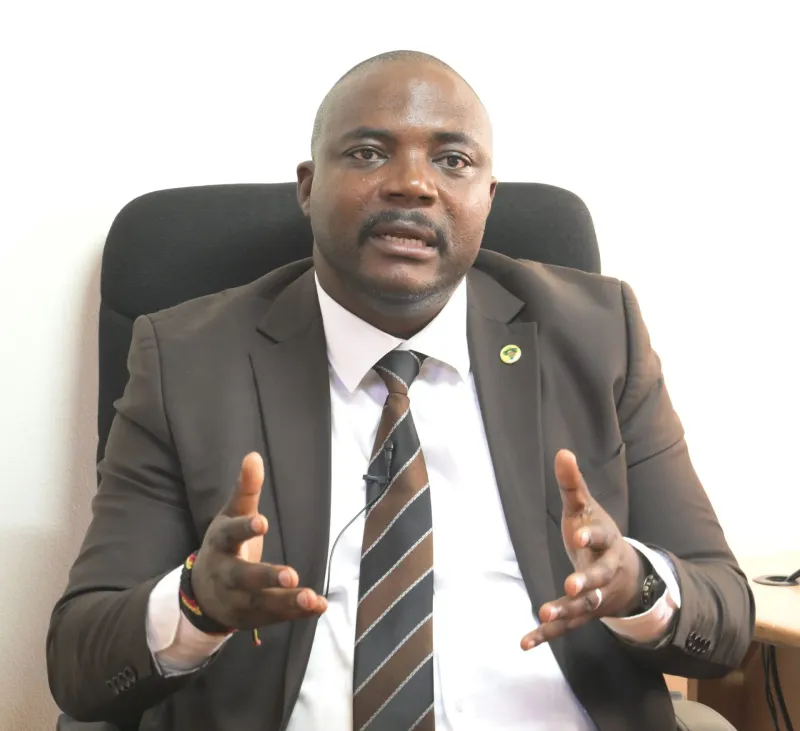
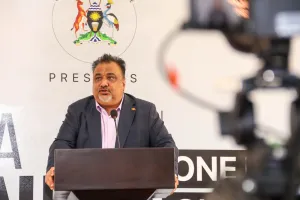
Jimmy Nambiro, Head of the State House Education Desk and Private Secretary to President Yoweri Museveni on Education and Skilling, said such practices undermine the objectives of Uganda’s universal education programmes and can prevent children from poor and vulnerable families from attending school.
Nambiro made the remarks on today, at his office on Lumumba Avenue in Kampala.
He said the Government introduced UPE in 1997 and later introduced USE in 2007 as measures aimed at expanding access to education, particularly for children from poor and vulnerable households.
According to Nambiro, universal free education remains one of the flagship programmes of the National Resistance Movement (NRM) Government because of its focus on increasing access to schooling among Ugandans in both rural and urban communities. “The Universal Free Education is a flagship programme for the NRM Government that directly addresses the needs of education for the vulnerable poor Ugandans in both rural and urban areas,” Nambiro said.
He said the Government continues to provide resources to the education sector through the Ministry of Education and Sports to support infrastructure, human resources, teaching materials, facilitation, training and capacity building in UPE and USE schools.
Nambiro also pointed to the Government White Paper and the Education Act, 2008, as part of the legal framework supporting Uganda’s education system and the right to education.
Nambiro said the introduction of universal education has considerably increased the number of children accessing school in Uganda.
He put the number of school-going children at about 10 million, compared with approximately 2.5 million before the introduction of universal free education.
He also said literacy levels have improved to about 85 percent.
The Government, according to Nambiro, currently supports more than 12,551 primary schools and 1,615 secondary schools across the country.
He said the figures demonstrate the scale of Government investment in expanding access to education and ensuring that poverty does not prevent children from attending school.
Despite the expansion of access, Nambiro expressed concern about what he described as illegal charges imposed by some school administrators, Parent-Teacher Associations and school boards.
He said such charges can undermine the universal education programme by transferring costs to parents, including families that may already struggle to meet basic household needs.
Among the practices cited by Nambiro were illegal school fees and development charges, demands for examination registration fees, alleged ghost learners on school enrolment lists, alleged ghost teachers and concerns about the use and accountability of capitation grants.
He particularly criticised schools that charge parents for registration of candidates for examinations administered by the Uganda National Examinations Board (UNEB).
Nambiro said the Government pays examination registration fees for candidates at Primary Seven, O-Level and A-Level.
He described the alleged charges as barriers to access to universal education and said they were contrary to the Education Act, 2008, and presidential directives concerning children enrolled under the Government's universal education programmes.
“These are serious barriers to the access of free Universal Education meant to benefit the poor communities and they are against the law of Education Act of 2008 and the Presidential directives issued from time to time not to send any child under Universal Programme out of school,” he said.
The State House official warned that such practices could also undermine public confidence in the Government's commitment to providing universal education.
Nambiro said the State House Education Desk has intensified monitoring of UPE and USE schools to identify cases where children are allegedly denied access to education because of charges.
He called on District Education Officers, school inspectors, Resident District Commissioners, District Internal Security Officers, Gombolola Internal Security Officers and political, religious and cultural leaders to support efforts to protect learners under the universal education programmes.
He urged the various stakeholders to report school administrators suspected of violating Government directives and education laws.
Nambiro further warned that children who drop out of school because of financial barriers may become more vulnerable to wider social challenges, including teenage pregnancies and drug abuse.
He said protecting children's access to education should therefore be treated as a collective responsibility.
Nambiro said the State House Education Desk is working with Government institutions, including the Anti-Corruption Unit under the Office of the President, to investigate reported irregularities in schools.
He said members of the public are also reporting cases allowing the desk to follow up on complaints.
According to Nambiro, several head teachers, school inspectors and District Education Officers are currently facing investigations over alleged violations.
He said those found culpable could face disciplinary or legal action. “The State House Education Desk is to continue vigorously with field monitoring exercises in all schools across the whole country to ensure compliance,” he said.
Nambiro reiterated that UPE and USE were primarily introduced to help children from poor and vulnerable families access education.
He warned that school administrators found charging learners under the Government's universal education programmes would face legal action. “His Excellency the President of the Republic of Uganda did not introduce Universal Free Education for the rich. Therefore, anyone found charging for free Universal Education at all levels will face the law,” he said.
He urged parents and communities to report alleged illegal charges and other practices that prevent children from benefiting from UPE and USE.
Nambiro said cooperation between communities, education authorities, security agencies and political, religious and cultural leaders would remain important in protecting access to education and ensuring that the objectives of Uganda's universal education programmes are achieved.


The Sunrise Editor
Leave a Comment
Your email address will not be published.