

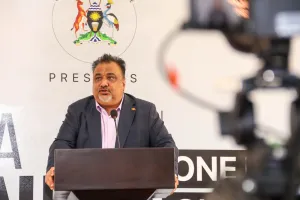
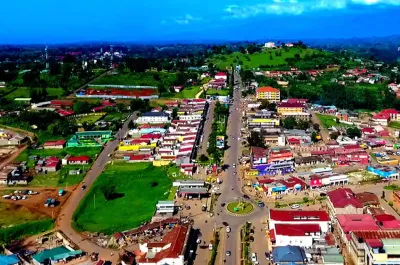
Uganda and the Intergovernmental Authority on Development (IGAD), together with development partners, are preparing a five-year programme aimed at transforming livestock production, strengthening peace and improving the resilience of communities in Karamoja.
Known as the Integrated Livestock Development, Peacebuilding and Resilience Enhancement for Sustainable Livelihoods in Karamoja (ILPRE-Karamoja), the programme is scheduled to run from January 2027 to December 2031.
The initiative brings together livestock development and peacebuilding at a time when access to water, pasture, markets and land remains closely connected to the livelihoods and stability of pastoral and agro-pastoral communities across the wider Karamoja region.
The programme is being aligned with Uganda's national and regional development priorities, including the Fourth National Development Plan (NDP IV) and the Karamoja regional development framework.
According to officials involved in the initiative, ILPRE-Karamoja will concentrate on several areas considered critical to long-term economic transformation in the region.
These include improving animal health and livestock productivity, expanding access to water, strengthening livestock markets, improving land governance and supporting conflict prevention.
The programme will also give particular attention to young people and women, with officials stressing that communities should have a central role in determining and implementing development interventions.
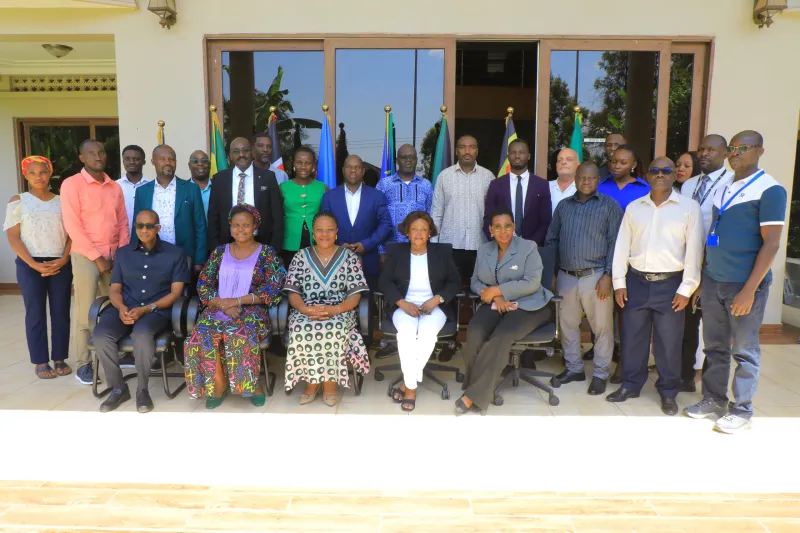
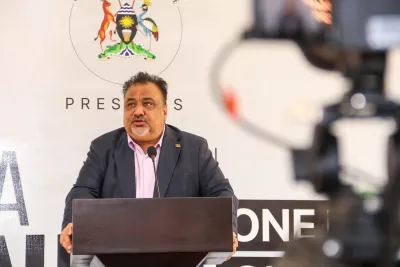
Ms Joselyn Bigirwa, Head of the IGAD Secretariat Mission to Uganda, said the programme is intended to build on gains already made in livestock productivity, cross-border resource management, conflict prevention and market access.
She emphasised that development in Karamoja should be community-led, with youth and women given greater opportunities to participate in economic activities and decision-making.
IGAD is expected to work with Uganda's Office of the Prime Minister, Ministry of Foreign Affairs and Operation Wealth Creation in coordinating implementation and strengthening accountability.
The focus on livestock reflects the central role pastoralism plays in the Karamoja Cluster.
Research and programmes supported by IGAD and other development organisations have identified livestock as a major economic asset in the wider cluster, while also pointing to challenges including drought, limited water and pasture, animal diseases and weak connections to formal markets.
The wider Karamoja Cluster extends beyond Uganda into neighbouring areas of Kenya, Ethiopia and South Sudan. Livestock movements and access to shared grazing and water resources therefore have implications that go beyond national borders.
This regional dimension is one reason cross-border resource management features prominently in the new programme.
When pasture and water become scarce, pastoral communities may move with their animals in search of resources. Previous IGAD-supported research and programming has highlighted how competition over scarce water and pasture can contribute to tensions and conflict, making natural-resource management an important component of peacebuilding.
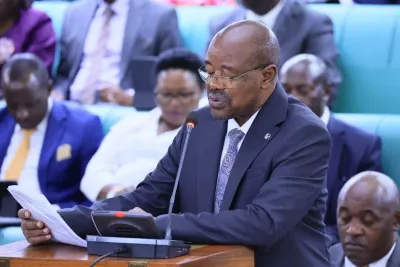
Dr Edith Namutebi Nsubuga, Head of Regional Peace and Security at Uganda's Ministry of Foreign Affairs, reaffirmed the government's commitment to stability in Karamoja.
She said government must provide a secure environment that allows development partners to concentrate on improving livelihoods and resilience.
Nsubuga also called for stronger coordination between actors working in the region, higher-impact interventions and a shift in mindset aimed at reducing long-term dependence on aid.
Her remarks underline one of the central challenges facing development efforts in Karamoja: investments in security and investments in livelihoods cannot be treated as completely separate issues.
IGAD's previous work in the region has similarly linked peacebuilding with livestock mobility, natural-resource management, market access and community resilience. Its earlier Karamoja resilience programming was designed through consultations involving pastoral and agro-pastoral communities, women, youth, local authorities and development partners.
Water is expected to be one of the important components of ILPRE-Karamoja.
For pastoral communities, reliable access to water affects livestock health, migration patterns, production and relations between communities using shared resources.
Land governance is equally significant. In recent years, IGAD has supported participatory land-use planning in parts of Karamoja, including processes designed to identify land-use challenges and develop inclusive and conflict-sensitive approaches.
IGAD reported in 2025 that land pressure, population growth, land fragmentation and disputes over access were contributing to competition over water and pasture in parts of the Karamoja Cluster.
Nsubuga urged stakeholders to follow up on water-related studies so that findings can translate into practical investments during the 2027–2031 implementation period.
Improving livestock production alone may not be enough to transform household incomes if producers remain poorly connected to profitable markets.
IGAD research has previously identified limited integration of the Karamoja Cluster into wider livestock marketing systems as a challenge, while calling for greater investment in value chains and market access.
ILPRE-Karamoja therefore places market access alongside animal health, water and production.
A stronger livestock value chain could create opportunities beyond the sale of live animals, including veterinary services, transportation, livestock aggregation, processing and other forms of value addition.
That approach would potentially allow more economic value to remain within communities while creating additional opportunities for young people and women.
ILPRE-Karamoja is not emerging in isolation.
IGAD has spent years supporting resilience and pastoral livelihood initiatives in the Karamoja Cluster. Earlier regional programmes have combined natural-resource management, livestock production, market access, disaster-risk management and peacebuilding.
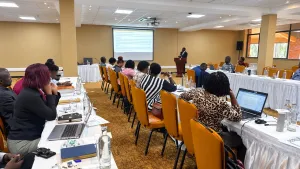
In April 2026, IGAD, Uganda's Office of the Prime Minister, Ministry of Foreign Affairs and Operation Wealth Creation held consultations in Moroto on a joint Karamoja programme.
Those discussions identified insecurity, competition over resources, underdeveloped livestock systems, cross-border trade and sustainable rangeland management among the issues requiring coordinated action. Participants also highlighted animal health, water infrastructure, livestock markets and community involvement as areas for intervention.
The new five-year programme therefore provides an opportunity to bring several strands of previous work into a more coordinated framework.
A major feature of the initiative is the emphasis on communities as active participants in development.
This approach is particularly relevant in pastoral areas where decisions concerning grazing routes, water points, livestock mobility and land use can directly affect the success of development projects.
Previous experience in the Karamoja Cluster has shown the importance of cross-border dialogue and community participation in managing shared resources and strengthening peaceful relations. FAO-supported work has found that coordinated approaches to livestock movement and natural-resource management can contribute to both resilient livelihoods and conflict prevention.
For ILPRE-Karamoja, the challenge will be translating that principle into practical systems that give local communities a meaningful role while maintaining effective government oversight and accountability.
The programme is expected to enter implementation in January 2027 and continue through December 2031.
Its success will ultimately depend on whether planned interventions move beyond individual projects and create lasting improvements in livestock productivity, water access, market participation, land management and household resilience.
Coordination will also be crucial. With multiple government institutions, IGAD, development partners and local communities involved, officials have stressed the need to avoid fragmented interventions and ensure that investments complement one another.
For Karamoja, the five-year programme represents an attempt to link economic development and peacebuilding around the region's most important livelihood systems.
If effectively implemented, ILPRE-Karamoja could help shift development efforts towards stronger livestock value chains, better management of shared natural resources and more resilient livelihoods, while giving communities a greater stake in the region's long-term transformation.




Sunrise reporter
Leave a Comment
Your email address will not be published.