



The Ugandan government has stepped up efforts to protect public land from encroachment, illegal occupation and misuse as it moves to establish a Comprehensive Government Land Inventory covering government-owned land across the country.
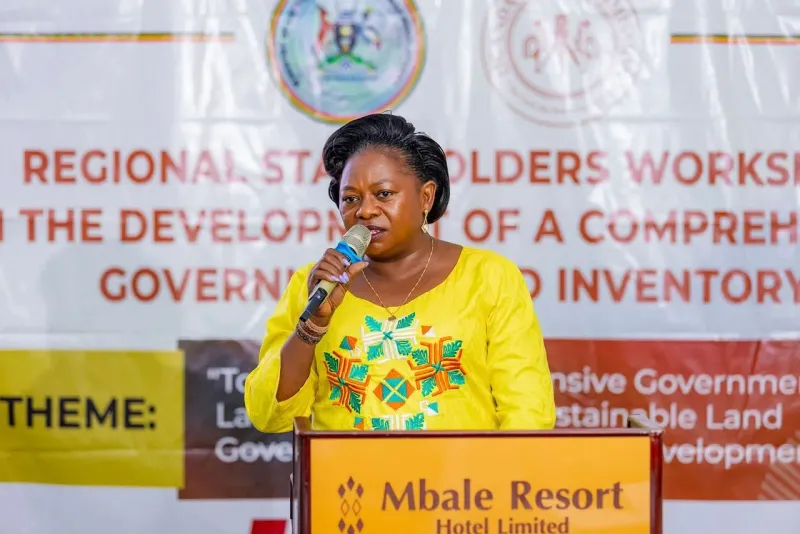
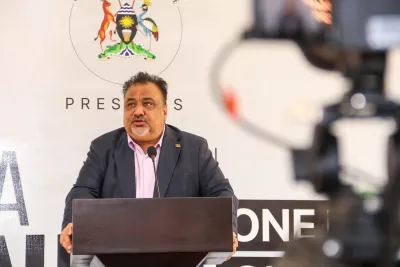
The latest push was highlighted during a Bugisu and Bukedi Regional Stakeholders Awareness Meeting in Mbale, where Minister of State for Lands Harriet Ntabazi called on local governments and other stakeholders to actively participate in identifying, verifying and documenting government land within their areas.
Ntabazi said public land is an important national asset that must be protected and properly managed because it supports essential services and infrastructure, including schools, health facilities, roads, markets and other public developments.
She urged District Land Boards, technical officers, political leaders and other stakeholders to take ownership of the inventory exercise by providing accurate information about government land in their respective jurisdictions.
The planned inventory is expected to create a more reliable picture of government land by documenting details such as its location, size, ownership, use and current status. The information will help authorities improve land management, planning, infrastructure development, investment and decision-making.
The initiative is being implemented through the Uganda Land Commission in collaboration with the Ministry of Lands, Housing and Urban Development. The Ministry says nationwide stakeholder engagements are being used to gather information and build understanding of the importance of documenting, protecting and responsibly managing government land.
The Uganda Land Commission has a constitutional mandate to hold and manage land vested in or acquired by the Government of Uganda. Its stated objectives include maintaining an updated inventory of government land and property and ensuring that government land is titled and secured.
The renewed inventory exercise comes amid longstanding concerns over weaknesses in the documentation and management of public land. Previous government and audit reports have pointed to risks associated with incomplete land records, encroachment, unclear boundaries and disputes involving government property.
A 2023 statement to Parliament on government-owned land reported that verification at the time found 17,296 parcels of government land across the country, of which 4,146 parcels, or 24 percent, were surveyed and titled while 13,150 parcels remained unsurveyed and untitled. The statement also highlighted encroachment and irregular allocation of government land as challenges affecting its management.
The current exercise is therefore intended to go beyond simply compiling a list of public properties. Authorities want dependable information that can help determine what land government owns, where it is located, how it is being used and whether it faces threats such as encroachment or ownership disputes.
Ntabazi also sought to reassure communities that the inventory exercise is not an attempt to take away privately owned land that was lawfully acquired.
She stressed that legitimate private ownership will be respected and that cases involving disputed ownership will be handled through the appropriate legal and administrative processes.
The clarification is important in a country where land ownership disputes can involve multiple claims and where communities may be concerned about government land verification exercises.
The Ministry has said the regional consultations are intended to translate the national government land initiative into practical action at district and community level, while allowing stakeholders to raise challenges and provide recommendations that can improve the inventory process.
For local governments, the exercise will require cooperation among land boards, land officers, surveyors, physical planners, political leaders and other officials who have information about public land in their jurisdictions.
The government hopes that a comprehensive and regularly updated land inventory will strengthen accountability and reduce the risk of public land being lost through illegal occupation, fraudulent transactions, poor documentation or irregular allocation.
The exercise could also help government avoid future costs associated with acquiring land for public infrastructure when land originally reserved for public use has already been lost.
Uganda has previously identified the absence of a comprehensive government land database as a challenge to effective stewardship of public property. The Auditor General has warned that inadequate records can increase the risk of encroachment, irregular acquisition and disputes that may ultimately expose government to financial losses.
The ongoing stakeholder engagements are consequently part of a broader effort to strengthen the administration and protection of public land in Uganda.
For communities in Bugisu and Bukedi and other regions taking part in the consultations, the government is seeking accurate local information to ensure that public land is identified, documented and protected before it is lost or subjected to competing claims.
The government says the ultimate objective is to safeguard land reserved for public purposes today while ensuring that future generations have access to land needed for schools, hospitals, roads, markets and other public infrastructure.
As the Comprehensive Government Land Inventory exercise continues, the effectiveness of the programme will depend largely on the accuracy of information supplied by local governments and other stakeholders, as well as the government's ability to verify, secure and regularly update the records.




Sunrise reporter
Leave a Comment
Your email address will not be published.