




Uganda is strengthening coordination among government institutions involved in the fisheries sector in a bid to tighten control over the importation and clearance of fishing gear, fish and fish products, while protecting gains made in fisheries production and trade.
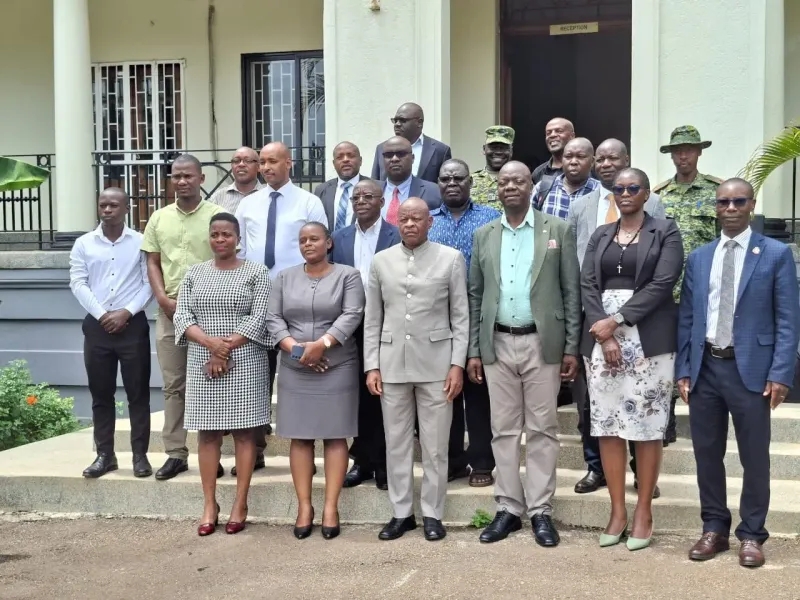
Representatives from the Ministry of Agriculture, Animal Industry and Fisheries (MAAIF), the Ministry of Trade, Industry and Cooperatives, the Uganda Revenue Authority (URA) and the Uganda National Bureau of Standards (UNBS) met at the MAAIF headquarters in Entebbe to discuss ways of improving collaboration between the institutions.
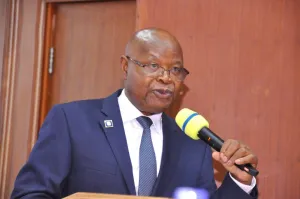
The meeting was chaired by the Minister of State for Fisheries, Hon. Robert Migadde Ndugwa, alongside the Minister of State for Trade, Industry and Cooperatives, Hon. Gen. Wilson Mbadi.
The discussions focused on strengthening coordination in the regulation, importation and clearance of fishing appliances, fish and fish products. Particular attention was placed on preventing prohibited fishing equipment from entering the country through both formal and informal routes.
“Each one of our institutions has a role to play in streamlining these activities,” Migadde said, according to the statement on the meeting. “Together, we are exploring means of strengthening collaboration to eliminate importation of illegal items that enter Uganda through both formal and informal routes, including but not limited to prohibited fishing nets and hooks.”
The renewed focus on fishing gear comes as Uganda continues to pursue measures aimed at improving fisheries management and increasing sustainable fish production.
Recent official figures show that Uganda's national fish catch increased by 6.3 percent, from 684,305 metric tonnes in 2023 to 727,034 metric tonnes in 2024. The value of the catch also rose from about Shs2.066 trillion to Shs2.087 trillion.
The aquaculture industry is also becoming an increasingly important component of Uganda's fisheries economy. The Uganda Aquaculture Census 2025 recorded 9,463 aquaculture farms across 146 districts, with total production estimated at 65,444 metric tonnes during the 12 months from July 2024 to June 2025.
Nile tilapia accounted for the largest share of farmed fish production, contributing 53,924.1 metric tonnes, or 82.4 percent of total aquaculture output. Catfish contributed another 11,347.4 metric tonnes, equivalent to 17.3 percent.
The census also found that most Ugandan fish farms are small-scale operations, with 6,408 farms, representing 67.7 percent of the total, located in rural areas. Ponds remain the dominant production method, accounting for 93.1 percent of grow-out farms.
Fish farming is therefore emerging alongside capture fisheries as an important source of fish for domestic consumption and commercial markets. More than three-quarters of aquaculture production was sold during the census reference period, according to UBOS.
Uganda's fish trade has also recorded strong growth. MAAIF data shows that the value of fish exports increased by 39 percent, from USD155.20 million in Financial Year 2023/24 to USD216.42 million in Financial Year 2024/25.
The growth in production and exports has increased the importance of effective regulation across the fisheries value chain, from fishing and aquaculture to the movement of fish, fishing equipment and related products across Uganda's borders.
The government has in recent years continued to tighten fisheries management measures. In an August 2026 statement, MAAIF said new regulations had been finalised following the Fisheries and Aquaculture Act, 2023, including regulations dealing with fishing capacity, licensing, permitted fishing gear and minimum harvest sizes.
The ministry said the regulations are intended to address challenges affecting fish production and productivity, including fishing in breeding and nursery grounds and the use of inappropriate fishing practices.
The latest inter-agency engagement therefore places import controls within the wider effort to improve fisheries management. Closer cooperation between MAAIF, Trade, URA and UNBS could help ensure that fishing equipment entering the country meets the required standards and that prohibited gear is prevented from reaching fishing communities.
For Uganda's fisheries sector, maintaining the balance between increased production, stronger trade and effective enforcement will remain important as the country seeks to expand both capture fisheries and aquaculture.
With more than 9,000 aquaculture farms already recorded and national fish catches exceeding 727,000 metric tonnes in 2024, the sector has a growing economic footprint.





Sunrise reporter
Leave a Comment
Your email address will not be published.