


Uganda’s State House Diaspora Unit has called for dedicated government funding and stronger institutional coordination to improve services for Ugandans living abroad and strengthen their contribution to national development.
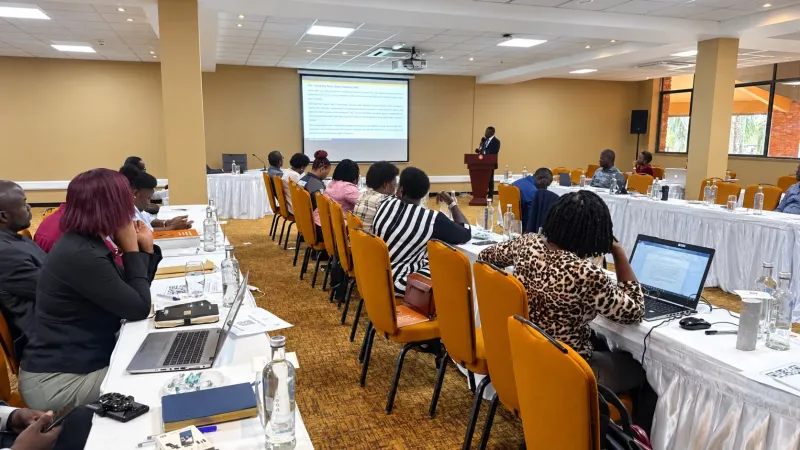
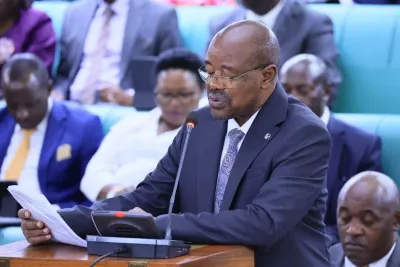
The proposals were presented by Dr Hillary Emmanuel Musoke, Senior Presidential Advisor on Agribusiness and Value-Addition Development, during an induction workshop for members of Parliament’s Committee on Foreign Affairs at Speke Resort Munyonyo on Saturday.
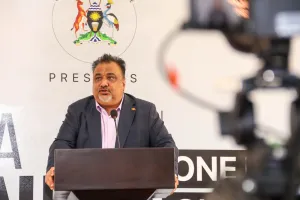
Dr Musoke delivered the presentation on behalf of Mohammed Bagonza, Senior Presidential Advisor on Diaspora Affairs and Head of the State House Diaspora Unit, who was reportedly abroad on national duty.
The presentation, held under the theme “Harnessing the Diaspora for National Development and Strengthening Consular Services for Ugandans Abroad,” emphasised the need for practical government support to enable Ugandans in the diaspora to contribute more effectively to the country’s economic development.
According to Bank of Uganda figures cited in the presentation, Uganda received US$2.5 billion in remittances in 2025, equivalent to approximately 3.8 per cent of gross domestic product (GDP). The money sent home supports households in meeting essential expenses, including education and healthcare.
However, the presentation noted that the contribution of Ugandans living abroad extends beyond financial remittances. Diaspora communities can help finance businesses, connect Ugandan producers to international markets, promote tourism and transfer skills and expertise through research, mentorship and technology sharing.
These contributions could support Uganda’s Tenfold Growth Strategy, which aims to expand the country’s economy from US$50 billion to US$500 billion by 2040.
Despite these opportunities, Ugandans abroad continue to face challenges accessing documents and consular services, navigating investment procedures and obtaining reliable follow-up from relevant institutions. Entry barriers and uncertainty surrounding investment processes can also discourage diaspora members from investing or participating in development initiatives back home.
To address these concerns, the State House Diaspora Unit called for the finalisation of Uganda’s diaspora policy and consideration of a dedicated diaspora body with a clear mandate to coordinate diaspora-related activities.
The presentation also highlighted the importance of clearly defining responsibilities among the Ministry of Foreign Affairs, Uganda’s diplomatic missions, the State House Diaspora Unit and other relevant government agencies to reduce overlaps and improve service delivery.
On financing, the Unit argued that diaspora engagement requires more predictable public funding. It pointed to dedicated institutions, budgets and programmes supporting sectors such as coffee, tourism and mineral development as examples of structured government support.
According to the proposals, a dedicated diaspora budget would help provide adequate staffing, sustain engagement with Ugandans abroad and improve the reliability of services offered to them.
The recommendations also included reducing the cost of sending money to Uganda, establishing trusted investment and savings channels, and strengthening assistance for citizens who require protection, repatriation or reintegration support.
The proposals place greater institutional support for Ugandans abroad at the centre of efforts to harness remittances, investment, skills and international connections for Uganda’s long-term economic development.




Lynzy Mbabazi
Leave a Comment
Your email address will not be published.