



Education
Madi Okollo Records Only One First Grade in 2025 PLE, Leaders Call for Urgent Education Reforms
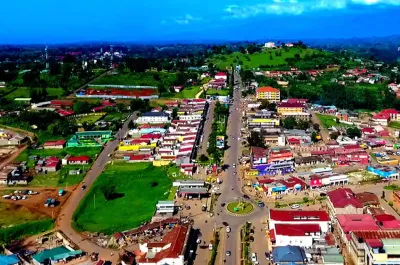
Leaders and residents of Madi Okollo District have expressed concern over the poor performance recorded in the 2025 Primary Leaving Examinations (PLE), calling for urgent intervention to reverse the trend.
According to the examination results released on Friday, the district managed to produce only one first-grade candidate, a male refugee learner from Rhino Camp settlement. This marked a drop from the previous year, when the district recorded two first-grade pupils.
Statistics from the Uganda National Examinations Board indicate that 1,791 candidates sat for the 2025 PLE in Madi Okollo District. Of these, 305 attained Division Two, 645 were graded in Division Three, 274 fell under Division Four, while a significant 506 candidates were ungraded and placed in Division U.
Since gaining district status in 2019, Madi Okollo has persistently struggled with weak academic outcomes at both primary and secondary school levels, a trend that local leaders say has not been adequately addressed.
District officials and community leaders partly blame the situation on social and economic activities that interfere with learning. These include unregulated night discos, fishing activities along the River Nile, and busy market schedules, which they argue draw children away from schoolwork and reduce study time.
Nationally, the district ranked at the bottom of the 2025 PLE performance table. Within the West Nile region, Madi Okollo also trailed behind neighboring districts, including Obongi, which registered two first-grade candidates.
The Speaker of Madi Okollo District Local Council, Faimah Letiru, expressed deep concern over the results, warning that continued inaction could expose the district to a long-term education crisis affecting future generations.
Echoing similar sentiments, the District Secretary for Social Services, Wahab Ondoga Siraj, said the outcomes reflect underlying systemic problems that cannot be solved by one institution alone, calling for coordinated efforts from leaders, parents, and the central government.
Parents in the district have also voiced disappointment, saying the persistent poor performance has eroded confidence in the local education system. Many have appealed to the government to intervene decisively and tackle the root causes undermining learning outcomes.
On a broader scale, Harold Acemah, a retired diplomat from the West Nile region, noted that declining academic performance is not unique to Madi Okollo but reflects nationwide challenges within the education sector. He called for comprehensive reforms, stressing the importance of teacher commitment, parental involvement in providing scholastic materials and supervision, and consistent government funding for education.
Elsewhere in the West Nile region, Arua City emerged as the best performer with 363 first-grade candidates. It was followed by Adjumani District with 111, Koboko with 98, Yumbe with 63, Maracha with 47, Pakwach with 38, Moyo with 35, Terego with 31, Nebbi Municipality with 26, Zombo with 25, Nebbi District with 24, Arua District with 13, and Koboko District with 10 first-grade candidates.
The latest results have intensified calls for urgent reforms as stakeholders warn that failure to act could further widen educational disparities within the region and the country at large.



Jason Olinga
Leave a Comment
Your email address will not be published.