




Education
Inter-Schools Coding Competition Targets 500 Schools, Empowering Uganda’s Next Generation of Innovators
Uganda’s Inter-Schools Coding Competition (ISCC), the country’s largest national advanced technology initiative for secondary school students, continues to shape the future of digital innovation by equipping young learners with advanced technological skills. Designed to align with Uganda’s digital transformation agenda, the program is inspiring a new generation of innovators and problem solvers across the country.
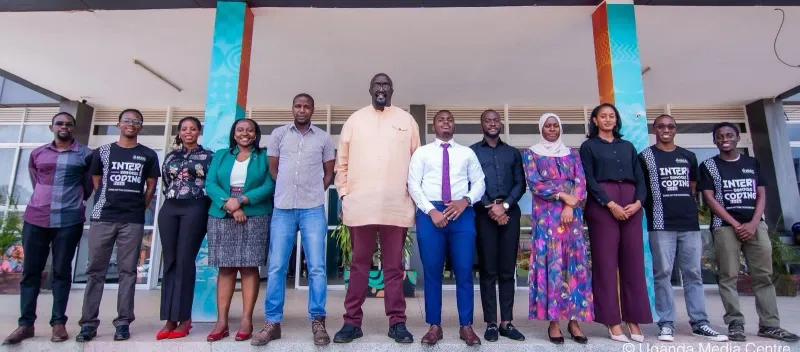
On Tuesday, April 21st, 2026, the initiative reached another milestone when the Permanent Secretary of the Ministry of ICT & National Guidance, Dr. Aminah Zawedde, and the Executive Director of the Uganda Media Centre, Mr. Alan Kasujja, met with the ISCC team at the National Innovation Hub in Nakawa. The meeting reaffirmed the Government of Uganda’s commitment to strengthening digital skills among young people.
The ISCC uses a Competition-Based Learning approach to bridge the gap between classroom ICT education and practical, real-world digital skills. Through this hands-on model, students not only learn theory but also apply their knowledge to solve real challenges.
Since its inception, the program and its partners have trained over 4,000 students from 120 schools in Python programming. This foundational skill opens pathways into fields such as data science, artificial intelligence, machine learning, and web development, reflecting growing interest among Uganda’s youth in technology-driven careers.
The initiative is now aiming to scale its impact by reaching 500 secondary schools this year. Isaac Prince Sekatawa of ISCC highlighted the ambition of the program, stating, “Last year, we were able to reach 4,000 students. This year, we are reaching 500,000 students across the country.”
Dr. Zawedde emphasized that digital transformation begins with equipping young people with essential skills such as coding, analysis, and problem-solving, noting that these competencies are now as important as English and Mathematics. She also underscored the importance of infrastructure, tools, and online services, alongside data protection and cybersecurity, in ensuring that digital skills have a real impact.
She further described digital skilling as a key driver of innovation, entrepreneurship, and sustainable opportunities for Uganda’s youth.
Mr. Kasujja expressed strong support for the initiative, stating, “so we as the Media Centre are excited to support anything that has an impact on communities. Anything that seeks to show young people where the opportunities are. We are going to support those groups.”
He added, “That's why we are associating ourselves with a competition that showcases coding skills from across the country. We are giving them visibility.”
Mr. Kasujja noted that the Uganda Media Centre is committed to offering strategic support and visibility to impactful initiatives, ensuring projects gain the attention they deserve. He also highlighted that the competition is reaching students in rural and remote areas, including regions like Kigezi, where some of the best-performing schools are located.
The inaugural competition, held on December 12th, 2025, at the Kololo Ceremonial Grounds, saw Standard High School Zzana emerge as champions, setting a strong foundation for future editions.
“So, we are excited that this year we are happening again. It's happening again, and we look forward to seeing the permanent secretary as our chief guest at the Kololo Independence Grounds,” Prince Sekatawa remarked.
In her closing remarks, Dr. Zawedde stressed that building a generation of coders requires more than training alone, emphasizing the need for clear pathways to jobs, competitions, and tangible rewards for young people.
Testimonies from participants further highlight the initiative’s impact. Daniel Mich Ogwal, a former student of Pine International School, described the competition as a unique and transformative experience. Competing alongside his peers, he navigated the intensity of leaderboard rankings and strong competition from teams in regions such as Kigezi, eventually securing third place at the national finals in Kololo.
He noted that the ISCC inspired many participants to develop innovative solutions, including digital election and sign-in systems. Daniel also shared how a fellow participant, Joshua, was motivated to start building a Ugandan version of Amazon despite not winning.
For many students, the Inter-Schools Coding Competition is more than just a contest, it is a life-changing platform that builds confidence, ambition, and a clear pathway into Uganda’s digital future.







The Sunrise Editor
Leave a Comment
Your email address will not be published.