
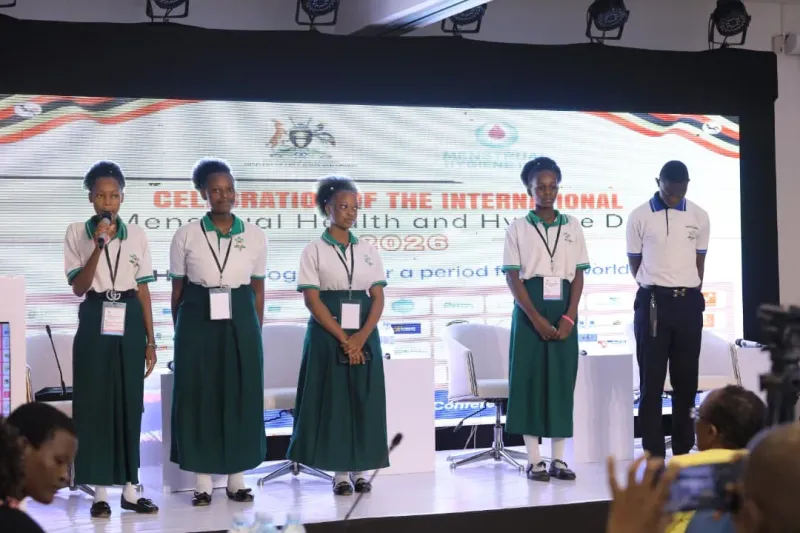
The Ministry of Education and Sports officially rolled out the Menstrual Health Guidelines for Schools and Education Institutions during the International Menstrual Health & Hygiene Day 2026 National Conference held at the UNICEF Conference Hall in Kampala.
The conference brought together government ministries, development partners, civil society organizations, educators, cultural leaders, and learners to strengthen conversations around menstrual health, dignity, and equal access to education.
Held under the theme “Together for a period friendly world,” the event focused on strengthening policy implementation, accountability, and access to menstrual health solutions for all learners across Uganda.
According to the Ministry of Education and Sports, the newly rolled-out Menstrual Health Guidelines provide a comprehensive framework for schools and institutions to effectively address the needs of menstruating learners, uphold dignity, improve school attendance, and support equitable access to education.
The Ministry further noted that this year’s commemoration focused on the national rollout of the guidelines alongside strengthened monitoring of their implementation to promote safe and supportive learning environments for all learners.
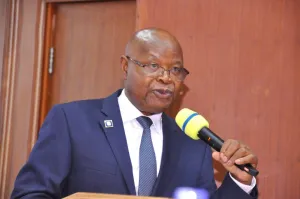
Speaking during the conference, Dr. Hajat Safina Mutumba, representing the Commissioner at the Ministry of Education and Sports, described the event as “an accountability moment” rather than a celebration.
“This is not a celebration - it is an accountability moment,” she said, while highlighting progress made in involving boys in menstrual health advocacy, including participation in making reusable sanitary pads and helping to break stigma surrounding menstruation.
Hajjat Safina Mutumba, representing the Director of Basic and Secondary Education at the Ministry, emphasized that menstrual hygiene is not only a health issue but also an education, dignity, and equality issue affecting thousands of girls across Uganda.
She noted that many girls continue to miss school due to lack of sanitary materials, inadequate WASH facilities, stigma, and limited psychosocial support, calling for stronger accountability and sustained investment in menstrual health for learners.
“Your voices, your lived experiences, and your courage in breaking the silence around menstruation are the most powerful forces for change we have,” Mutumba told young participants during the conference.
The conference placed young people at the center of national conversations on menstrual health and dignity, with stakeholders emphasizing that menstrual health is directly linked to education, public health, gender equality, and human rights.
Participants stressed that every learner deserves access to safe menstrual products, accurate information, supportive school environments, and dignity throughout their education journey.
Dr. Kebirungi Harriet delivered a keynote address describing menstruation as a normal biological process that has too often been treated with silence and stigma.
She emphasized that menstrual health should not be viewed solely as a “women’s issue,” but rather as an education, equity, and development challenge requiring collective responsibility across all sectors.
Dr. Kebirungi called for action to end stigma, improve WASH infrastructure, and ensure girls remain in school with dignity.
Dr. Harriet urged MPs present to push for tax cuts on locally made menstrual products to improve affordability. She said slow progress persists as it’s seen as a women’s issue, adding it would differ if it affected men.
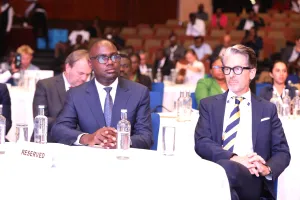
Representatives from the European Union in Uganda also reaffirmed their commitment to supporting girls’ education and menstrual health initiatives in partnership with the Government of Uganda, UNICEF Uganda, and other stakeholders.
Juliet, representing the EU in Uganda, said no girl should miss school, feel ashamed, or face risks because of menstruation.
“We reaffirm a simple truth: no girl in Uganda should miss school, feel ashamed, or be exposed to risk because of menstruation,” she said.
She added that menstrual health is linked to dignity, education, and equality, while highlighting ongoing investments in safer schools, improved WASH facilities, health information, and support services for girls.
Juliet also highlighted achievements under the Gender for Development Uganda programme, including support that reached more than 5,000 vulnerable adolescent girls in Northern Uganda with menstrual hygiene materials and cash support to help them stay in school.
According to the EU representative, nearly 1,800 out-of-school adolescents, more than half of them girls, were also supported to return to learning through accelerated education programmes.
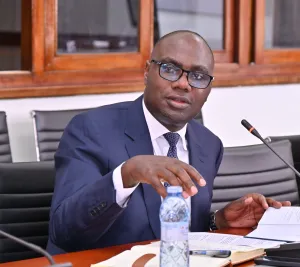
Mr. Richard Minze from the Ministry of Education and sports highlighted the Ministry’s multisectoral and holistic approach, noting that while there may not be a standalone budget line, menstrual health is integrated within broader development grants and education programming. He emphasized the need to re-strategize priorities when it comes to MHH
Ms. Petua Isabirye from Equal Opportunities Commission emphasized emphasized that MHH must be prioritized across planning and budgeting processes. She noted that there are still gaps in accountability and tracking, as current national budget assessments lack explicit indicators to measure allocation and investment in menstrual health and hygiene management.
Angella Nansubuga from the Ministry of Education and Sports also highlighted key policies and guidelines supporting menstrual health, including the Education Act, policies on inclusion and violence against children in schools, the MHH Guidelines for schools and educational institutions, and the national MHH strategy implemented through a multisectoral approach. She emphasized the need for engagement from different actors at all levels, especially at the parliamentary level.
Civil society organizations including Smart Girls Uganda joined the national commemoration and called for stronger collaboration to build a more inclusive and period-friendly Uganda.
The conference concluded with renewed calls for sustained partnerships, accountability, and investments to ensure that menstruation no longer becomes a barrier to education and opportunity for girls across Uganda.


Sunrise reporter
Leave a Comment
Your email address will not be published.