


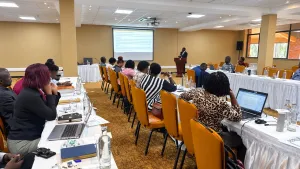



The Uganda Virus Research Institute (UVRI) has marked 90 years of scientific contribution, highlighting decades of biomedical research, disease surveillance, outbreak response and support to global public health efforts.
The Ministry of Health Uganda joined UVRI in celebrating the institution’s 90th anniversary, recognizing its role in strengthening Uganda’s health system through research, laboratory capacity and response to infectious disease threats.
“For nine decades, UVRI has been at the forefront of biomedical research, disease surveillance, and outbreak response, strengthening Uganda’s health system and contributing to global public health,” the Ministry of Health said in a message celebrating the milestone.
UVRI’s role in Uganda’s health security
Over the years, UVRI has played an important role in Uganda’s disease research and surveillance efforts. According to remarks shared during the anniversary events, the institute regained momentum after periods of political instability in the 1970s and early 1980s and later became Uganda’s national reference laboratory for HIV.
Prof. Pontiano Kaleebu, Director of UVRI, highlighted the institute’s historical journey and its contribution to HIV research and national laboratory capacity.
The anniversary celebrations also focused on the importance of scientific institutions in preparing countries for future health emergencies.
Laboratory systems key to pandemic preparedness
Dr. Susan Nabadda, Commissioner for National Laboratory and Diagnostic Services at Uganda’s Ministry of Health, said strong diagnostic systems are essential for health security.
“Diagnostics are the foundation of health security,” she said, emphasizing that countries need strong laboratory systems before outbreaks occur rather than waiting until a crisis begins.
She called for increased investment in: Human resources alongside laboratory infrastructure, one Health surveillance systems, genomics and digital health capacity, domestic health financing, African manufacturing and innovation, and turning research findings into public health policies and action.
Dr. Nabadda stressed that countries cannot effectively respond to health threats they cannot detect.
Calls for stronger vaccine innovation and manufacturing in Africa
The UVRI anniversary also highlighted Africa’s growing role in vaccine research and manufacturing.
Dr. Mark Feinberg, President and CEO of IAVI, said continued progress in vaccine development requires funding across the full innovation pathway, from early scientific discovery to commercial sustainability.
“For Africa to continue producing new vaccines for diseases that disproportionately affect our populations, we must ensure that funding supports the entire innovation pathway,” Feinberg said.
He also recognized investments by governments, development partners and donors in strengthening vaccine manufacturing capacity across Africa, saying the continent’s progress in expanding vaccine production deserves recognition.
WHO highlights need for preparedness before outbreaks
During the UVRI 90th anniversary discussions, World Health Organization Uganda emphasized that strong scientific institutions are central to health security.
Dr. Otim Patrick Cossy Ramadan, WHO African Region Regional Emergency Response Manager, said lessons from recent public health emergencies show that preparedness cannot start when an outbreak has already begun.
He highlighted the importance of long-term investment in: Research, disease surveillance, laboratory systems, Innovation, and health workforce development.
According to WHO Uganda, these investments help countries detect, prevent and respond to health threats more effectively.
UVRI’s 90-year milestone
As UVRI celebrates nine decades of scientific work, health leaders and partners have highlighted the institute’s continuing role in advancing research, strengthening laboratory systems and supporting Uganda and Africa’s preparedness for future health challenges.
The anniversary serves as a reminder that sustained investment in science, innovation and health systems is critical for protecting communities from emerging diseases.







Phillip Baraka
Leave a Comment
Your email address will not be published.