


Around 100 children seized from a Catholic school in central Nigeria have regained their freedom, roughly a month after they were taken. Their return to safety became evident when a convoy of minibuses, flanked by military trucks and armoured escorts, rolled into Minna, the Niger state capital, where Governor Umar Bago officially received them.
Authorities have released few details about how the rescue was achieved. It remains uncertain whether the operation relied on negotiations, force, or a combination of both, and officials have not confirmed if any ransom payments were involved.
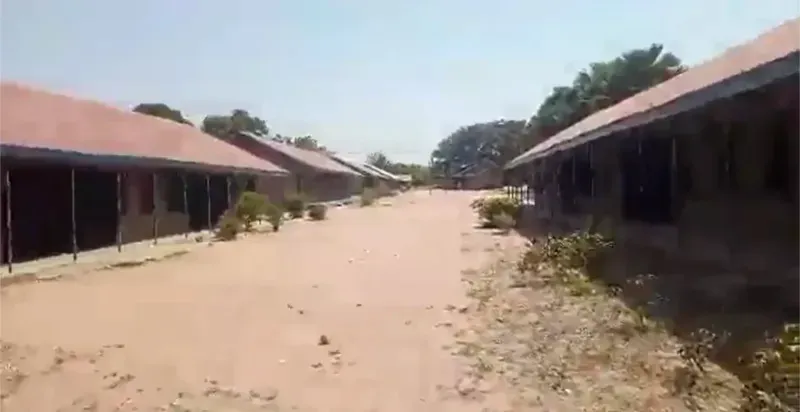
The mass abduction occurred in late November, when more than 250 pupils and a dozen staff members were kidnapped from St Mary’s Catholic School in Papiri, one of several large-scale raids that have shaken north-central Nigeria. According to Nasarawa State Governor Abdullahi Sule, the federal government played a “key role” in securing the children’s release, though he noted that the “behind-the-scenes” work could not yet be disclosed for security reasons.
Just days before the rescue, National Security Adviser Nuhu Ribadu travelled to Papiri, where he met community leaders led by Bishop Bulus Dauwa Yohanna and promised that the children would soon be reunited with their families.
Recent months have seen a surge in attacks on both schools and religious sites. The assault on St Mary’s on 21 November followed two other major kidnappings: on 18 November, two people were killed and 38 abducted at the Christ Apostolic Church in Kwara state; the day before, two people were killed and 25 Muslim students were seized from Government Girls’ Secondary School in Kebbi state. All those taken in the Kwara and Kebbi incidents have since been released.
The violence has continued. Last week, gunmen staged two separate abductions, one at a new church in Kogi state, where a pastor, his wife and several worshippers were taken, and another in Sokoto state, where a bride and her bridesmaids were among those kidnapped.
Security analysts say it is still unclear which groups are responsible. Many believe criminal gangs seeking ransom are behind most attacks, although a presidential spokesman previously suggested that jihadist elements may be involved. Despite a nationwide ban on ransom payments intended to cut off funding to kidnappers, there is widespread belief that such payments continue.
Nigeria’s long-running security crisis drew global attention recently after US President Donald Trump warned he would consider sending American troops if the government “continues to allow the killing of Christians”. Nigerian authorities and local experts, however, maintain that victims come from all religious backgrounds and reject claims that Christians are being specifically targeted.


The Sunrise Editor
Leave a Comment
Your email address will not be published.