
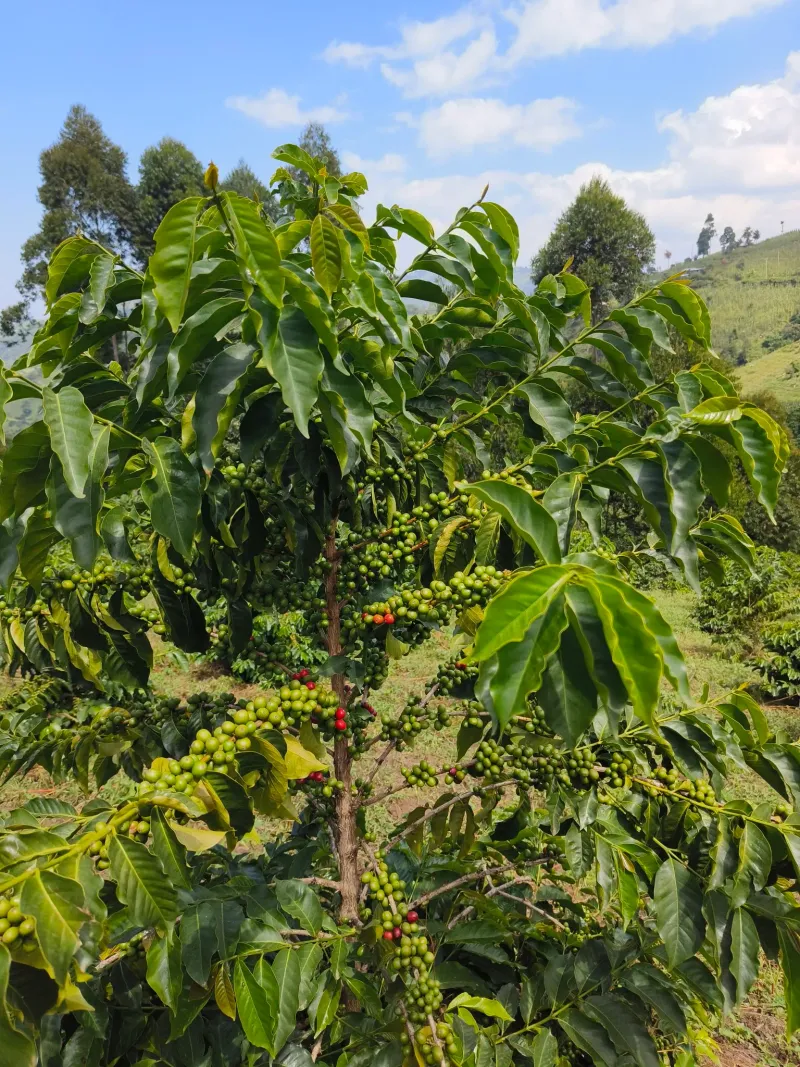





Uganda’s agricultural exporters are confronting a serious threat as the European Union’s new deforestation and traceability rules raise the risk of exclusion from markets valued at more than €2.7 billion across East Africa. With coffee remaining one of Uganda’s top foreign-exchange earners, the country’s exporters face mounting pressure to prove their supply chains are compliant before the EU’s updated requirements take effect on December 30, 2025.
The EU Deforestation Regulation obliges exporters to provide verifiable proof of the legal origin of their goods, backed by detailed digital traceability from farm to market. Yet awareness among East African agribusinesses remains low. A 2024 Danish Industry Report found that only around 15 percent of companies fully understand what the regulation requires, raising alarms about the region’s readiness.
Coffee producers are especially exposed as the EU continues to absorb the majority of East Africa’s coffee exports, making compliance essential for major producers including Uganda, Kenya, Tanzania, Ethiopia, Rwanda and Burundi. The scope of the regulation is broad, covering cocoa, tea, cereals, horticulture, oil crops, rubber and timber, sectors where Uganda targets premium European buyers who increasingly demand transparent supply chains.
“Traceability enables competitiveness, market access and financial inclusion,” said Susan Atyang, regional programme manager at the Agricultural Business Initiative, speaking during a recent webinar hosted by Swiss agritech firm Koltiva. She noted that traceability has shifted from a technical add-on to “the minimum for staying relevant in Europe’s tightening agricultural markets”.
The challenge is intensified by Uganda’s heavy reliance on smallholder farmers. More than three-quarters of the country’s agriculture is smallholder-driven, and many producers lack formal land documents required for geo-mapping and digital verification. Limited internet access and high poverty levels in rural communities further complicate efforts to gather reliable data. The Danish Industry Report highlights key barriers: 65 percent of companies need clearer compliance guidance, 57 percent require operational frameworks, and over half lack access to digital tools. Some European buyers have already reduced sourcing from East African suppliers due to concerns about verification in smallholder-dominated chains.
Industry experts emphasize that traceability is not just a technological upgrade but also a matter of awareness. “You cannot achieve traceability without farmer empowerment,” said Waithera Muriithi, strategy and innovation lead at Café Africa Uganda. “The real challenge is not ability, it is awareness. When farmers understand the benefits, adoption accelerates.” Café Africa is coordinating national-level efforts, including the creation of EUDR task forces and a centralised data warehouse to support exporters.
The government reform that dissolved the Uganda Coffee Development Authority (UCDA) and transferred its functions to the Ministry of Agriculture, Animal Industry and Fisheries has placed additional urgency on streamlining national systems. The ministry now leads coordination of coffee sector data and compliance initiatives previously overseen by UCDA.
Cost remains one of the most debated aspects of compliance. Exporters, processors and cooperatives argue that rural farmers cannot shoulder the burden of digital onboarding and mapping. “There is no sustainability without traceability, and the demand will only keep increasing,” said Fanny Butler, Koltiva’s senior head of markets for Europe, the Middle East and Africa. She stressed that shared-cost models where buyers subsidize onboarding, suppliers maintain data quality and development partners support mapping offer the only practical path for scaling compliance in smallholder regions.
This shared-investment approach is increasingly being adopted as exporters recognise that coordinated action will be essential to meet the EU’s requirements.
The consequences of failing to comply extend far beyond short-term market access. East Africa is projected to contribute nearly 19 percent of global agricultural production growth over the next decade, according to OECD and FAO estimates. However, achieving this potential hinges on how quickly countries like Uganda can close the compliance gap and digitize their supply chains.
Manfred Borer, chief executive of Koltiva, underscored the stakes: “East Africa has the resources, the productive ecosystems and the global demand. What it needs now is synchronised readiness. Traceability is no longer a niche initiative. It is the price of participating in the world’s most valuable markets.”
For Uganda’s exporters, the message is increasingly clear: adopting digital traceability systems early will secure continued access to high-value European buyers, while delays could lock producers out of the EU altogether as the 2025 deadline approaches.






The Sunrise Editor
Leave a Comment
Your email address will not be published.