
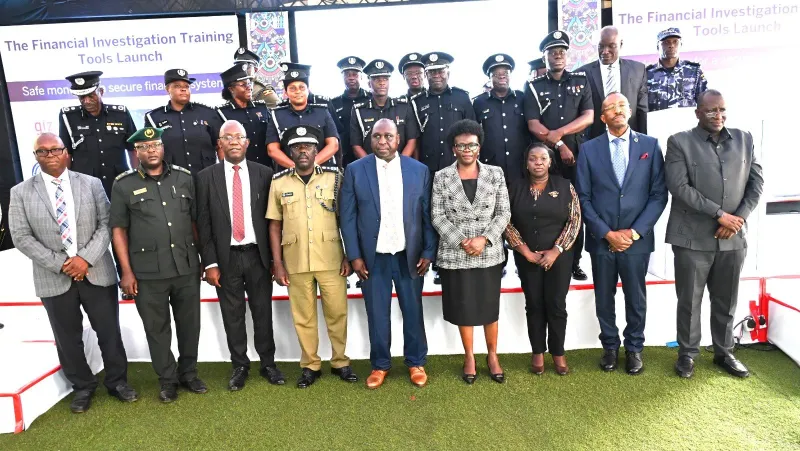



Uganda’s leading law enforcement and accountability institutions have jointly launched a Financial Investigations Training Manual and Tools, marking a significant step in strengthening the country’s fight against financial and economic crimes.
The initiative was officially unveiled at the Uganda Police Force Headquarters in Naguru, Kampala, bringing together key partner agencies including the Inspectorate of Government (IGG Uganda), the Financial Intelligence Authority (FIA), Uganda Police Force, Uganda Revenue Authority (URA), Office of the Director of Public Prosecutions (ODPP), and the Uganda Wildlife Authority (UWA).
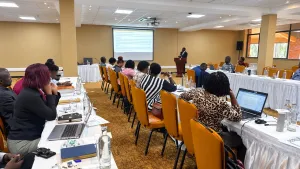
The collaboratively developed manual is designed as a comprehensive guide for financial crime investigators, providing structured procedures, modern investigative techniques, and clear methodologies for tracing illicit financial flows and recovering stolen assets.
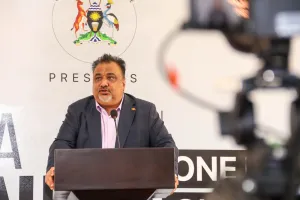
Speaking during the launch, Deputy Inspector General of Police James Ocaya emphasized that the Uganda Police Force is prioritizing institutional transformation, with a focus on improving the quality of investigations, especially in financial and economic crime cases. He noted that effective financial investigations depend on the ability to trace the origin, ownership, movement, and final destination of funds linked to criminal activity.
The Financial Intelligence Authority also highlighted that the training tools are intended to enhance the capacity of all stakeholders, ensuring that investigators are equipped with the knowledge and skills needed to address increasingly complex financial crimes.
The Inspectorate of Government underscored the importance of inter-agency cooperation, noting that the manual represents a shared commitment by institutions to move beyond individual mandates and work collectively toward safeguarding Uganda’s economic integrity. IGG representatives stressed that such collaboration strengthens case-building, improves evidence-based investigations, and increases the likelihood of successful prosecutions and asset recovery.
The manual is also expected to serve as a capacity-building resource for both new and experienced officers, ensuring standardized training across institutions involved in financial crime investigations. It is positioned as a timely response to the evolving nature of financial crime, which continues to grow in sophistication and cross-border complexity.
By promoting intelligence-led investigations and structured coordination among agencies, the initiative is expected to significantly improve Uganda’s ability to detect, investigate, and prosecute financial crimes while strengthening the overall stability of the financial system.
The launch reflects a broader national strategy aimed at reinforcing anti-money laundering efforts, improving accountability, and ensuring that Uganda’s financial system remains secure, transparent, and resilient against illicit activities.






Paul Rubongyera
Leave a Comment
Your email address will not be published.