
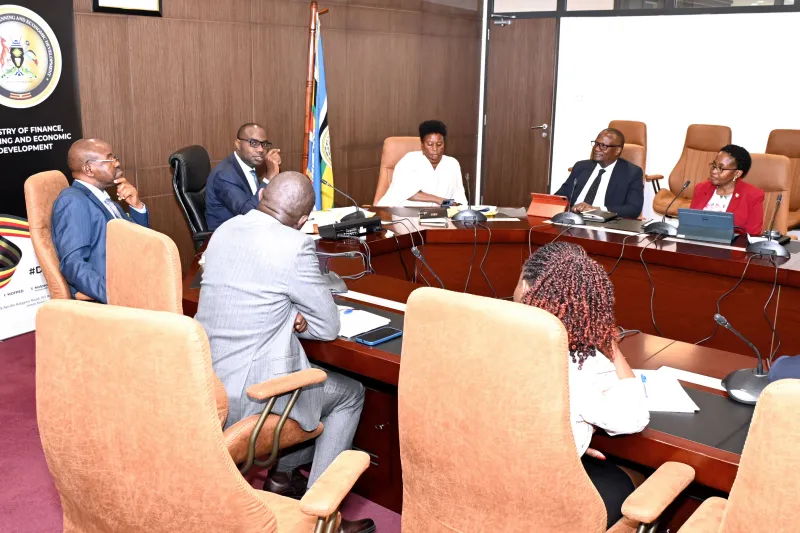



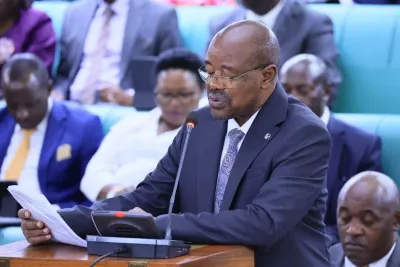
Uganda’s Finance Minister Henry Musasizi has urged the Uganda National Oil Company (UNOC) to explore innovative and sustainable financing options to strengthen its operations and reduce reliance on government budgetary support as the country moves closer to first oil.
Musasizi, together with Hon. Amos Lugoloobi and Hon. Cissy Mulondo, tasked the UNOC Board with finding financing approaches that can support the company’s operations and long-term growth.
The Finance Minister commended UNOC for maintaining Uganda’s petroleum supply despite global geopolitical tensions and conflicts affecting major oil-producing regions. He noted that fuel has remained available in Uganda at relatively stable prices, but questioned the significant variations in pump prices across the country, citing differences between prices in Kabale, Masaka, Mbarara and Kampala.
The call for alternative financing comes as UNOC reports progress in Uganda’s oil and gas sector. By the end of June 2026, the East African Crude Oil Pipeline (EACOP) project had reached 89.4% completion, while the Kingfisher project stood at 79.36% and Tilenga at 74.2%.
As Uganda prepares for first oil, UNOC expects approximately US$72 million in cash-call obligations. The company is also strengthening its role in the petroleum supply chain, reporting a 39% increase in sole petroleum importation and supplying 36 oil marketing companies.
UNOC’s financial performance has also improved, with gross margins rising from Sh387 billion to Sh540 billion in the 2025/26 financial year. Under its US$2 billion Vitol Bahrain financing facility, US$150 million had been disbursed, while Sh536 billion was transferred to the Ministry of Finance.
The national oil company is simultaneously advancing several major infrastructure projects aimed at strengthening Uganda’s petroleum storage and supply capacity. These include the 320-million-litre Kampala Storage Terminal and a 110-million-litre storage terminal in Mombasa. UNOC is also planning a refinery with a proposed capacity of 60,000 barrels per day.
At Kabalega Industrial Park, Phase One infrastructure is also being developed, with Sh37.96 billion secured for the project.
As part of its push for greater financial independence, UNOC has proposed a sustainable self-financing model. The company says its sole-importation business generates about US$3 million in administrative charges each month, providing a potential source of internally generated revenue.
Despite its push for financial independence, UNOC says continued government commitment to capitalising the company remains critical to unlocking its potential and enabling it to contribute more to Uganda’s economic growth.
The engagement between the Finance Ministry and UNOC therefore underscores the government’s focus on building a financially sustainable national oil company capable of supporting Uganda’s petroleum sector as the country advances towards first oil.




Sunrise reporter
Leave a Comment
Your email address will not be published.