




Economy
Uganda’s Economy Shows Resilience Ahead of 2026 Elections: Growth, Investments, and Fiscal Stability
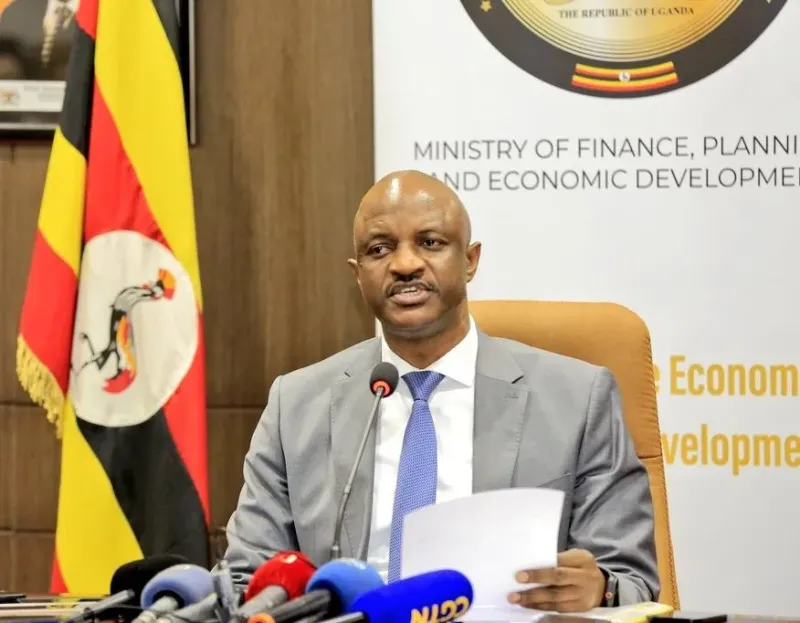
As Uganda approaches the January 2026 general elections, the country’s economy is demonstrating remarkable resilience despite global uncertainties. According to recent updates from the Ministry of Finance, Planning and Economic Development and the Statement of Economic and Fiscal Policy by Dr. Ramathan Ggoobi, the Permanent secretary and secretary to the Treasury, Uganda’s domestic economy has continued to thrive, underpinned by sound macroeconomic management and targeted government interventions.
Strong Economic Growth Amid Global Challenges
“Economic growth in Uganda was robust at 6.3 percent in FY 2024/25, underpinned by continued macroeconomic stability due to effective coordination between fiscal and monetary policy,” Dr. Ggoobi notes. This performance is particularly impressive given a global environment marked by geopolitical tensions, trade disruptions, and protectionist measures that have slowed advanced and emerging economies.
Sub-Saharan Africa, by contrast, is showing gradual improvement, offering Uganda opportunities to expand exports and deepen regional economic integration. Growth in the region is expected to rise to 4.4 percent in 2026, highlighting a favorable backdrop for Uganda’s industrialization and market expansion ambitions.
Inflation and Price Stability
Uganda has maintained low and stable inflation, a key factor underpinning economic confidence. Annual headline and core inflation averaged 3.5 percent and 3.9 percent respectively in FY 2024/25, staying well below the 5 percent policy target. Prudent monetary policy, coupled with favorable weather and good harvests, has helped sustain a steady food supply.
In FY 2025/26, inflationary pressures remain subdued:
- July–October 2025: headline inflation averaged 3.7%, core inflation 3.9%.
- October 2025: both headline and core inflation were 3.4%.
- Energy, fuel, and utilities inflation fell to 0.3%, down from 1.8% the previous year, due to declining global oil prices and routing petroleum imports through the Uganda National Oil Company (UNOC).
- Food crop inflation has been slightly elevated at 4.9%, driven by high demand from neighboring countries.
Exchange Rate and Foreign Reserves Strengthen
The Uganda Shilling has continued to strengthen against the US Dollar, appreciating 1% on average per month since the start of FY 2025/26. Between June and October 2025, it appreciated 3.9%, trading at an average midrate of Shs 3,463.9/USD in October, compared to Shs 3,605.8/USD in June.
This currency strength is supported by inflows from exports, particularly coffee, remittances, tourism receipts, and FDI in the oil sector, as well as portfolio investments in government securities. Consequently, foreign exchange reserves rose to USD 4.98 billion, enough to cover 3.7 months of imports, a significant improvement from 2.3 months in September 2024.
Investment Climate and External Sector Performance
Uganda’s investment environment has strengthened confidence among both local and foreign investors. Foreign Direct Investment (FDI) reached USD 2.98 billion in FY 2024/25, largely driven by developments in the oil and gas sector. Remittances from the Ugandan diaspora rose to USD 1.57 billion, marking a record high alongside tourism receipts, which have rebounded post-pandemic to USD 1.57 billion.
“Together, these represent the highest levels of FDI and remittances ever recorded in a single financial year,” the report emphasizes. The improved external position has restored Uganda’s foreign exchange reserves and reinforced macroeconomic stability.
Broad-Based Sectoral Growth
The economy’s growth is not limited to one sector. In FY 2024/25:
- Industry: 6.9% growth, led by manufacturing and construction.
- Agriculture, Forestry & Fishing: 6.8% growth.
- Services: 5.4%, remaining a key contributor to domestic activity.
High-frequency indicators like the Purchasing Managers Index (PMI) averaged 53.6 in Q1 FY 2025/26, signaling strong private sector demand. The Business Tendency Index (BTI) stood at 58.4, reflecting high optimism among investors.
Government Initiatives Driving Transformation
Key government programs have played a pivotal role in sustaining growth and improving livelihoods. The Parish Development Model (PDM), with Shs 1,064 billion disbursed in FY 2024/25, along with the Emyooga program (Shs 100 billion) and the capitalization of the Uganda Development Bank (Shs 80.6 billion), have strengthened private sector development, production, and productivity.
The socio-economic impact is evident: the share of households in subsistence economies fell to 33.1%, and poverty declined to 16.1%, down from 20.3% in FY 2019/20.
Prospects for FY 2025/26 and Beyond
Looking ahead, the government projects 6.6% growth for FY 2025/26, with the medium-term target surpassing 7%. “This will mainly be driven by expansion in oil and gas sector activities, continued investment in infrastructure, strengthened agricultural output, growth in services, and enhanced foreign direct investment inflows,” the Ministry notes.
The first oil production, expected in FY 2026/27, is poised to create ripple effects across manufacturing, construction, transport, tourism, real estate, and financial services.
Election Preparations and Fiscal Responsibility
As Uganda prepares for the elections, fiscal prudence remains a priority. According to Dr. Ggoobi, “since the start of financial year 2023/24, the Ministry of Finance has allocated and released a total of Shs 1,116.72 billion to the various agencies responsible for implementing the electoral roadmap.” This demonstrates the government’s commitment to facilitating a smooth, transparent electoral process while maintaining economic stability.
Conclusion
Uganda’s economic story is one of resilience, strategic planning, and socio-economic transformation. Despite global challenges, the country is poised for growth, strengthened by robust sectoral performance, strategic investments, low inflation, and a strong currency. As the 2026 elections approach, Uganda continues to balance fiscal responsibility, electoral readiness, and economic ambition, laying the foundation for a prosperous and inclusive future.




Carne Lee
Leave a Comment
Your email address will not be published.