




Uganda is set to accelerate the industrialisation of its coffee sector as Government moves to shift focus from producing and exporting raw coffee beans to value addition, manufacturing and expanding access to international markets.
The new strategy is aimed at increasing farmers' incomes, creating employment opportunities, attracting investment and ensuring that Uganda retains a greater share of the value generated from its coffee industry.
The Government position was outlined during the National Coffee Strategic Retreat and Coffee Round Table at Inspire Africa Coffee Park in Ntungamo District, western Uganda, where government officials, farmers, cooperatives, processors, investors and development partners discussed the future of the country's coffee industry.
Officiating at the retreat, Minister of State for Trade, Hon. Sanjay Tanna, called for a decisive shift from discussions to implementation, stressing that Uganda needs clear priorities, institutional responsibilities, timelines and measurable results to transform its coffee sector.
Held under the theme, "Positioning Coffee as a Driver of Industrialization, Tourism, Investment and Global Commercial Diplomacy," the meeting focused on positioning coffee as a major contributor to Uganda's wider economic transformation.
Tanna identified value addition, quality improvement, branding, market access, competitiveness and stronger public-private partnerships as priority areas requiring accelerated action.
He said Uganda's coffee strategy should deliver practical results, including improved farmer incomes, stronger businesses, increased exports, job creation and greater retention of economic value within the country.
The Minister reaffirmed the Ministry of Trade's commitment to improving the business environment and strengthening partnerships that can attract investment and make Ugandan coffee more competitive in both domestic and international markets.
He also challenged stakeholders to develop practical, measurable and time-bound interventions to address challenges affecting different stages of the coffee value chain.
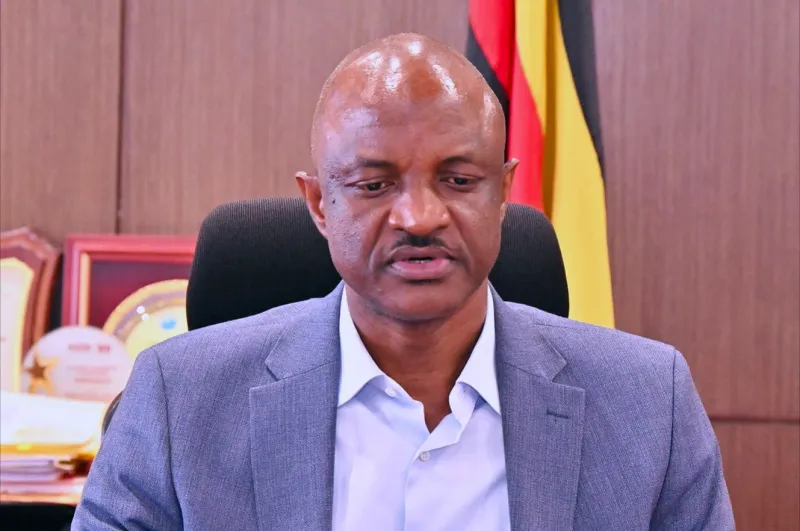
Permanent Secretary and Secretary to the Treasury, Dr. Ramathan Ggoobi, reinforced the Government's commitment to the transformation by announcing a shift in public investment priorities from supporting coffee production alone towards productivity, value addition, industrialisation and export competitiveness.
Uganda earned US$2.5 billion from coffee exports in 2025, shipping 8.7 million 60-kilogramme bags, with most of the exports sold as green coffee.
According to Ggoobi, the figures demonstrate Uganda's strength in coffee production but also highlight the opportunity to earn more by expanding domestic processing, branding, distribution and the marketing of finished coffee products.
He explained that from the 2027/2028 financial year, Government investment will increasingly prioritise irrigation, climate resilience, agricultural research, extension services, farmer aggregation, traceability, washing and grading facilities, laboratories, certification, industrial skills, market development and export promotion.
Under the proposed approach, Government will focus on providing the necessary infrastructure and supportive policy environment, while the private sector is expected to lead commercially viable investments in coffee roasting, packaging, soluble coffee, extracts and other high-value products.
Coffee tourism and public procurement will also be promoted as part of efforts to expand domestic consumption and develop new markets for Ugandan coffee.
Dr Ggoobi emphasised that public support would be targeted, temporary and performance-based, with investments assessed according to their contribution to productivity, competitiveness, export growth, employment and economic returns.
The Chairperson of Inspire Africa Group, Dr. Robert Lim Lim, welcomed Government officials and other stakeholders to the engagement, describing the Coffee Park as an important platform for demonstrating how Uganda and Africa can move from exporting raw coffee to processing, branding and competing in higher-value international markets.
He called for stronger partnerships in processing, research, innovation, quality standards and market development, reaffirming Inspire Africa's commitment to working with Government and other industry players to develop a competitive coffee ecosystem.
The proposed transformation comes amid broader efforts to strengthen Uganda's domestic coffee-processing capacity. The Africa Coffee Park in Rwashamaire, Ntungamo District, has been developed as a value-addition facility intended to support the production of refined coffee products for domestic and export markets.
Uganda's coffee industry therefore faces an important opportunity to build on its production and export performance by expanding the industries and businesses connected to the crop.
The Government's message is that the country's future coffee success should not be measured by the number of bags exported alone, but also by the value of products manufactured locally, the jobs created, the incomes earned by farmers and the country's competitiveness in the global coffee business.





Sunrise reporter
Leave a Comment
Your email address will not be published.