





Uganda has been ranked third in Africa on the Absa Africa Financial Markets Index, reaffirming the country’s growing strength, resilience, and attractiveness as a financial and investment destination on the continent.
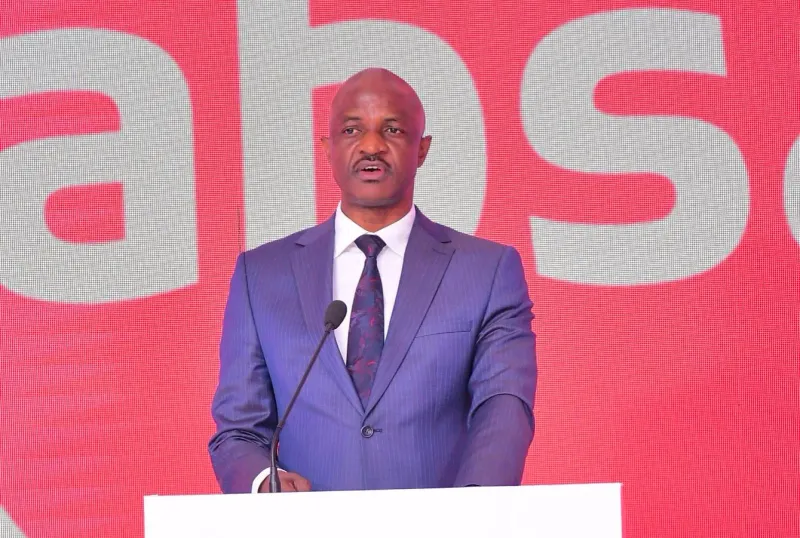
Speaking at the Absa Africa Financial Markets Index and Economic Outlook Forum held on Tuesday at the Sheraton Kampala Hotel, the Permanent Secretary and Secretary to the Treasury (PSST), Dr Ramathan Ggoobi, said global economies are undergoing significant adjustments driven by tighter financial conditions, geopolitical tensions, and changing trade dynamics.
Dr Ggoobi, who was the Chief Guest at the forum, noted that while the current global environment presents uncertainty, it also offers opportunities particularly for African economies that have invested in stability, reform institutions, and deepening financial markets. He emphasized that Uganda is committed to positioning itself among these forward-looking economies.
Despite ongoing global challenges, Dr Ggoobi revealed that Uganda’s economic growth is projected to range between 6.5 percent and 7 percent this year, an election year.
"Uganda is ranked among the fastest-growing economies not just in the region but the world and is expected to remain so in the medium term”, said the PSST.
The PSST attributed Uganda’s strong performance to prudent macroeconomic management and sustained structural reforms, particularly within financial markets and regulatory frameworks. These reforms, he said, have delivered tangible outcomes for the economy.
Key indicators include the expansion of nominal GDP to approximately USD 68.4 billion by June 2026, alongside a projected income per capita exceeding USD 1,399.
Additional macroeconomic gains highlighted include controlled inflation averaging 3.5 percent, a stable Uganda shilling, rising export earnings, and growth in foreign direct investment (FDI), tourism receipts, and remittance inflows.
Dr Ggoobi outlined Uganda’s priority reforms in the financial sector, focusing on rebuilding capital markets capable of providing long-term debt and equity financing. He also emphasized the importance of attracting venture capital to support innovation, especially for high-risk enterprises that require lower collateral thresholds.
Another key proposal involves exploring the establishment of a dedicated SME-focused stock exchange, aimed at supporting businesses that do not yet meet the requirements for listing on the main securities exchange.
In addition, the PSST highlighted ongoing efforts to capitalize the Uganda Development Bank (UDB) to address the growing demand for long-term, affordable financing across productive sectors of the economy.
“We are working on a mission to build a 500 billion-dollar-economy by 2040 and our strategic bets are the ATMS and enablers,” said the PSST.
Financial inclusion remains a cornerstone of Uganda’s transformation agenda, according to Dr Ggoobi. He pointed to the Parish Development Model (PDM) as a successful example, noting that it has enabled the digital delivery of over USD 1 billion to citizens who were previously excluded by traditional financial systems.
“My message today is simple. Uganda’s economic fundamentals are strong, our policy direction is clear and our opportunities are expanding. The work ahead is to deepen financial markets and sustain momentum through continued reforms and partnerships,” said Dr Ggoobi.
He concluded by thanking Absa Group and its partners for providing a platform that brings together policymakers, regulators, and market leaders to reflect on Africa’s financial progress and shape the continent’s future financial direction.







The Sunrise Editor
Leave a Comment
Your email address will not be published.