




Ugandan electricity consumers are expected to continue paying the same power tariffs in the first quarter of 2026 as those charged in the last quarter of 2025, according to information from the Electricity Regulatory Authority (ERA), as the country balances affordability with persistent supply challenges.
Under the prevailing tariff structure, domestic customers will continue to pay a lifeline tariff of UGX 250 for the first 15 kilowatt hours, while the average domestic tariff stands at UGX 756.2 per unit.
Commercial consumers are charged an average of UGX 546.4 per unit, while medium-scale manufacturers pay UGX 355.1 per unit, a notable reduction from earlier rates. Large industrial consumers are billed UGX 300.4 per unit, while extra-large industrial users, including steel and cement producers, pay an average of UGX 203.6 per unit.
ERA data shows that electricity tariffs have now remained unchanged for several consecutive quarters and are about 14 percent lower than 2024 levels, with the manufacturing sector benefiting from the most significant reductions.
Exchange rate gains and demand growth behind tariff stability
ERA has previously explained that lower tariffs were driven by several macro-economic factors, including the appreciation of the Uganda shilling against the US dollar and sustained growth in electricity demand, which has been projected at over 10 percent annually.
Electricity tariffs in Uganda are determined through an Annual Tariff Review Public Hearing, a process that allows consumers, investors, and other stakeholders to scrutinise proposed expenditures and planned investments before final approval.
“This is aimed to rigorously test the justification of proposed expenditures and projects; capture public feedback and sector expectations; and reinforce accountability in tariff determination,” ERA officials have stated during the ongoing review process.
Supply reliability overshadows tariff relief
Despite lower and stable tariffs, electricity supply reliability has emerged as the dominant concern for households, businesses, and industries, particularly following the transition of the national electricity distribution network from Umeme Ltd to Uganda Electricity Distribution Company Limited (UEDCL) in 2025.
Public complaints over frequent outages, voltage fluctuations, and delayed restoration have become widespread, with comparisons frequently drawn between the former concessionaire and the state-owned distributor.
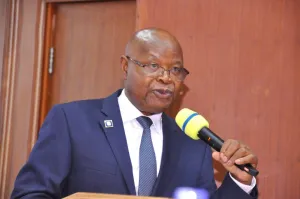
ERA Chief Executive Officer Eng. Ziria Tibalwa Waako acknowledged the challenges, saying, “We are acutely aware that many households, businesses, and institutions have experienced power interruptions during the year, and we recognise the inconvenience and economic strain this has caused.”
She added that affordability alone is not enough without reliable service, “While lower tariffs have eased the cost of electricity for many consumers, we recognise that affordability alone is not sufficient without a reliable supply. Addressing reliability challenges, therefore, remains a central focus of our regulatory efforts.”
Infrastructure constraints and transition pains
According to ERA, Uganda’s installed electricity generation capacity currently stands at about 2,098 megawatts, supported by 5,383 kilometres of transmission lines and nearly 80,000 kilometres of distribution infrastructure.
Peak electricity demand rose to around 1,300 megawatts by mid-2025, representing a year-on-year increase of roughly 25 percent. National grid connections have grown to about 2.52 million customers, translating into an estimated 60 to 65 percent electricity access rate.
However, Waako noted that several challenges continue to limit service quality, including technical losses, vandalism of infrastructure, land acquisition delays, and reliability issues inherited during the transition to UEDCL.
“We acknowledge the challenges that accompanied this transition, particularly those affecting power supply and network performance. We have listened carefully to consumers who experienced prolonged outages, voltage fluctuations, and delayed restoration during this period. These concerns are well noted and taken seriously,” she said.
Government steps up grid upgrades
The Ministry of Energy and Mineral Development says efforts are underway to strengthen the distribution network and stabilise supply, particularly in high-demand urban areas.
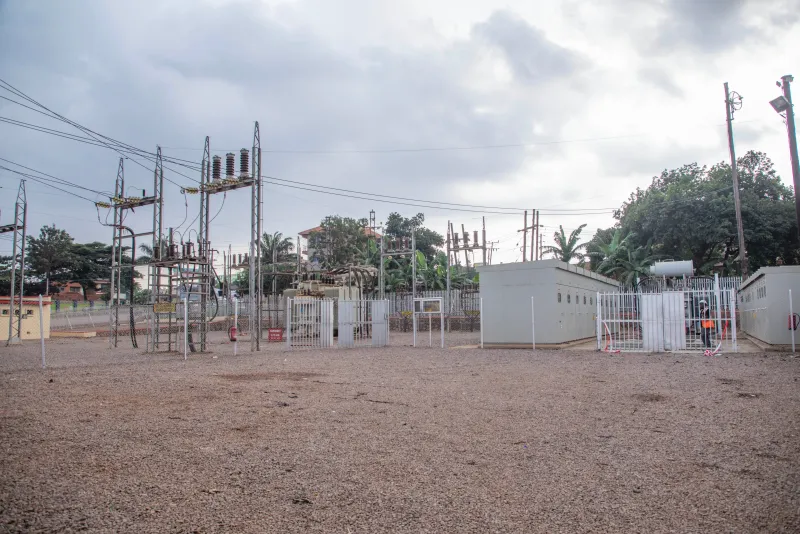
Energy Minister Ruth Nankabirwa recently cited upgrades at the Kampala South Substation, where capacity was expanded to support growing demand along Entebbe Road and surrounding neighbourhoods.
“Our focus remains delivering a stable, reliable power supply for Kampala and the country by 2026,” the minister said.
UEDCL reports that the installation of a new 10/14 MVA transformer at the substation is expected to improve reliability for over 108,000 households and more than 650 commercial customers, reducing outages and enhancing resilience across the network.
Similar upgrades have already been implemented at substations in Kakiri, Kabale, Masaka, Kumi, and Mubende, as part of a broader national grid optimisation programme.
Outlook: growth amid challenges
ERA says regulatory oversight has been intensified, with corrective measures and targeted investments approved to improve performance. At the same time, the government continues to pursue additional generation projects to support long-term demand growth.
Uganda’s energy planners remain optimistic about achieving universal electricity access by 2030, supported by ongoing investments in generation, transmission, and distribution infrastructure.
For now, however, the sector’s immediate test remains translating lower tariffs into reliable, uninterrupted power supply, a goal both regulators and government say remains firmly at the top of the national energy agenda.




Marlene Luwedde
Leave a Comment
Your email address will not be published.