
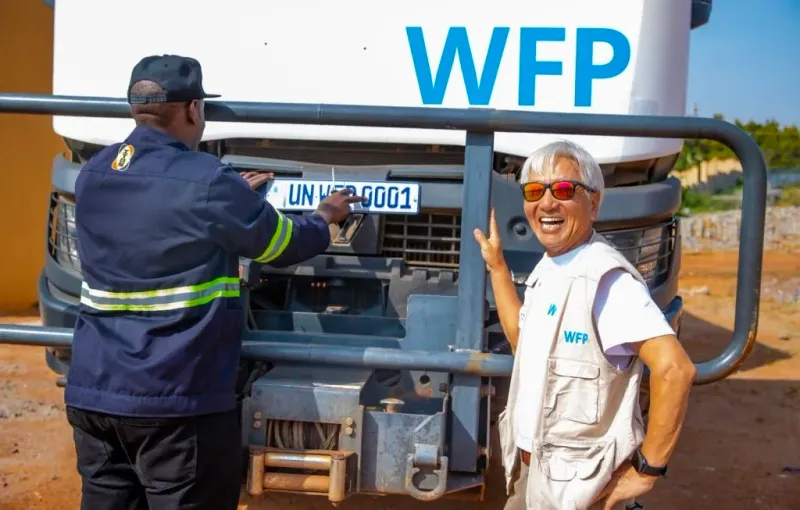
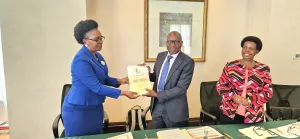


The Government of Uganda and the World Food Programme (WFP) have formally agreed to establish Kampala as the home of the WFP Global Fleet Hub, a strategic logistics centre aimed at strengthening humanitarian response across Africa. At the same ceremony, they launched specialised UN/WFP vehicle number plates for WFP’s emergency fleet, a move designed to speed up relief deliveries by easing cross‑border deployment of aid vehicles.
Officials say the new licence plates will allow WFP humanitarian convoys to bypass lengthy re‑registration and clearance procedures at international borders. This is expected to reduce bureaucratic delays and enable faster, more efficient movement of aid across the continent.
According to the government, Uganda’s location, established infrastructure and prior work under its digital plate system (the Intelligent Transport Monitoring System) made Kampala an ideal choice for the hub. During the launch, the government noted that the hub’s operations, including a fleet reportedly numbering more than 1,000 trucks, will generate jobs for drivers, mechanics and supply‑chain workers, providing new economic and skills‑development opportunities for Ugandans.
WFP’s Country Director for Uganda, Marcus Prior, described the hub as “a rapid deployment centre for humanitarian emergencies across Africa,” stressing that the new arrangements will help ensure faster delivery of food, medical supplies and other aid when crises strike.
Uganda’s government, represented by Charles Ssentongo (Chief of Protocol at the Ministry of Foreign Affairs), reaffirmed the country’s commitment to multilateral cooperation and to consolidating its role as a regional humanitarian logistics hub. Ssentongo said hosting the WFP Global Fleet Hub will reinforce Uganda’s growing profile as an important coordination centre for humanitarian action in Africa.
With the Global Fleet Hub now in place and special UN/WFP plates issued, Uganda is poised to enhance the speed, efficiency and scale of humanitarian aid delivery, across its borders and beyond, whenever disaster or conflict threatens communities in need.



Marlene Luwedde
Leave a Comment
Your email address will not be published.