
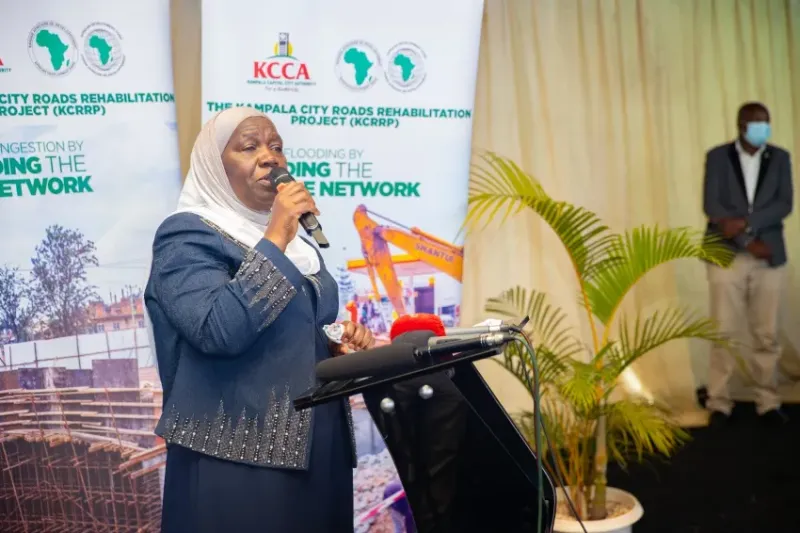





Kampala is undergoing one of its most significant infrastructure transformations in recent years as the Kampala City Roads Rehabilitation Project (KCRRP) reaches 78% completion, signaling major progress in reshaping the capital into a modern and efficient city.
Implemented by the Kampala Capital City Authority, the project is steadily improving mobility, reducing flooding, and enhancing road safety across Kampala. Officials describe the initiative as a game changer aligned with Uganda Vision 2040, with long-term benefits for urban planning and economic growth.
Speaking at a media briefing held at City Hall, the Minister for Kampala Capital City and Metropolitan Affairs, Minsa Kabanda, emphasized the critical role of infrastructure in transforming the city. She noted that improved road networks are essential for connecting communities, boosting productivity, and enhancing quality of life. She also urged contractors to maintain high standards and deliver work within agreed timelines while calling on the public to safeguard infrastructure.
KCCA Deputy Executive Director Benon Kigenyi acknowledged the disruption caused by ongoing construction works, including traffic congestion, dust, and noise, but stressed that these are temporary challenges necessary for long-term gains. He noted that Kampala has shifted from being a city plagued by potholes to an active construction hub, reflecting the scale of ongoing development.
The KCRRP covers more than 120 kilometers of roads, including key routes such as Salaama Road, Portbell Road, Old Mubende Road, and Sir Apollo Kaggwa Road. Additional works are expected to begin on corridors like Mpererwe–Kiteezi-Kiti Road, further expanding the project’s impact.
Funded by the African Development Bank, the project goes beyond road construction. It includes major drainage upgrades aimed at addressing flooding, installation of street lighting to improve nighttime safety, and the introduction of signalised junctions to ease traffic flow in busy areas. Authorities report that some parts of the city have already experienced reduced flooding due to improved drainage systems, while new lighting infrastructure has enhanced security after dark.
The project also incorporates pedestrian-friendly infrastructure, with 134 kilometers of walkways planned, alongside 22 upgraded junctions, 30 public toilets, and six markets. In addition, Kampala is set to benefit from an environmental component that includes planting 10,000 trees across the city. Contractors are required to plant three trees for every one removed during construction, reinforcing sustainability efforts.
Despite the progress, challenges remain. Officials highlighted delays in acquiring right of way, relocation of utility lines, and cases of vandalism as ongoing concerns. Authorities have called on residents and the media to help protect public infrastructure and discourage destructive practices that could undermine the project’s benefits.
KCCA officials also credited city residents for their patience throughout the construction period, noting that the scale of transformation underway is unprecedented in Kampala’s recent history. Alongside physical infrastructure, the project includes complementary initiatives such as women empowerment, youth skilling, and institutional capacity building.
With civil works nearing completion and additional components still underway, authorities say the Kampala City Roads Rehabilitation Project is laying a strong foundation for a smarter, more liveable city. As emphasized by the minister, the initiative represents more than just road construction, it is about the future of the City.





The Sunrise Editor
Leave a Comment
Your email address will not be published.