
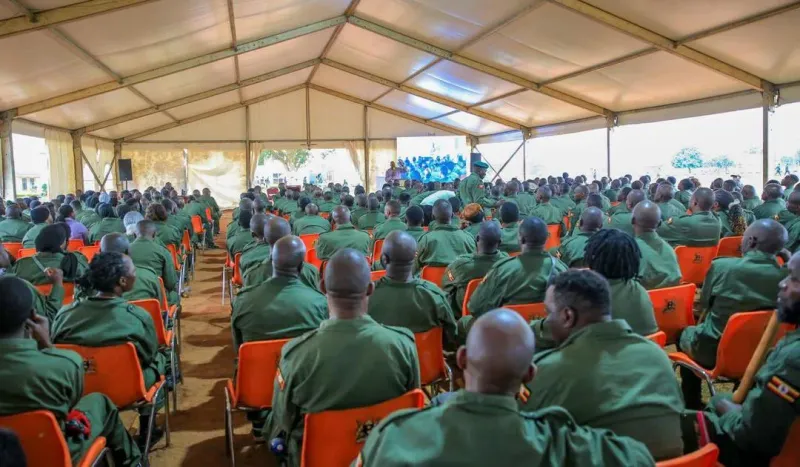
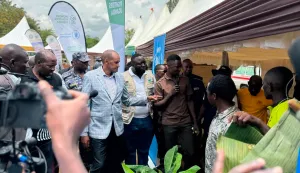
The government has announced plans to support Ugandans repatriated from South Africa through economic intervention programmes as the returnees undergo rehabilitation and ideological orientation at the National Leadership Institute (NALI) in Kyankwanzi.
The group of at least 1,030 was repatriated following recent xenophobic attacks in South Africa that forced many Ugandans to abandon their businesses, jobs and homes. Government officials say the ongoing training is helping the returnees regain confidence while preparing them to rebuild their lives in Uganda.
The Commissioner for the National Secretariat for Patriotism Corps (NSPC) at State House, Hellen Seku, said the programme has registered encouraging progress, with many participants now expressing confidence in Uganda's economic opportunities.
According to Seku, the group comprises 438 men, 261 women and 331 children aged between zero and 16 years.
Speaking during one of the training sessions at Kyankwanzi, Seku said the initiative has attracted interest from other Ugandans who returned independently from South Africa and now wish to participate in future training programmes.
"I have received countless calls from Ugandans who returned on their own and now want to join this programme because they are seeing the positive transformation of their colleagues on social media," she said.
Now in its second week, the programme focuses on patriotism, national identity, leadership and economic empowerment.
Seku said many participants arrived at the institute traumatised and uncertain about their future after losing livelihoods they had built over several years in South Africa. However, she said the orientation has helped many appreciate the opportunities available in Uganda.
She also thanked President Yoweri Museveni for facilitating the repatriation of the affected Ugandans, describing the intervention as an act of compassion and national responsibility.
The commissioner further commended Mulago National Referral Hospital, Kiboga Hospital and other government health facilities for providing specialised treatment and psychological support to returnees. She noted that some participants arrived in poor health, while others were suffering from severe psychological distress.
To support parents attending the training, organisers established a temporary nursery at Kyankwanzi to care for the hundreds of children who accompanied their families.
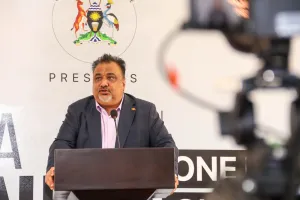
Addressing the returnees, Senior Presidential Advisor on Political Mobilisation Moses Byaruhanga condemned xenophobic violence and called for stronger economic integration across Africa.
He said unemployment remains one of the factors contributing to hostility towards foreign nationals and argued that expanding regional markets would create more jobs across the continent.
Byaruhanga also assured the returnees that government is designing economic interventions to help them restart their lives.
He said the returnees will be organised into enterprise groups according to their skills before receiving support through existing government financing schemes. "The government has money. Our biggest challenge has never been a lack of funds but poor organisation. Once these returnees organise themselves into productive groups, we shall support them," Byaruhanga said.
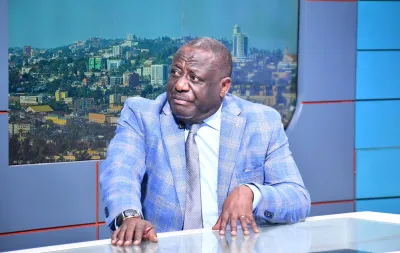
Senior Presidential Advisor on Special Duties and Chairperson of the Presidential Advisory Committee on Exports and Industrial Development (PACEID), Odrek Rwabwogo, encouraged the returnees to take advantage of opportunities in value addition, manufacturing and agro-processing.
He said Uganda aims to increase exports by strengthening industrialisation, expanding affordable energy and promoting agricultural processing to improve farmers' incomes.
Rwabwogo cited fish farming as one of the sectors with significant potential to create employment, saying Uganda could generate more than 200,000 jobs through investments in aquaculture, feed production, maize growing, soybean cultivation and processing industries.
He also urged the returnees not to allow their experiences in South Africa to define their future, encouraging them to embrace the opportunity to rebuild their lives in Uganda through knowledge, innovation and productive enterprise.
As the programme nears its conclusion on Friday, July 17, 2026, Seku said its success has encouraged more Ugandans stranded abroad to express interest in voluntarily returning home and participating in similar training initiatives.

Jason Olinga
Leave a Comment
Your email address will not be published.