
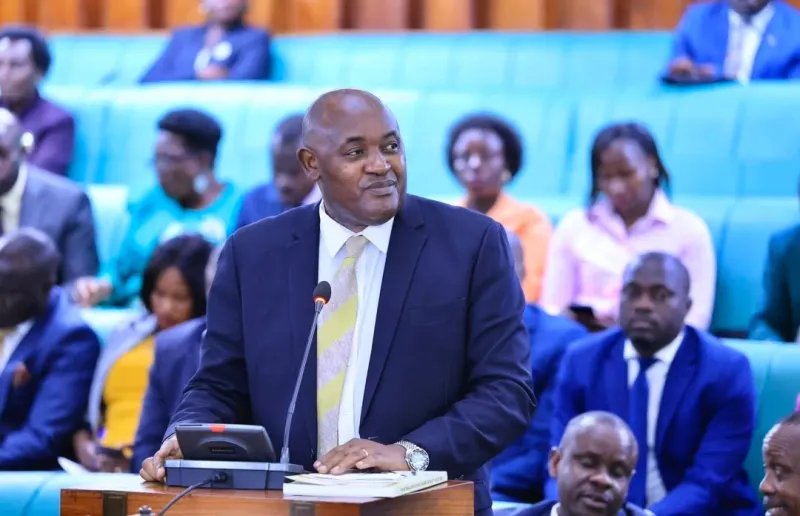




Uganda’s current cohort of medical interns will receive the Shs1 million allowance after Cabinet reversed its earlier decision to suspend government facilitation, Health Minister Chris Baryomunsi has told Parliament.
Baryomunsi made the announcement while updating MPs on the deployment and welfare of medical interns, amid growing concern over the government’s earlier decision to withdraw the payment.
The Minister said government has expanded the number of internship centres and deployed 2,490 pre-interns across 77 centres.
The development provides relief to the current group of medical graduates, whose internship arrangements had become the subject of debate between government, Parliament and health professionals.
Baryomunsi told the House that Cabinet had reconsidered its earlier position on the facilitation of medical interns.
Under the revised position, the current cohort will receive the Shs1 million allowance that had previously been at the centre of the dispute.
The government’s earlier decision to stop the payment had triggered criticism from medical professionals and concern in Parliament. The issue had remained unresolved as interns were being deployed to health facilities.
Parliament reported last week that government was still consulting on the policy while interns were being urged to report to their assigned duty stations.
Baryomunsi had also warned that interns who failed to report to their assigned duty stations by August 15 risked forfeiting their internship placements as government addressed their concerns.
The Health Minister said government has increased the number of facilities available for internship training.
A total of 2,490 pre-interns have been deployed across 77 internship centres, according to the ministerial update.
The expansion is significant because medical internship is a mandatory stage of professional training for medical graduates before they can progress to independent practice.
However, Baryomunsi stressed that increasing the number of internship centres and deploying more graduates must go hand in hand with adequate supervision. “We need to ensure that even when the interns are deployed, the senior doctors are present to provide supervision.”
The emphasis on supervision highlights one of the practical challenges facing the expanded internship programme: ensuring that interns receive meaningful clinical training while also supporting the health facilities where they are placed.
Beyond the immediate question of intern allowances, Baryomunsi told Parliament that government is working on broader human-resource challenges within Uganda’s health sector.
He said Cabinet had directed him to prepare a report within six months addressing issues affecting human resources in health.
The Minister, however, said he intends to complete the work much sooner.
Baryomunsi said he would aim to produce the report within two months, rather than waiting for the full six-month period.
The report is expected to address some of the wider concerns surrounding staffing and the management of health workers.
He also said the President had directed that payments to medical workers should not be taxed.
While welcoming the reversal for the current group, Leader of the Opposition Joel Ssenyonyi raised concerns about what happens to future cohorts.
Ssenyonyi argued that Cabinet's decision appears to apply specifically to the current group of interns, leaving uncertainty over whether the next cohort will receive the same support.
His concern is that Parliament could once again face the same dispute when another group of medical graduates begins internship.
The Opposition leader urged Baryomunsi to continue engaging Cabinet so that the allowance arrangement can also cover future cohorts.
That question remains one of the key unresolved issues in the government's medical internship policy.
The controversy over medical intern allowances follows a broader policy debate about how government should support graduates during internship.
Earlier this year, Baryomunsi defended the government's decision to stop the allowance, arguing that internship is primarily a continuation of professional training rather than formal employment. The debate was also linked to the increasing number of medical graduates being produced by both public and private training institutions.
The policy shift attracted resistance from health professionals, who argued that interns play an important role in delivering services in hospitals and other health facilities.
The issue subsequently became a parliamentary concern, with MPs calling for government to resolve the uncertainty surrounding intern facilitation. Parliament later reported that the government was consulting on the matter.
The latest Cabinet decision therefore represents a significant change from the earlier position, at least for the current cohort.
For now, the immediate issue of payment has been settled for the current group of interns, with Baryomunsi confirming that they will receive the Shs1 million allowance.
The bigger policy question, however, remains open: will future medical intern cohorts continue receiving government facilitation?
Ssenyonyi's intervention in Parliament suggests that MPs expect the Health Ministry to seek a more permanent solution rather than return to the same dispute when the next group of graduates begins internship.
Meanwhile, the government faces the additional task of ensuring that the rapid expansion of internship centres is matched by enough senior doctors and other qualified personnel to supervise trainees effectively.
The outcome of Baryomunsi's planned review of human-resource issues in the health sector could therefore have implications beyond the current internship cohort.






Sunrise reporter
Leave a Comment
Your email address will not be published.