

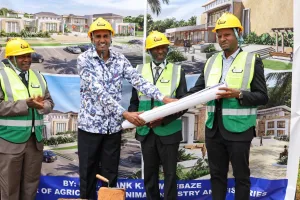




Kampala Capital City Authority (KCCA) has pledged to work with the government to facilitate the implementation of the Standard Gauge Railway (SGR) project in Kampala, with particular attention to community mobilisation, land acquisition and compensation of people affected by the railway corridor.
Kampala Lord Mayor Ronald Nsubuga Balimwezo made the commitment during a meeting with officials from the Ministry of Works and Transport's SGR Project Management Unit at the Lord Mayor's Parlour on Thursday.
The engagement was held to brief newly elected KCCA office bearers on the planned railway and explore how the city authority can contribute to its implementation.
Balimwezo said KCCA supports efforts to accelerate the project but stressed that residents whose property or land is affected must receive fair compensation. “We are joining them to ensure the project succeeds. We want the project fast-tracked, but we also want the project-affected persons to be well and fairly compensated,” Balimwezo said.
He added that KCCA would assist the project team in engaging communities located along the railway route. The authority will also help sensitise residents about the project's expected benefits and the importance of protecting the railway reserve.
According to Balimwezo, shifting a significant amount of freight from roads to rail could help address congestion in Kampala.
He said moving as many as 2,000 containers by rail would reduce the number of heavy trucks using city roads.
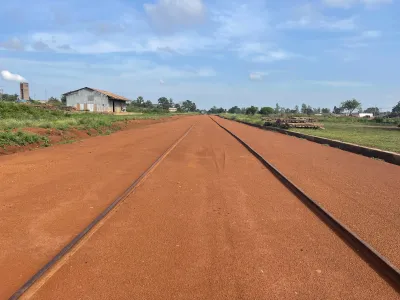
The 272-kilometre Malaba-Kampala SGR is the priority component of Uganda's planned modern railway network. Once completed, it is expected to connect Uganda with Kenya's railway network and provide a direct rail connection to the Port of Mombasa.
Within Kampala, the railway corridor will pass through Nakawa and Central divisions.
Project officials said the railway will be capable of transporting both passengers and freight at speeds of up to 120 kilometres per hour. The system is intended to provide a faster and more efficient alternative to the existing metre-gauge railway.
The SGR project is also expected to improve the movement of goods between the Kenyan coast and Uganda.
Officials estimate that freight travelling between Mombasa and Kampala could reach its destination in roughly one day. They also project a reduction in the cost of transporting a container, from approximately US$3,200 to US$1,600.
The planned Kampala railway station is expected to connect with the proposed Bus Rapid Transit (BRT) network, giving passengers an opportunity to transfer between rail services and public transport.
Emmanuel Ssemakula, deputy project coordinator for technical works under the SGR project, said discussions with KCCA were focused largely on establishing a coordinated approach to compensating people affected by the railway.
“We are here to meet KCCA leadership to discuss and pave the way for how best to compensate the people affected by the project in Kampala. We have, in principle, agreed on how to handle these PAPs,” Ssemakula said.
The project passes through 11 districts and two cities, according to the project team.
Government has already compensated a substantial number of Project-Affected Persons, officials said, although discussions are continuing in locations where compensation and right-of-way matters have not yet been fully resolved.
KCCA's involvement is therefore expected to strengthen engagement with communities in Kampala as the government works to address outstanding issues and advance construction of the Malaba-Kampala SGR.





Sunrise reporter
Leave a Comment
Your email address will not be published.