


Kampala Capital City Authority (KCCA) has told Parliament that a prolonged court dispute over outdoor advertising fees has prevented the Authority from collecting revenue from billboards, digital screens and other advertising structures in Kampala since 2020.
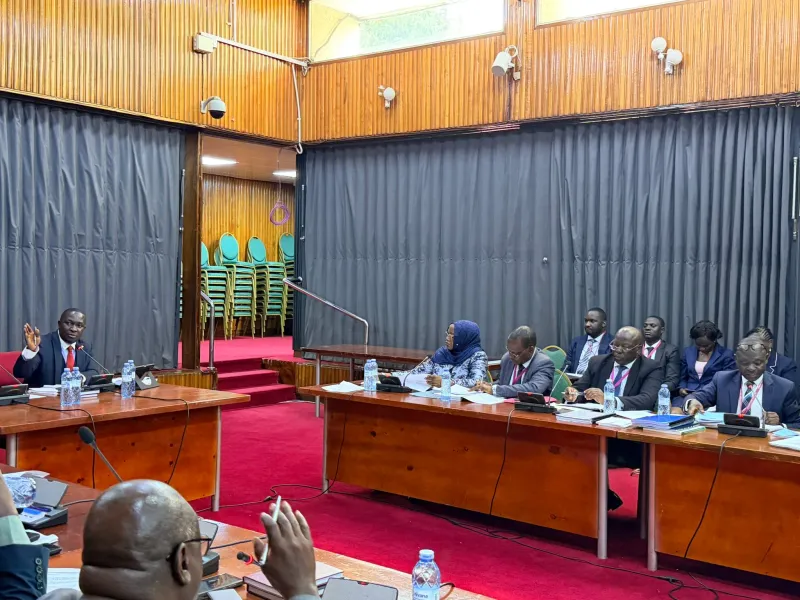
KCCA Executive Director Sharifah Buzeki made the disclosure on Wednesday, when she appeared before the Committee on Commissions, Statutory Authorities and State Enterprises (COSASE) to respond to matters raised in the Auditor General’s audit of the Authority for the 2024/2025 financial year.
The committee questioned why KCCA had not been collecting revenue from the rapidly expanding outdoor advertising sector in the capital city.
Hon. Bumali Mpindi expressed concern that the dispute had persisted for several years, saying the matter deserved urgent attention because advertisers continue to earn money from businesses while the city authority loses potential revenue.
Mpindi called for an administrative solution involving the relevant institutions, including the Judiciary, to allow KCCA to resume collection of outdoor advertising fees.
COSASE Deputy Chairperson George Musisi similarly urged stakeholders to support KCCA in resolving the outstanding legal and administrative issues.
Buzeki explained that KCCA had previously collected outdoor advertising fees before the National Outdoor Advertising Contractors Association (NOACA) challenged the charges in court.
She said the legal dispute resulted in KCCA working with its Authority Council and consulting the Solicitor General to establish a clearer legal basis for regulating outdoor advertising and charging fees.
The process eventually resulted in the Kampala Capital City (Outdoor Advertising) Ordinance, 2025.
However, implementation of the new rates under the ordinance triggered another legal challenge by NOACA.
In September 2025, the High Court affirmed KCCA’s authority to regulate outdoor advertising and charge fees under the ordinance. However, the court suspended implementation of some of the new rates after determining that certain increases were unreasonable.
According to Buzeki, KCCA subsequently engaged outdoor advertisers and agreed to review the rates with their participation.
“We agreed with them to a consent judgment and agreed to review the rates with their input. We have fast-tracked this exercise,” Buzeki told the committee.
She said the KCCA Authority Council has since approved revised rates, which are expected to be submitted to the Solicitor General for approval.
The proposed rates take into account factors such as the size, location and type of advertising structure, as well as the period during which an advertisement is displayed.
Buzeki described outdoor advertising as an important potential source of revenue for KCCA, particularly as Kampala continues to experience growth in the number of billboards, digital advertising screens and other commercial advertising structures.
“Since 2020, KCCA has not been getting revenue from outdoor advertising. We need to quickly pass it so that we get this revenue as the Authority,” she said.
She appealed for parliamentary support to help establish a clear and workable legal framework that would enable KCCA to resume revenue collection from the sector.
The Authority says additional revenue from outdoor advertising would help strengthen its capacity to finance city services and infrastructure.
During the same appearance before COSASE, Buzeki also provided updates on compensation for people affected by the Kiteezi landfill collapse.
She said compensation had been paid to all victims except one person who is currently outside Uganda and whose details still require clarification.
Buzeki explained that KCCA does not determine the compensation amounts. Instead, the figures are assessed by the Government Valuer based on the value of the affected property.
She also told MPs that KCCA had fully paid for land acquired for a new waste management facility, which she said was an important step towards developing a safer and more sustainable waste management system for Kampala.
On garbage collection, Buzeki said KCCA had started the procurement process for 10 additional garbage collection trucks.
The Authority has also increased the number of private companies contracted to collect waste in Kampala to nine. The companies have been assigned different zones across the city as part of efforts to improve waste collection coverage and efficiency.
According to KCCA, the private waste collection companies have a combined fleet of 141 trucks and can collect approximately 1,669 tonnes of garbage per day.
KCCA’s own fleet provides additional capacity of about 500 tonnes daily, bringing the combined collection capacity of the Authority and private operators to roughly 2,169 tonnes per day.
With Kampala generating an estimated 2,000 tonnes of garbage each day, Buzeki said the increased collection capacity places KCCA in a better position to manage the amount of waste generated across the city.
The Authority says the additional trucks, increased participation of private waste collectors and zoning system are part of broader efforts to improve cleanliness, waste management and service delivery in Kampala.




Sunrise reporter
Leave a Comment
Your email address will not be published.