
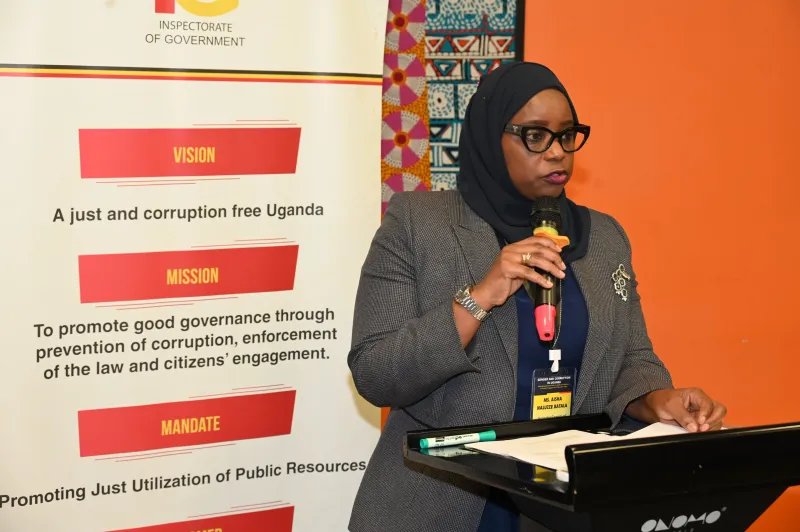

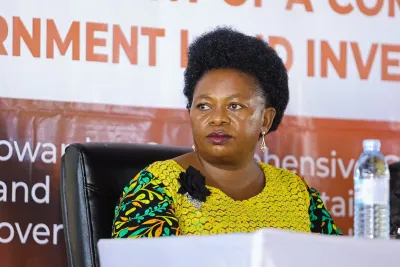
The Inspector General of Government (IGG), Lady Justice Naluzze Aisha Batala, has called for stronger institutional action to combat gender-related corruption in Uganda, particularly in the health and education sectors, warning that women, girls and other vulnerable groups are disproportionately affected by corrupt practices.
Lady Justice Naluzze made the call while delivering remarks at the opening of a two-day workshop on Gender and Corruption in Uganda, focusing on the health and education sectors, held at Onomo Hotel Kampala.
She noted that corruption extends beyond the loss of public funds, stalled government projects and inflated contracts to include practices that violate people's dignity, undermine their rights and restrict access to essential public services.
The IGG singled out sexual corruption as one of the most harmful forms of corruption affecting women and girls. This occurs when individuals in positions of authority demand sexual favours in exchange for access to public services, academic grades or other opportunities.
"These are not abstract issues. A mother who cannot afford an unofficial payment at a health facility, a student pressured by a person in authority, a victim who stays silent for fear of stigma or retaliation: each is a failure of integrity, and each undermines the right to health and the right to education," she said.
Lady Justice Naluzze emphasised that the health and education sectors are particularly important because they provide direct interaction between citizens and the State. She explained that the way public services are delivered in these sectors determines whether public confidence in government institutions is strengthened or weakened.
She warned that corruption in health and education has far-reaching consequences for families, communities and Uganda's overall development.
The IGG urged public institutions, including the Inspectorate of Government, to assess whether their existing systems, procedures and institutional cultures are effective enough to identify, receive and respond to complaints involving gender-related corruption.
She also acknowledged that sexual corruption is often hidden, under-reported and difficult to prove because victims fear losing their jobs, educational opportunities or reputations. Some victims also remain silent because of possible stigma and retaliation.
To address the challenge, she called for more accessible and responsive complaint-reporting mechanisms that allow victims to report corruption without fear.
Lady Justice Naluzze further informed participants that the Inspectorate of Government has a fully-fledged Directorate of Ombudsman Affairs responsible for handling complaints relating to maladministration and injustice. She described the directorate as an important institutional mechanism for addressing concerns affecting citizens' access to public services.
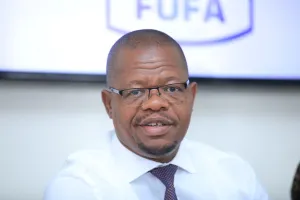
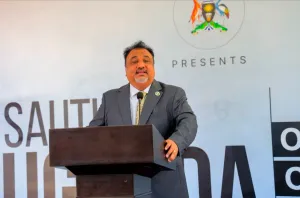
The two-day workshop, hosted by the Inspectorate of Government with support from the Danish Embassy to Uganda, is being held in collaboration with the Embassy of Sweden in Uganda, the United Kingdom Foreign, Commonwealth and Development Office, and the U4 Anti-Corruption Resource Centre.
It has brought together more than 15 stakeholders to examine the gender-related dimensions of corruption, particularly in Uganda's health and education sectors.
The Deputy British High Commissioner to Uganda, H.E. Kirlew Tiffany, also attended the workshop and encouraged participants to openly share their experiences and insights to enrich the discussions.
She expressed optimism that recommendations from the workshop would contribute to meaningful change in the fight against gender-related corruption in Uganda.
The discussions are expected to help strengthen institutional responses to corruption that disproportionately affects women, girls and other vulnerable groups, while promoting accountability, integrity and equal access to essential public services.



Sunrise reporter
Leave a Comment
Your email address will not be published.