



Oil and Gas
Uganda–Tanzania Oil Pipeline Project Reaches 79% Completion as EACOP Targets First Oil in 2026
The East African Crude Oil Pipeline (EACOP) Project has reached 79 percent completion, with Uganda and Tanzania reaffirming their commitment to deliver Uganda’s first oil on schedule and begin exports in 2026.
This follows a high-level Uganda–Tanzania stakeholder meeting held on Monday at the Ministry of Energy in Dar es Salaam as part of ongoing coordination efforts for the landmark cross-border oil infrastructure project. The meeting was led by Uganda’s Minister of Energy and Mineral Development, Hon. Dr. Ruth Nankabirwa, and hosted by Tanzania’s Minister for Energy, Hon. Deogratius Ndejembi.
Officials reviewed progress on major components of the 1,443-kilometre East African Crude Oil Pipeline, including the pipeline corridor, above-ground installations, the Tanga Marine Terminal, and associated infrastructure. Construction across the project has reached peak levels and remains on track, with start-up targeted for 31 July 2026 and first crude oil exports expected in October 2026.
Both governments reiterated strong political support for EACOP, highlighting its importance to regional integration, energy trade, employment creation, and skills development in East Africa. The project is expected to significantly enhance economic cooperation between Uganda and Tanzania while positioning the region as a key energy exporter.
Senior officials from the two countries used the Dar es Salaam engagement to align regulatory and institutional actions required for the final delivery phase of the project. Discussions focused on cross-border coordination, regulatory facilitation, and operational readiness as EACOP transitions from construction to commissioning.
Dr. Nankabirwa emphasized the importance of on-the-ground verification and direct engagement with project teams to ensure timely delivery. Tanzania reaffirmed its role in enabling smooth implementation through land access, approvals, and institutional support, while both sides stressed the need to maintain high safety and environmental standards.
The meeting also addressed preparations for commissioning later in 2026, with emphasis placed on building local technical capacity to support long-term oil and gas operations across the value chain in both countries.
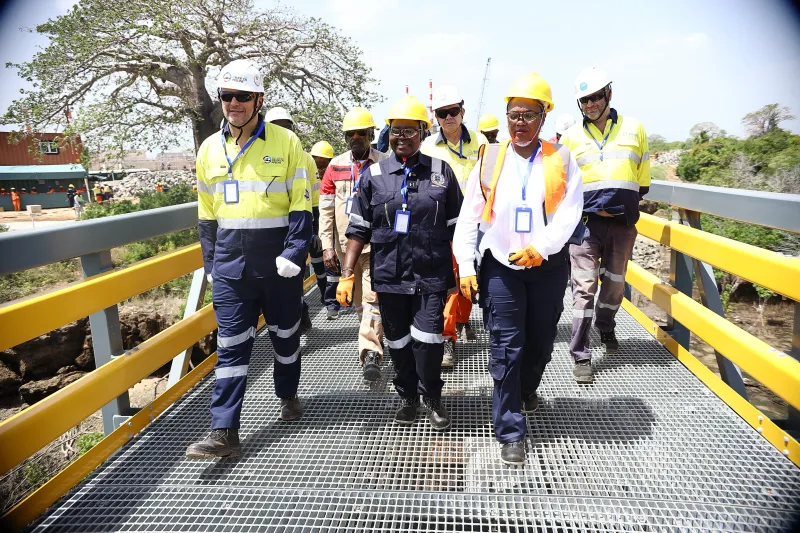
Ahead of an EACOP field tour, the Ugandan delegation led by Dr. Nankabirwa paid a courtesy call on Tanga Regional Commissioner, Dr. Batilda Buriani, alongside leaders from Tanzania’s Ministry of Energy, the Uganda National Oil Company (UNOC), NPC, and EACOP. Discussions highlighted the tangible benefits already being realized in Tanzania’s Tanga Region, including job creation, skills transfer, improved safety standards, and environmental protection in sensitive areas.
The delegation also visited the Marine Storage and Terminal Facility in Tanga to assess progress at the key crude oil export hub. The facility includes four crude oil storage tanks with a combined storage capacity of approximately 2 million barrels, as well as power generation and export pumping systems. An export jetty connected to the onshore terminal will support crude oil shipments to international markets.
The engagement concluded with a shared commitment by Uganda and Tanzania to complete the remaining works safely, sustainably, and on schedule, reinforcing EACOP’s position as one of Africa’s most significant energy infrastructure projects.




Sunrise reporter
Leave a Comment
Your email address will not be published.