
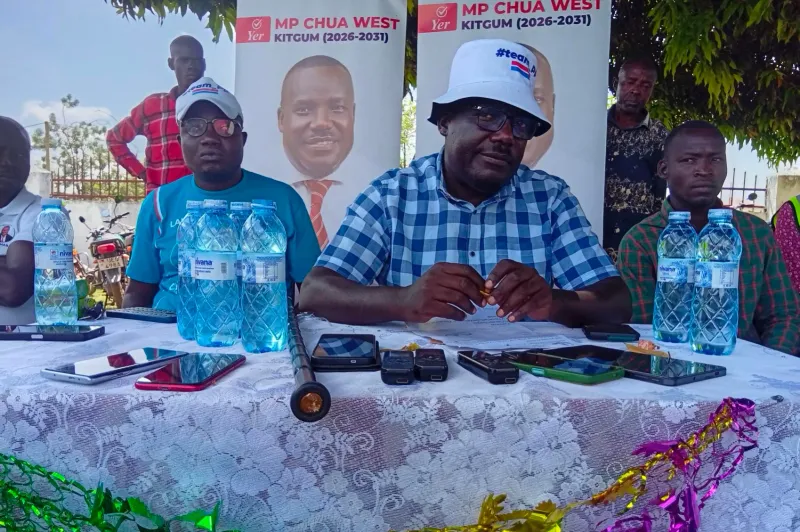





Campaign activities in Kitgum District as Uganda heads toward the 2026 general elections are increasingly being disrupted by alcohol abuse, identity politics, and rising clan-based tensions—factors that candidates say are undermining democratic participation and public safety.
Phillips Poly Okin Ojara, the incumbent Member of Parliament for Chua West, has expressed concern that many political rallies in Kitgum have lost their purpose, turning into informal social gatherings rather than platforms for civic engagement. Speaking to the media in Kitgum Municipality, Ojara said large crowds often attend rallies, but many participants are too intoxicated to follow campaign messages or meaningfully engage with candidates.
“You find people present in large numbers, but they are not really present,” Ojara remarked, blaming excessive alcohol consumption and substance abuse for weakening political dialogue and voter awareness.
According to the legislator, alcohol-fueled gatherings are also creating fertile ground for identity politics, with some candidates accused of mobilising support along clan lines instead of promoting issue-based campaigns. In Chua West constituency, Ojara pointed to growing tensions between supporters from the Okaka and Labongo communities, where political allegiance is increasingly determined by clan affiliation rather than policy positions.
Ojara warned that the combination of alcohol abuse and identity-based politics has contributed to a spike in election-related violence, including vandalism of campaign materials, threats against candidates, intimidation of supporters, and the spread of hate speech. “Politics shouldn’t be a do-or-die situation,” Ojara cautioned.
“Life existed before this election, and it will continue after it’s over. So why allow someone to exploit you for their own political gain?”
He further raised alarm over the manipulation of young people, saying intoxicated youths are often used to disrupt rallies and intimidate opponents. Ojara called on cultural leaders, local authorities, and community elders to intervene urgently to prevent further escalation of political tensions.
Citing a recent incident, Ojara referenced the assault of Fred Olak Kamao, the Omiya Anyima West Sub-county NRM chairperson, who was attacked during a rally in Pela Central Village. The incident, he said, involved youths who were reportedly under the influence of alcohol.
Denis Olanya, the Chua West Youths Chairperson, echoed these concerns, accusing some political actors of deliberately intoxicating young people or inciting them to cause chaos in pursuit of personal political ambitions. He urged youths to reject such manipulation and encouraged candidates to empower young people through employment opportunities, skills training, and development programs rather than alcohol and violence.
Similar allegations were raised by Margaret Lamwaka Odwar, the current Member of Parliament for Chua East and a candidate for Kitgum District Woman MP. Odwar claimed that her campaign activities had also been undermined through the deliberate distribution of alcohol to her supporters by political rivals.
“During my recent campaign visit to Kiteny and Orom East sub-county, I was dismayed to find many people intoxicated and unable to engage,” she said.
“We later discovered that agents of one of my opponents had deliberately distributed alcohol, effectively silencing our supporters and undermining the democratic process.”
As the campaign season intensifies, Ojara, who is seeking a third term as Chua West MP as an independent, faces competition from five contenders: Simon Peter Oryema Adum (NRM), Solomon Nokrach (DP), Joseph Ogweng Okellowange (UPC), Aisa Ann Okot Nagudi, and Eng. Allan Akena, all contesting as independents.
With growing concerns over alcohol abuse, youth exploitation, and clan-driven politics, leaders in Kitgum are calling for a return to issue-based campaigns that prioritise peace, unity, and meaningful voter engagement ahead of the 2026 polls.





Jason Olinga
Leave a Comment
Your email address will not be published.