
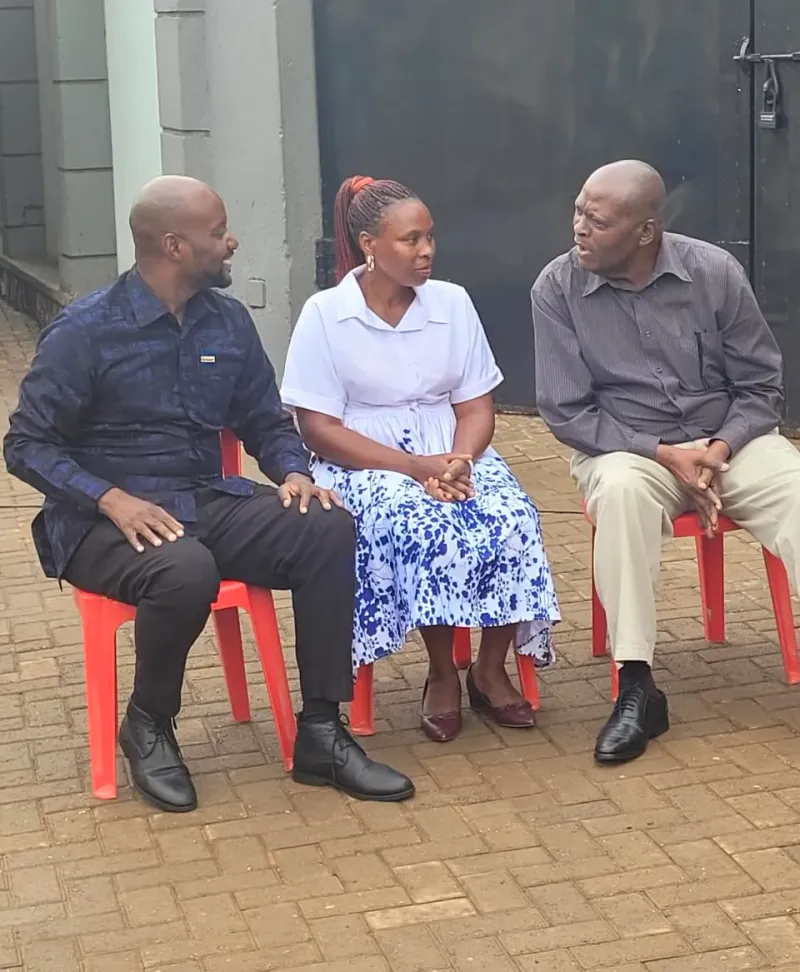



Moses Nkonge Kibalama, former president of the National Unity, Reconciliation and Development Party (NURP), which rebranded to the National Unity Platform (NUP) in 2020, has officially withdrawn his legal challenge against Robert Kyagulanyi Ssentamu’s leadership.
Since late 2020, Kibalama and his former Secretary General, Paul Ssimbwa Kagombe, had been disputing Kyagulanyi’s leadership, claiming it strayed from the agreements made when the new leadership took office. Their initial case was dismissed in 2020, but they later filed additional cases seeking to nullify Kyagulanyi’s position.
Speaking at the NUP offices in Kampala, a frail-looking Kibalama emphasized the need for unity, saying it was time to reconcile. “It is time to put aside our disagreements and resume working together for the benefit of not only the party but also the country,” he stated.
Paul Ssimbwa Kagombe, the party’s former Secretary General, also expressed regret over past confrontations. He formally apologized to NUP leadership and confirmed the withdrawal of the court case, framing it as a step toward reconciliation.
Kagombe explained that, unlike previous occasions when public declarations of reconciliation were followed by reversals, this time the decision was carefully considered. “We have taken time to reflect seriously and concluded that returning to NUP was our only viable option,” he said, urging Ugandans to support Kyagulanyi in the upcoming presidential elections.
NUP Secretary General David Lewis Rubongoya welcomed the gesture, noting that Kibalama and Kagombe’s previous actions had harmed the party and even delayed the Electoral Commission from gazetting the party’s new constitution. He added that the party was pleased they acknowledged their mistakes and chose to “bury the hatchet.”
On whether NUP trusts Kibalama and his group not to backtrack again, Rubongoya commented, “The possibility remains, but that would not stop NUP from doing what it believes is right.”
Meanwhile, NUP Treasurer Benjamin Katana highlighted the party’s commitment to reconciliation. He explained that the fallout had been fueled by opponents seeking to exploit divisions within NUP. “As a party, we believe in reconciliation and therefore could not reject Kibalama when he reached out. What grounds could now be used to cause disagreement, given that the party has reconciled with its former leaders?” Katana asked.
This development marks a significant step toward unity within NUP, ahead of the critical presidential elections, signaling a renewed focus on collective growth and party stability.
URN




The Sunrise Editor
Leave a Comment
Your email address will not be published.