
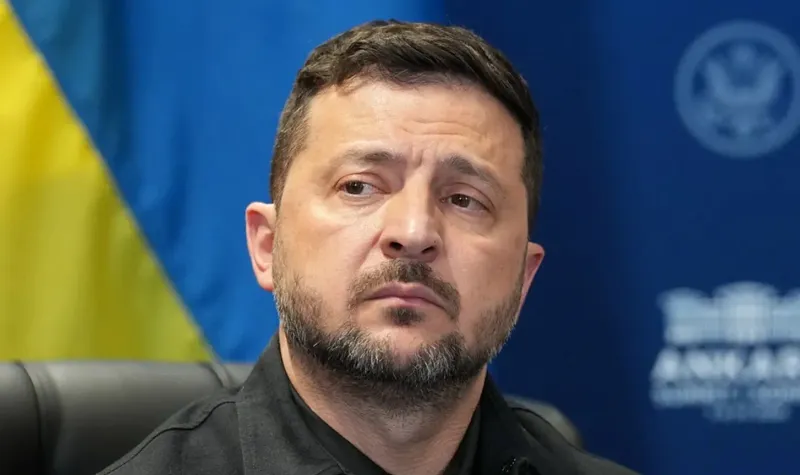



Russia could mobilize another 300,000 troops later this year as Moscow seeks to maintain pressure on Ukraine, Ukrainian President Volodymyr Zelensky has warned, raising the possibility of a major new recruitment drive after Russia's parliamentary elections in September.
Zelensky made the claim in wide-ranging remarks released on Sunday, saying Ukraine believes Russian President Vladimir Putin could use the election period as a point from which to launch another mobilization. He suggested that the new troops would be drawn largely from Russia's regions outside its biggest cities.
The warning is significant because Russia has avoided another nationwide mobilization since September 2022, when Putin ordered 300,000 reservists into military service. That call-up caused protests and prompted many Russians of military age to leave the country. Since then, Moscow has largely relied on contract recruitment to maintain the size of its forces.
Russia, however, has not confirmed that another mass mobilization has been ordered. On August 20, Russia's ambassador to the United Nations, Vasily Nebenzya, said there was no current plan for a mass mobilization, although his remarks did not completely rule out the possibility of a future call-up.
That leaves an important distinction in Zelensky's warning: the figure of 300,000 is an assessment from the Ukrainian side, not a confirmed Russian government decision.
The timing nevertheless matters. Zelensky has previously warned that Moscow could use the outcome of Russia's September parliamentary elections as an opportunity to announce a new recruitment campaign. Reuters reported earlier this month that the Ukrainian president had already raised concerns about a possible new mobilization following the elections.
The question is not simply whether Russia can find another 300,000 people. It is what Moscow would intend to do with them.
A force of that size would not suddenly produce 300,000 additional frontline soldiers. Recruits would need to be processed, trained, equipped and incorporated into existing military structures. But a large mobilization could give Russia a substantially bigger pool of manpower from which to sustain its offensive operations and replace losses over a longer period.
That could become particularly important in eastern Ukraine, where Russian forces continue to push toward the remaining Ukrainian-held areas of Donetsk region. Zelensky said Putin remains focused on capturing the rest of Donetsk and could use additional troops according to developments on the battlefield.
The broader picture is one of a war increasingly defined by manpower, production capacity and endurance. Russia has continued recruiting contract soldiers rather than returning to the politically costly mass call-up of 2022, but reports have pointed to growing pressure on the recruitment system as battlefield losses remain high.
Zelensky also claimed that Russia could ultimately seek to recruit around 500,000 additional troops by 2027. That larger figure has not been independently confirmed and should be understood as part of the Ukrainian government's assessment of Russia's future military plans.
For the Kremlin, another mass mobilization would therefore be both a military calculation and a political gamble. Putin has so far managed to pursue the war while avoiding another nationwide draft that would directly affect hundreds of thousands of Russian families. Repeating the 2022 experience could make the war harder to keep at a distance from ordinary Russians.
At the same time, Moscow may calculate that sustaining pressure on Ukraine requires additional manpower. If Russia concludes that its existing recruitment system cannot provide enough troops to maintain its current operations, a new mobilization could become increasingly attractive despite its domestic political costs.
For Ukraine, the prospect is equally serious. More Russian personnel would not guarantee a breakthrough, but it could allow Moscow to sustain attacks for longer and put additional pressure on Ukrainian defensive positions already facing shortages of personnel and air-defense resources.
There is also a strategic question hanging over the entire claim: whether a new Russian mobilization would be intended to support the existing offensive in Donetsk or give Moscow the ability to open additional fronts. Zelensky has previously warned that Russia could potentially redirect newly mobilized forces toward other areas of Ukraine depending on developments in the east.
For now, however, there is no evidence that Russia has formally ordered a new 300,000-person mobilization. The September parliamentary elections may therefore become an important point to watch, but they should not be treated as proof that a new draft will follow.
What is clear is that the possibility of another Russian mobilization has moved beyond a simple rumor. Ukrainian officials have repeatedly raised the prospect, independent reporting has examined the pressure on Russia's recruitment system, and Russian officials have issued denials while leaving some room for future developments.
If Moscow ultimately does call up hundreds of thousands of additional troops, the decision could mark a significant escalation in Russia's long-term commitment to the war. If it does not, the Kremlin's continued ability to recruit enough contract soldiers will become an equally important indicator of how Russia intends to sustain its military campaign.
For now, the 300,000 figure remains a warning from Kyiv rather than an announced Russian policy. The weeks following Russia's September elections may provide the clearest indication of whether that warning becomes reality.



Sunrise reporter
Leave a Comment
Your email address will not be published.