
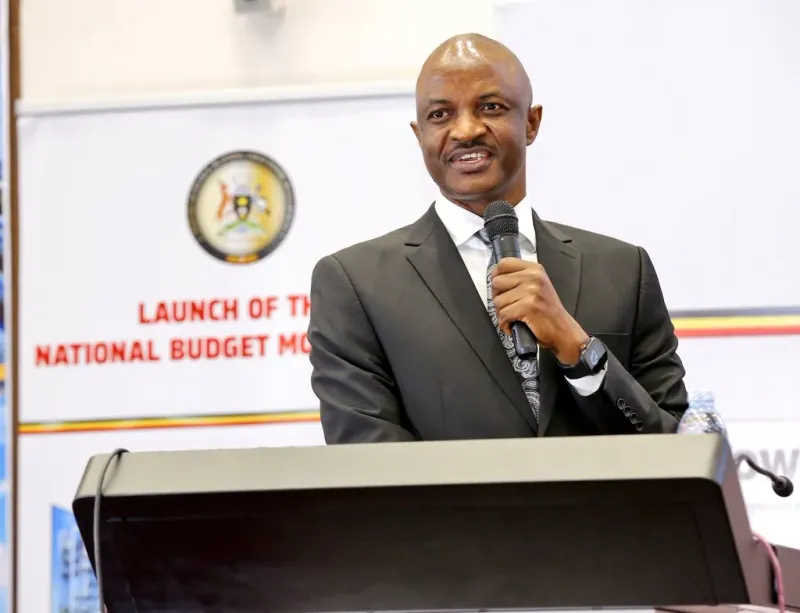
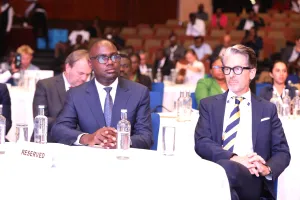



The Ministry of Finance, Planning and Economic Development has officially launched the National Budget Month for Financial Year 2026/27, reaffirming the Government's commitment to transparency, accountability and citizen participation in the budget process.
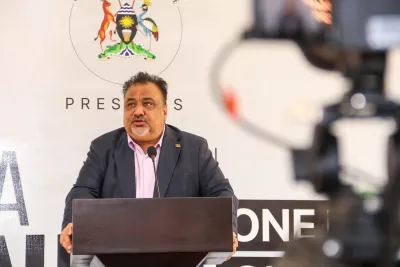
Speaking during the launch at the Ministry's Conference Hall in Kampala, the Permanent Secretary and Secretary to the Treasury, Dr. Ramathan Ggoobi, emphasized the importance of engaging citizens and stakeholders throughout the budget cycle to ensure effective implementation of government priorities and improved service delivery.
According to the Ministry, the FY 2026/27 budget was developed through an extensive consultative process involving the President, Cabinet, Parliament, Ministries, Departments and Agencies, Local Governments, civil society organisations, development partners, the private sector, academia, community leaders, youth and women groups, persons with disabilities, and citizens across the country.
The approved budget, passed by Parliament on April 24, 2026, is anchored on the theme: “Full Monetization of Uganda’s Economy through Commercial Agriculture, Industrialization, Expanding and Broadening Services, Digital Transformation and Market Access.”
Dr. Ggoobi noted that the success of any budget goes beyond its formulation and depends largely on effective implementation, monitoring and oversight by all stakeholders.
"The National Budget Month provides an important platform for Government to account to citizens on achievements registered during the current financial year, communicate opportunities available in the new budget, and obtain feedback that informs future planning and policy decisions," he said.
The Ministry said National Budget Month has, since its introduction in 2018, strengthened public engagement in public finance management through budget dialogues, media engagements, publications, social media campaigns and community outreach initiatives conducted in partnership with civil society organisations and development partners.
Officials noted that the initiative has helped improve public awareness of government programmes, strengthened ownership of the national budget and contributed to Uganda's performance in international budget transparency assessments.
According to information shared during the launch, Uganda's budget transparency score improved from 58 percent in 2021 to 59 percent in 2023, while budget oversight improved from 59 percent to 67 percent during the same period.
The Permanent Secretary acknowledged that more work is still needed to strengthen public participation in the budget process and expressed optimism that ongoing reforms and engagement efforts will yield improved results in future assessments.
Meanwhile, the Acting Director of Budget called upon government institutions, civil society organisations, the media and other stakeholders to actively participate in National Budget Month activities. The official noted that the launch comes at a critical time as Uganda implements the Ten-Fold Growth Strategy and the Fourth National Development Plan (NDP IV).
The Ministry also highlighted efforts to make budget information accessible to all Ugandans through the production of several budget information products, including the Citizens Guide to the Budget, a Braille version for persons with visual impairments, an audiovisual version for the deaf and blind, and a child-friendly version designed for school-going children.
In his remarks, Dr. Ggoobi also recognized the contribution of National Budget Month partners and stakeholders supporting budget transparency and accountability initiatives across the country.
"I wish to sincerely appreciate our National Budget Month Partners for their continued cooperation and commitment to advancing transparency, accountability, and good governance within the budget process," said the PSST Dr. Ramathan Ggoobi.
The Ministry concluded by calling upon citizens, institutions and development partners to actively participate in National Budget Month engagements to support effective implementation of the FY 2026/27 budget and Uganda's broader development aspirations.



Sunrise reporter
Leave a Comment
Your email address will not be published.