
Uganda’s Ministry of Finance, Planning and Economic Development (MOFPED) has pledged support to local governments seeking to develop infrastructure and service-delivery projects through Public-Private Partnerships (PPPs).
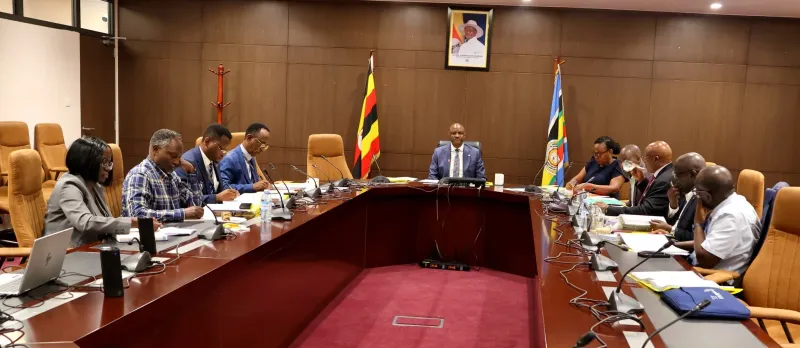
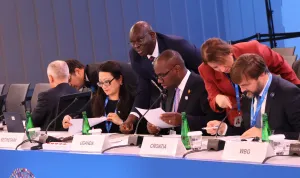
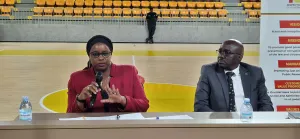
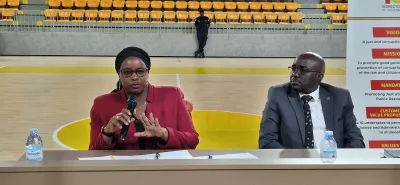
The commitment was made during the 43rd PPP Committee meeting, where local governments and other public institutions presented proposed projects aimed at attracting private investment while creating new sources of revenue.
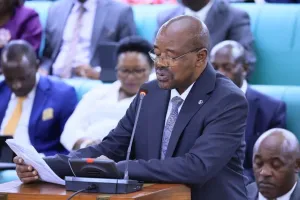
Permanent Secretary and Secretary to the Treasury (PSST) Dr Ramathan Ggoobi said the projects presented by local governments showed potential to generate income and improve public services.
Dr. Ggoobi said MOFPED would work to secure funding for feasibility studies, which are necessary to take promising proposals through project preparation and toward bankability and eventual implementation. “I am impressed that local governments can come up with these projects. They look well informed and have potential to generate revenue for local governments,” the PSST said.
He said the projects also align with the government’s broader economic growth objectives and the National Development Plan.
The projects presented at the meeting covered several sectors, including education, waste management, markets, commercial infrastructure, sports facilities and staff accommodation.
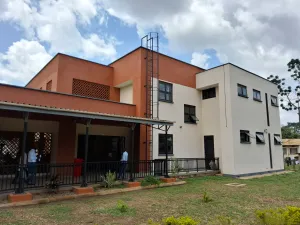
Among the proposals is a Shs50 billion student accommodation project at Muni University.
The university plans to develop accommodation facilities with capacity for 2,000 students, split equally between male and female students. Muni University has identified more than 3.2 hectares of titled land for the proposed development.
The project is expected to address accommodation needs while providing an opportunity for private-sector participation in university infrastructure.
Iganga Municipal Council presented plans for a Shs12 billion waste processing plant in Buluuza, Nakigo Subcounty.
The proposed facility is expected to support several stages of waste management, including collection, materials recovery, recycling, composting and re-manufacturing.
The project would therefore combine waste management with potential commercial activities around the recovery and reuse of materials.
Kyotera District Local Government presented a proposal to redevelop its central market under a build-operate-transfer (BOT) arrangement.
Under the proposed model, a private partner would participate in developing and operating the facility before transferring it back to the public authority in accordance with the agreed PPP arrangement.
Bushenyi-Ishaka Municipality presented a Shs1.8 billion project to construct 66 lock-up shops around the Ishaka taxi park.
The project is proposed under a build-own-operate-transfer (BOOT) model and is expected to expand commercial space while creating an additional potential revenue stream for the municipality.
Dr. Ggoobi said the proposed projects will require further assessment before implementation, particularly through feasibility studies and additional project preparation.
The studies are expected to help determine whether individual projects are technically, financially and commercially viable, as well as whether they can attract private investment on sustainable terms.
Uganda’s PPP framework provides contracting authorities with procedures and assessment tools for determining whether PPPs are appropriate for particular projects and for preparing them for implementation. The official PPP guidelines also include specific guidance for local governments.
The Ministry's PPP Committee is established under Uganda's PPP Act, 2015 and is responsible for functions including consideration of PPP projects within the government framework.
During the meeting, PPP Unit Executive Director Jim Mugunga also presented an update on efforts to strengthen the implementation of PPP projects.
Mugunga said improvements in areas such as guidelines, awareness and technical support were beginning to yield results.
However, he identified inadequate financing for feasibility studies and limited resources under the Project Preparation Facility among the challenges affecting project development.
The rationalisation of government resources was also cited among the factors affecting project preparation.
To address the challenges, the PPP Unit proposed increasing resources dedicated to project preparation, prioritising selected projects for faster implementation and operationalising the Project Development Facilitation Fund.
The proposed projects are intended to bring private capital into local government infrastructure while expanding services and creating employment opportunities.
If successfully prepared and taken to implementation, the projects could also provide local governments with longer-term revenue streams from commercial and service-related facilities.
However, the presentation of a project at the PPP Committee stage does not by itself mean that construction or implementation has been approved. Further feasibility work, project preparation and the applicable PPP approval processes remain important before projects can reach implementation.
The proposals form part of broader efforts by Uganda's PPP Unit to help public institutions develop projects that can attract private financing and support infrastructure delivery.


Sunrise reporter
Leave a Comment
Your email address will not be published.